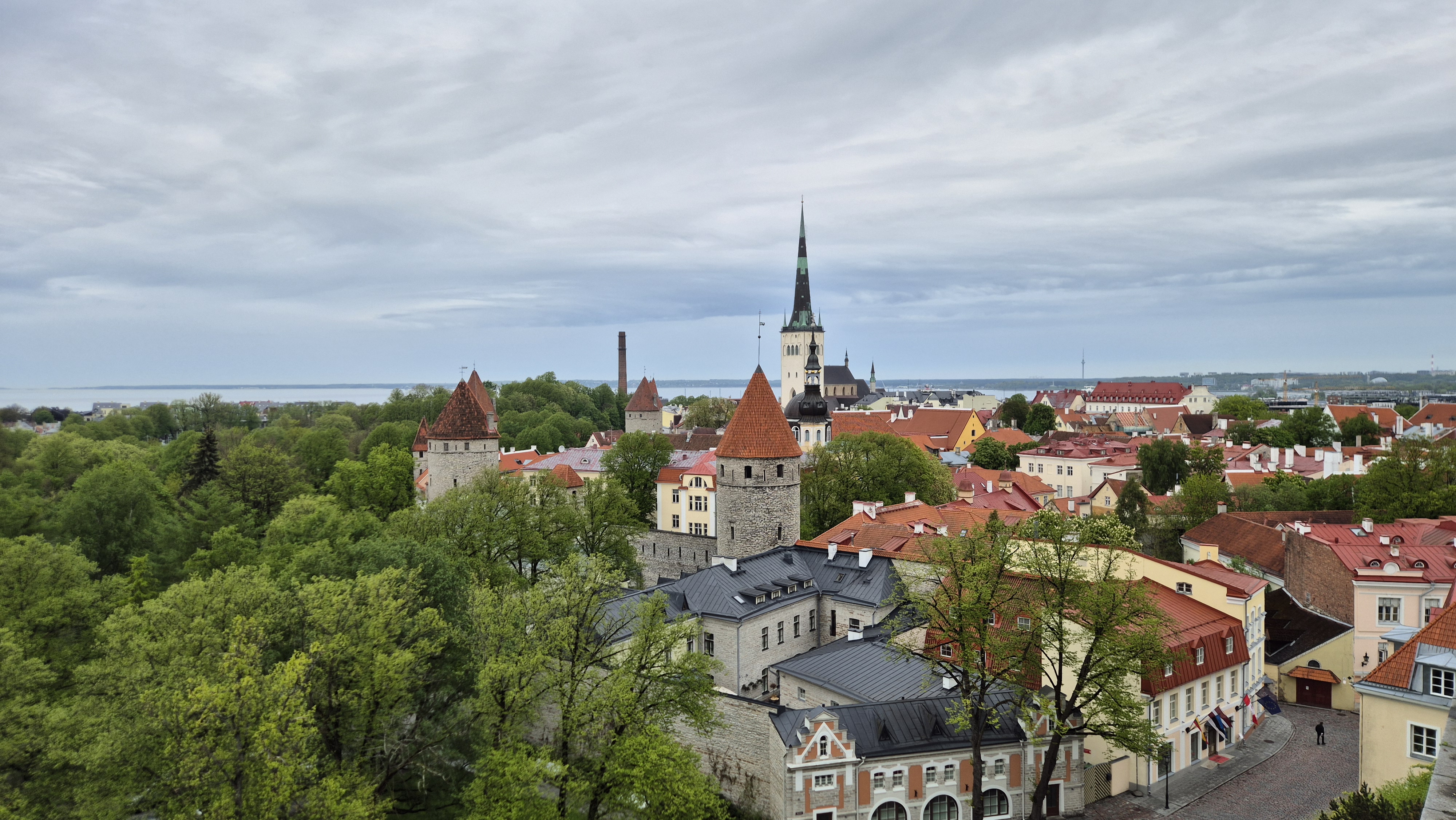

After a smooth sailing across the Baltic Sea, we had arrived at the Port of Tallinn around 1240 and had seven hours to explore the Estonian capital before our ferry back to Helsinki that evening. With a settlement dating back more than five millennia, Tallinn received Lübeck city right as part of the Hanseatic League in 1248 when it was known by its former name, Reval. The claim for both Tallinn and Estonia has been fought over numerous times, with Denmark, Sweden, Russia and Germany all having occupied the city at some point. However, in 1991, independence was restored, and the historic city of Tallinn is now the capital of an independent Estonian nation. Unfortunately, our short amount of time in Tallinn means this post is quite a short one, so if it leaves you hungering for more, check out the other posts from our Nordic Nomads adventure here, here, here, here and here.
From Terminal D of the Port, it was just a short walk to the tram stop outside Terminals A and B. Located on Line 2 of the city’s tram network, there are direct connections between the port, the train and bus stations and the northern side of the Old Town, however if like us you are heading for Freedom Square (Vabaduse väljak) on the south side of the Old Town, you’ll need to change onto lines 3, 4 or 5 at some point. We went via Suur Rannavärav which then meant waiting for a line 5 tram, so I don’t think it was the quickest route, however we were still at Freedom Square in plenty of time for our walking tour. If you fancy it, its also only a 2km or 30-minute walk from the Port to Freedom Square, however we decided to save our legs for exploring the city.
With our walking tour starting in Freedom Square, our guide started by telling us about the history of Estonia as a country, covering its occupation by various nations and its two spells as an independent nation. At one side of Freedom Square is the War of Independence Victory Column, the idea of which was first conceived in 1919 before the end of the 1918-1920 Estonian War of Independence. The idea gained traction and in 1936 a law was passed to establish a monument, with preparatory work beginning but ultimately being interrupted by World War 2 and the Soviet occupation of Estonia. Following Estonia’s second independence in 1991, the idea was revisited and finally in 2009, some 90 years after the idea was first suggested, the Victory Column was opened. The column is more than 23m tall and features 143 glass plates, with the top being crowned by the Cross of Liberty, Estonia’s most distinguished award.
Before leaving Freedom square we also learnt about the Estonian flag which can be ‘seen’ in nature during the winter, with the blue of the sky, the black of the dark forests and the white of the snow-covered ground. Above Freedom Square, behind the Victory Column are the earthworks that were formed part of the city’s defences and as we left the Square, we passed the former path of the city walls, with plenty of the remains of these still being visible around the city. As we made our way into the city centre, we stopped at a cross marked in the cobble stones and were also told the story of a Baron that was executed on this spot between the inner and outer gates of the city, to ensure that he was within the city’s jurisdiction whilst also not being in the city proper.
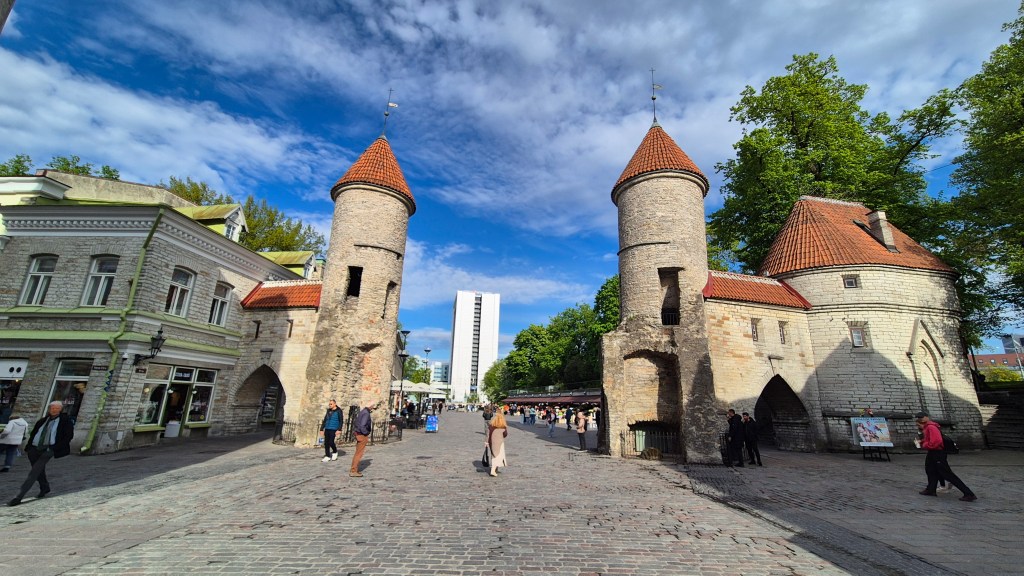
After passing an area that is known locally as the Bermuda Triangle of bars, popular with the city’s visiting stag and hen parties, we headed to Viru Gate on the eastern edge of the city centre where we were able to see the 24 hour flower market and the Hotel Viru, infamous as being the city’s international hotel during the Soviet era and the spying undertaken by the KGB within its walls. Returning to the Viru Gate itself, the twin towers are an excellent example of medieval architecture dating back to the 15th century, however the central gatehouse was demolished in the 1880s to assist with the construction of a horse tramway. Whilst the towers are original, the connecting side gatehouses are an early 2000s reconstruction for the Tallinn Old Town Days. (N.b. in an earlier version of the post I stated that the towers were an early 2000s reconstruction. This was incorrect as I misinterpreted info I had read. Thanks to Mihkel on Threads for the correction). Leaving the Viru Gate behind, our tour continued towards the very heart of the city centre and the Town Hall and Town Hall Square.
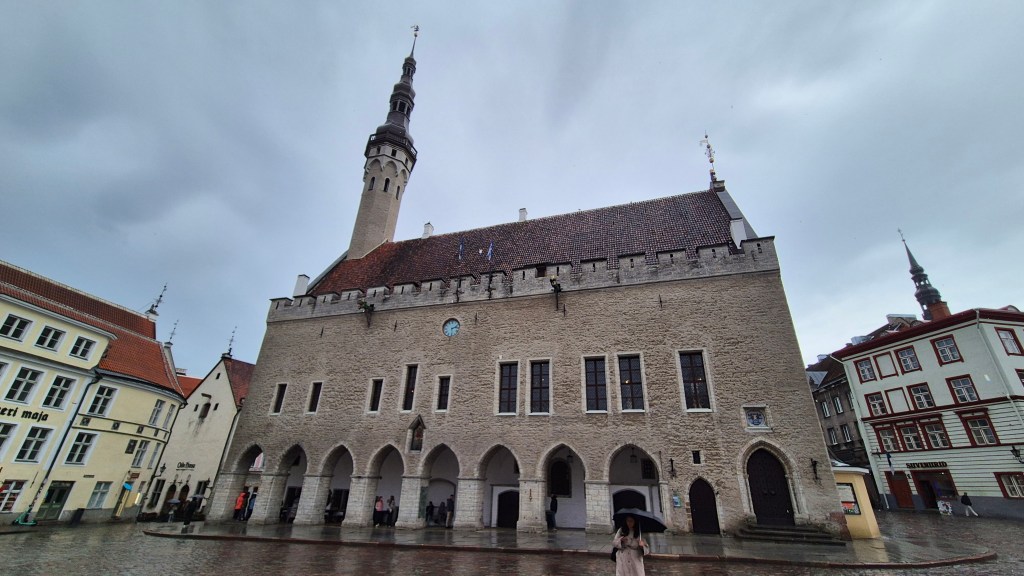
Dating from 1404, Tallin Town Hall is claimed to be the oldest Town Hall in Northern Europe and is certainly a beautiful example of medieval Gothic architecture. Along the walls of the Town Hall are numerous gargoyles acting as drains, spouting rainwater out onto the streets below, whilst Atop the Town Hall is ‘Old Thomas’ a weathervane that itself dates from 1530 and has become one of the symbols of Tallinn. On the other side of the Town Hall square is the Raeapteek (town hall pharmacy) which is one of the oldest continuously running pharmacies in Europe, having been in business since the early 15th century. Today it is still an active pharmacy but also hosts a small museum of historical artifacts, with a small donation being requested if you do pay it a visit.
From the Town Hall Square we headed uphill to our next stop, the former St. Nicholas Church which is now a museum of evangelical art, however, was also the site of Tallinn’s very own mummy! Duke Charles Eugène de Croÿ, the commander of the Russian army at Battle of Narva was taken prisoner and died in 1702. With no-one willing to pay for his funeral, the Duke was left in the side chapel of St. Nicholas’ where the air conditions prevented the body from decaying. An entrepreneurial priest made the mummified body a local attraction, and the body remained on display for almost two centuries until 1897 when authorities finally buried it. After St. Nicholas Church we headed to the Danish King’s garden where we learnt about Estonia’s invasion by the Danish and the legend of how the Danish flag came into existence.
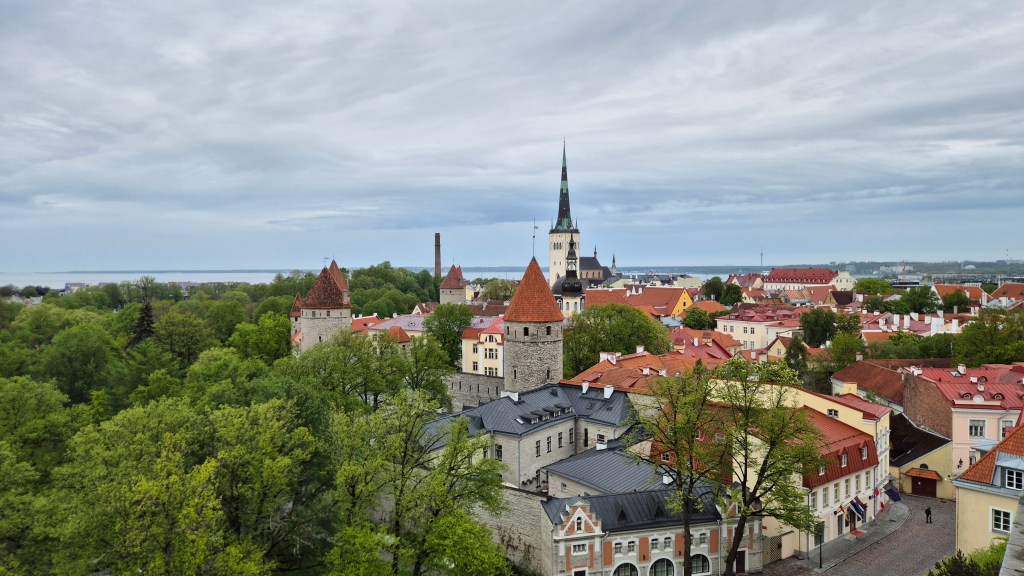
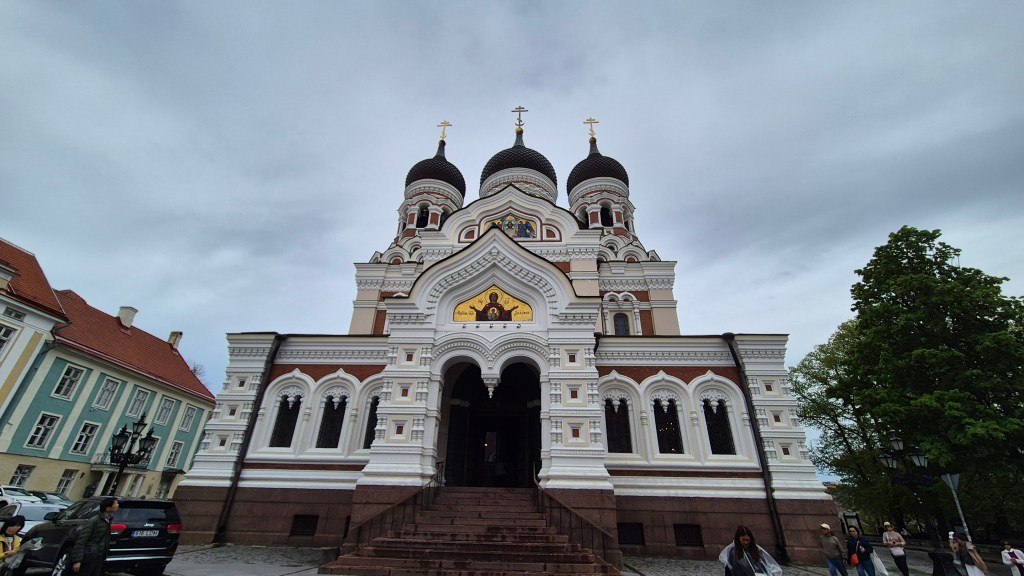
From the Danish King’s garden it was just a short walk to the Russian Orthodox Alexander Nevsky Cathedral which, as with most Orthodox churches, was absolutely beautifully decorated and worth a look inside even if only for a few minutes. Across the road from Alexander Nevsky Cathedral is Toompea Castle, now home to the Estonian parliament, and we continued passed this and through some narrow streets to the end point of the tour, the Bishop’s Garden Viewing Platform. From here, you get an excellent view out over Toompark, part of the city and the harbour. All in all the tour gave us an excellent overview of the city and its history, as well as the wider history of Estonia which was fascinating and admittedly something I didn’t know too much about.
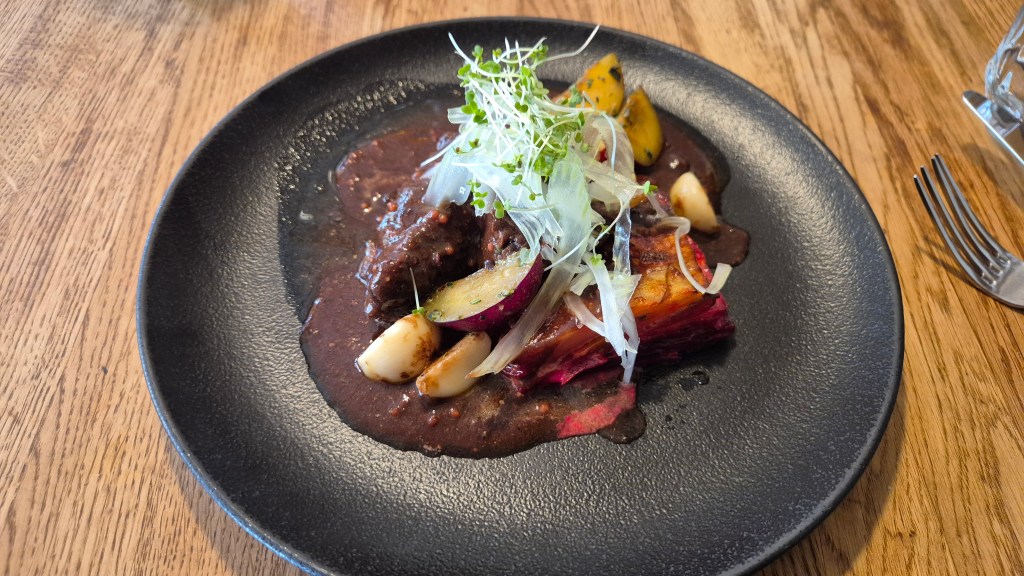
After the tour, we decided it was time to go and get a late lunch and warm up and so headed to Restaurant 16 located on Rataskeavu Plats next to a historic well we had passed on the tour. The restaurant is named Restaurant 16 because its located at 16 Rataskeavu and they decided not to give it a different name. We had some excellent house beers brewed by Óllenaut, both of which had tales behind their names that the waiter shared with us. For starters Beth went for the salmon soup, which was deliciously creamy, whilst I went for the three cheese pie which was the perfect warming food for what had been quite a cold spring day. For mains we both went for the braised roast elk which was amazing!
After our excellent meal we didn’t actually have very long left until we’d need to be heading for the ferry and so made our way into the newer part of the city to visit a supermarket and get snacks for the crossing. From the new town it was an easy direct tram back to the ferry terminal, bringing an end to our short visit to Tallinn. Whilst short, and ultimately barely scratching the surface, Tallinn is a beautiful city with a fascinating history and certainly somewhere that I’d like to visit for longer and get to learn even more about.

