
Having completed the final train journey of my Meander to Moldova, I had arrived at Chișinău’s railway station onboard an overnight sleeper service from Bucharest (read about that here). With two nights in the city, I had plenty of time to explore what is a relatively small capital city, but before I did any exploring, I needed to head into town and drop my bag off at my hotel. Whilst there is a bus stop near to the station, from my online research it seemed they didn’t accept card and, with no Moldovan Lei yet in my wallet, I booked a Bolt for the 15-minute ride to the city centre.

With my bag dropped off, my next priority was to find some caffeine and breakfast, given neither were provided onboard the sleeper. With my hotel centrally located just off the Cathedral Park, I walked the 10 minutes or so to the closest branch of Tucano Coffee, a popular local coffee chain that has three branches across the city centre. A coffee and an ‘English Breakfast cost me 250 Leu (around £11) and whilst some aspects of the breakfast were a bit unexpected for an ‘English’ breakfast (I’m looking at you kidney beans), overall, it was a delicious way to start the day. Tucano Coffee also had the advantage of having power sockets and WiFi which were particularly important as I had been charging off my power banks overnight and my phone’s data roaming plan didn’t include Moldova.
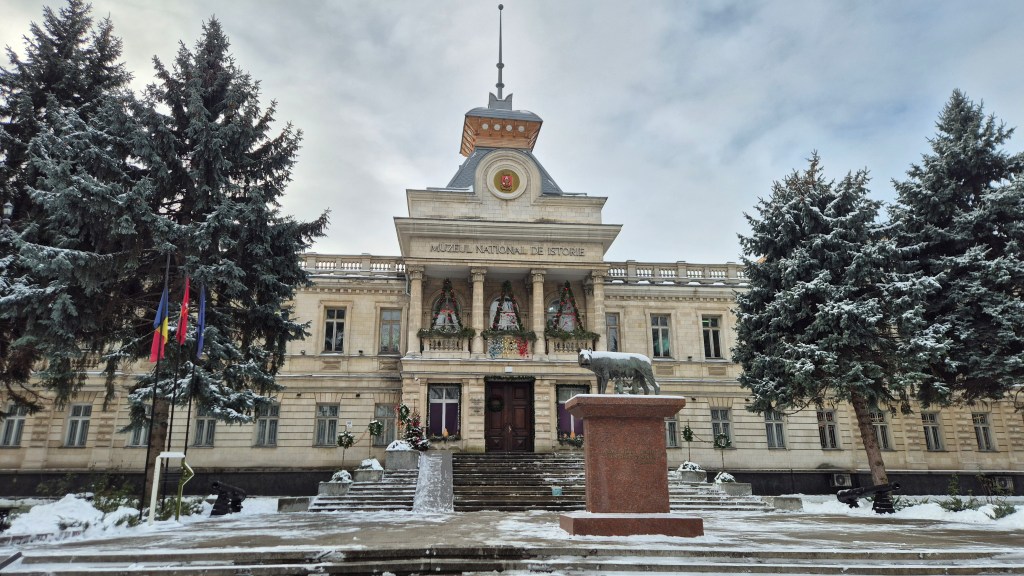
Having recharged both myself and my devices, I decided to make my way to the National History Museum of Moldova which was about a 15-minute walk from the coffee shop and just a couple of blocks from Cathedral Park. The museum had a large permanent exhibition on the 1st floor with artifacts from throughout Moldovan history, whilst the ground floor had a number of temporary exhibitions covering topics such as Moldova’s relationship with the EU; mechanical musical instruments; weapons; and royal clothing. Finally, the basement contained the Treasury and its collection of gold and silver artifacts dating from as early as the 5th century BC, and an exhibition on Soviet Moldova and the Gulags. I’ve got to say it was a very interesting museum and everything was labelled in English, although my one criticism would be there was no real ‘commentary’, just labelling, however when entry costs just 50 Leu (just over £2), it really is great value for money!
After a couple of hours of looking around the museum, it was time for a late lunch, and at the end of the block just passed the National Museum of Fine Arts, was Taifas, a restaurant serving traditional Moldovan dishes. The waiter who looked after me was great, suggesting the best dishes to get a taste for the cuisine, and so I started with a chicken noodle soup, followed by cabbage and grape leaves rice, diced meat, carrots and onion. To finish off what was a very enjoyable meal I had stuffed prunes with ice cream, with the meal accompanied by a glass of Moldovan wine, something I would learn later is an important product of the country. I’d certainly recommend Taifas if you’re ever in Chișinău as it was an excellent meal. With a full stomach and a lack of sleep, I decided it was time to head back to my hotel, get checked in, and call it a day given I had plenty of time to see more of the city the following day.
After a very good night’s sleep, I was raring to go the following morning and was booked onto a walking tour to see some more of Chișinău. Our guide was Anastasia, a Chișinău local, who as an independent guide could only be booked via Guruwalk. I had originally been booked on the tour the previous day, however due to the train delay we had had a text conversation and agreed to postpone by a day. The starting point for the tour was outside the Organ Hall, a building that was once a bank but is now a music venue. The building had previously had a statue on its roof, however a previous mayor of Chișinău has wanted the statue’s genitalia removed and ended up damaging the statue so much it had to be removed entirely. Next door to the Organ Hall is a Square and the National Theatre, both named after Mihai Eminescu, a famous Moldovan poet.

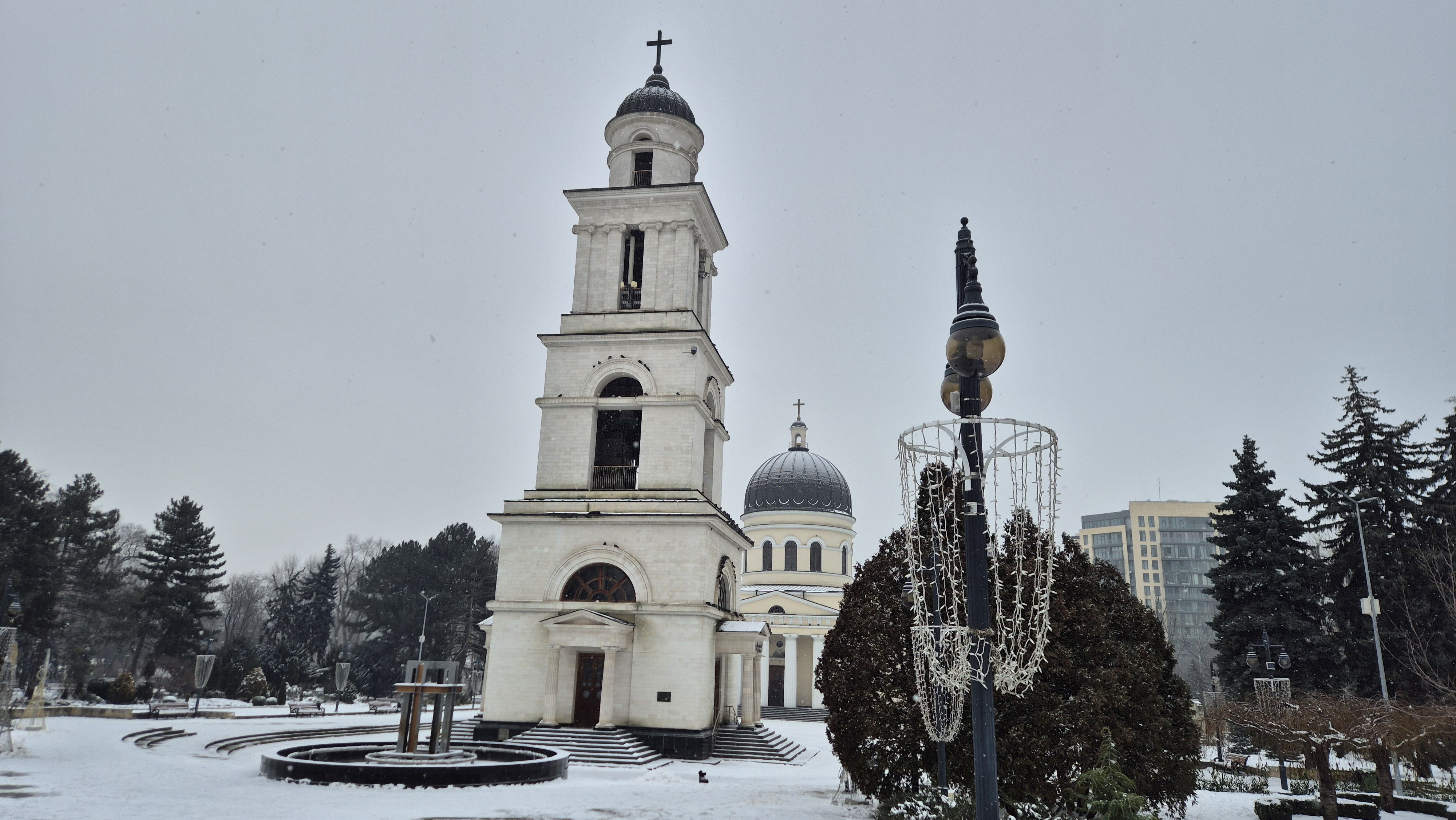
Walking back to Cathedral Square, we saw the Government House of Moldova and the Great National Assembly Square, the latter host to many demonstrations and celebrations such as the city’s main Christmas market and Moldova’s annual Wine Day. Our tour then took us through the Triumphal Arch and into Cathedral Park, to the Metropolitan Cathedral of Christ’s Nativity and its stand-alone bell tower. The current bell tower was constructed in the late 1990s, with the original bell tower having been destroyed during the communist era. However, the original tower hadn’t been large enough to house the largest bell, anyway, leading to the Triumphal Arch being built to house it instead. We took a few minutes to look inside the cathedral which as would be expected for an Orthodox church, was stunningly decorated.
Opposite the western corner of the Cathedral Square is the Stephen the Great Monument which sits in front of the main entrance to Stephen the Great Park. Stephen the Great was Prince of Moldova in the latter half of the 15th century and managed to maintain Moldovan independence from its more powerful neighbours such as the Ottoman Empire, Poland and Hungary. This, along with his aptitude for nation-building and protecting of the Christian faith made him a national hero in Moldova, as well as being canonised by the Romanian Orthodox Church. Inside the park, there is also a statue of Alexander Pushkin, the Russian poet, playwright and novelist, along with two lines of busts. One of these lines of busts are of those poets and authors allowed during the communist regime, whilst the second line is a later addition of poets and authors banned by the regime.
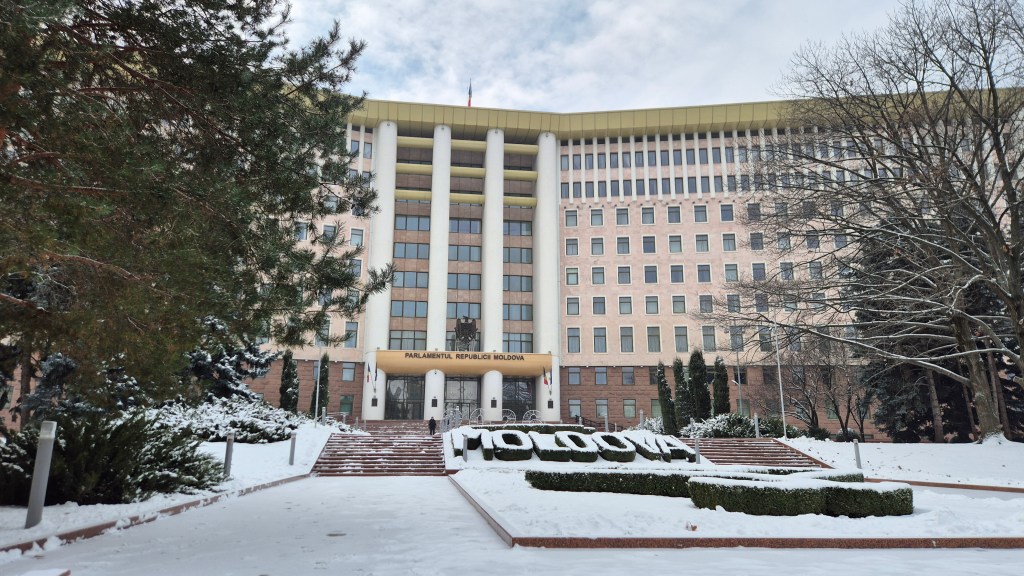
After having a quick look at the tree planed by Yuri Gugarin as part of his tour of the Soviet states following his trip to space, we headed out of the park to Moldova’s parliament building. Designed to look like an open book, this building ironically was previously the HQ of the Communist Party and is opposite the building of the Supreme Soviet of the Moldavian SSR, which is now the presidential palace. Down the road from the parliament and presidential palace is a monument to the Moldovan Wine industry and another beautiful orthodox church by the name of “Transfiguration of the Savior”.
Heading to the rear of Stephen the Great Park, we walked along 31 August 1989 street to the National History Museum which I had visited the day before. The grand museum building was finished in the late 1980s as a replacement for the previous building which had been severely damaged by an earthquake in 1977. We did also cover some history that I hadn’t picked up in the museum and that was of the history of the self-governing region of Transdinistra. This breakaway state is seen internationally as part of Moldova but has self-governed since the breakup of the USSR in 1991 and is known as being a bit of a time capsule into the USSR. Next door to the National History Museum is the Fine Art Museum which was previously the Communist Party HQ before they had moved to what is now the parliament building, and the main part of this building dates from the Russian Empire.
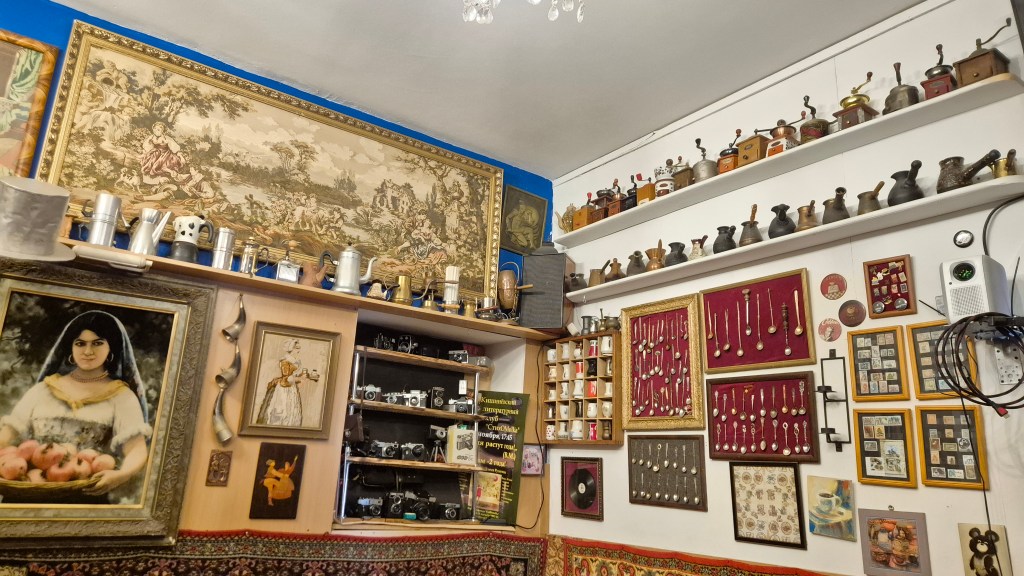
The last stop on the walking tour was CoffeeMolka, a rather interesting and strange coffee shop come museum that serves traditional Ottoman inspired coffee, accompanied by a shot of liquor in a room with the walls covered in old coffee pots and cameras. It also had a stage where they were rehearsing a puppet show, so it seems at times that they have performances, just adding to the odd character of the place. Finishing my coffee, I thanked Anastasia and made my way back towards Cathedral Square to find some lunch settling on La Plăcinte, a cafeteria style restaurant that serves traditional home-cooked Moldovan food at cheap prices. I opted for meat mămăligă balls to start which are essentially stuffed balls of polenta, followed by a main course of rabbit with vegetables in a white sauce. These were two very different dishes but both were great, with the rabbit especially being cooked just right. For dessert I went for mule moldovenesti which is a type of traditional pancake. All in all, the three course meal along with a coke cost me 345 Leu or around £15. Certainly not a price you’d be able to pay for decent food back at home!
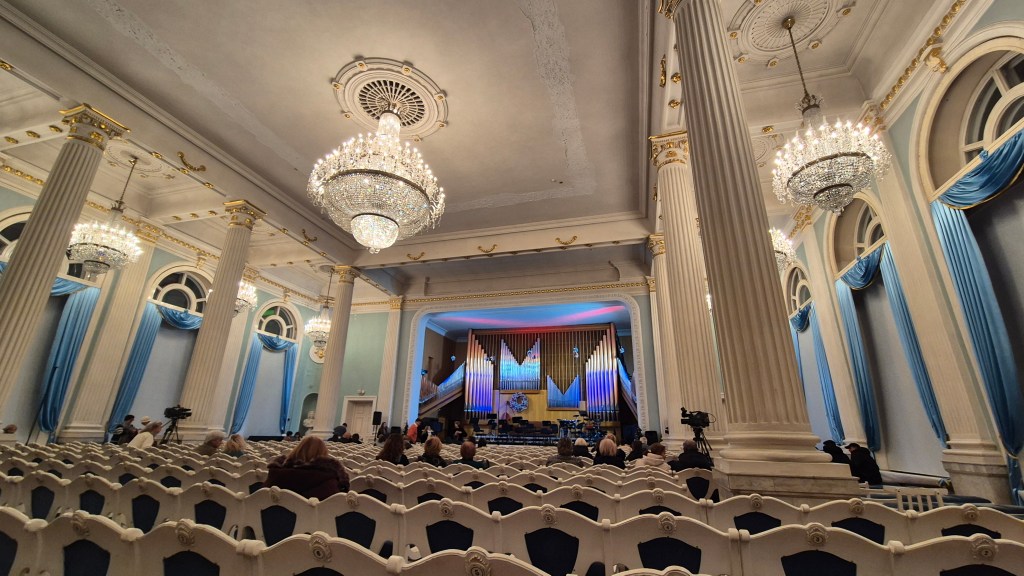
After a decent length walking tour and a long time outside in the snow, I decided to head back to the hotel to chill for a bit before heading back out that evening to see a performance at the Organ Hall. Our guide had recommended the Concertino Accordion Band when we were at the Organ Hall earlier in the day and with tickets only costing 150 Leu (just under £7), I thought I’d try something a bit different and check them out. Inside the Organ Hall, the main auditorium is a grand open space and the stage, as the name suggests, has a huge pipe organ. The Concertino Accordion Band seemed to be very popular in Moldova, and I certainly enjoyed their mix of classical and traditional music. It was an enjoyable evening, and at less than £7, well worth the experience.
With a relatively early flight the following morning meaning I’d be getting up and heading straight to the airport, I had time for one final meal in Chișinău before heading to bed. Deciding on another destination recommended by our guide, I headed to Tap Room by Litra where I had a burger and a pint of Weissbier before heading back to the hotel to get some sleep. When I started planning my trip to Chișinău, I didn’t know what to expect from the Moldovan capital, but it certainly exceeded expectations. This chilled, compact capital city is a great place to explore and had plenty to do, with my explorations of the centre only scratching the surface. With wine tours in the summer, salt mines to visit and a country within a country to explore, Moldova is certainly a hidden gem at the eastern edge of Europe.

