
Our base for the second half of our holiday in Germany was the Lower Saxony town of Hildesheim and whilst the town had a good bit of history and culture of its own to explore (read about that here), its location also provided a great opportunity for some easy day trips elsewhere. One day, whilst I headed off to Hamburg (read about that in a couple of weeks), the rest of the group headed to the town of Wolfenbüttle which is known for having the largest collection of timber framed buildings in Germany and is somewhere I’d like to check out in future based on their reviews. However, we also did two day trips as a full group, one to the nearby city of Baunschweig and another to the town of Wernigerode in neighbouring Saxony-Anhalt.
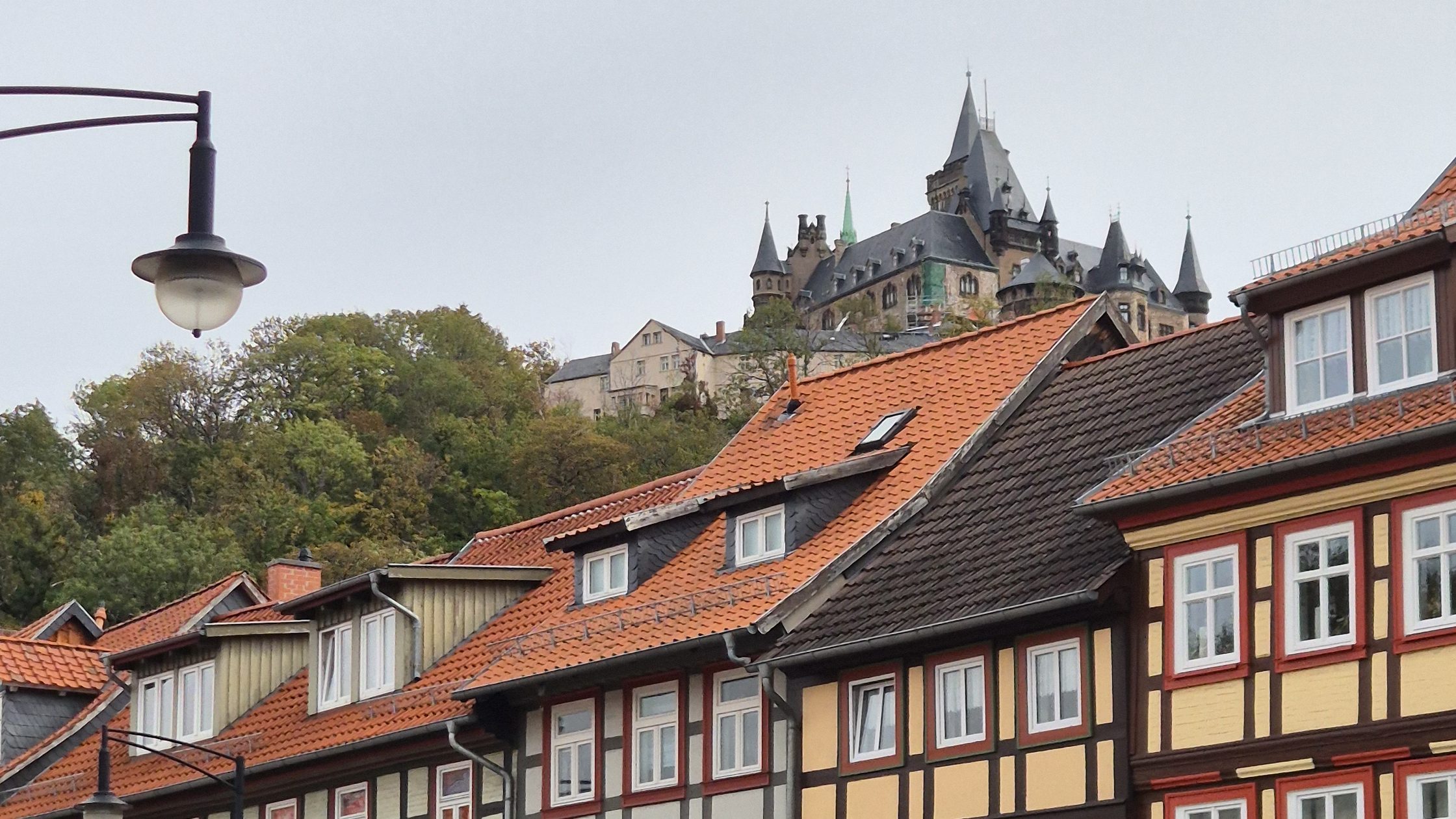
Located on the northern edge of the Nationalpark Harz (Harz Mountains National Park), the town of Wernigerode was the capital of the historic counties of Wernigerode and Stolberg-Wernigerode and following World War 2 ended up being a border town within the German Democratic Republic, only a few miles from the Iron Curtain. Our arrival into the town came by road, with us having hired a car for a couple of days, although the town is served by both Deutsche Bahn regional services and the narrow gauge Harzer Schmalspurbahnen which runs three lines through the national park. Of course, our first stop in the town was to find somewhere for a coffee and to get out bearings, with Das Lumaz being our coffee shop of choice on Burgstaße. From here it was a short wander through a couple of beautiful streets to reach the Marktplatz and Wernigerode Rathaus, the latter of which is currently undergoing restoration.
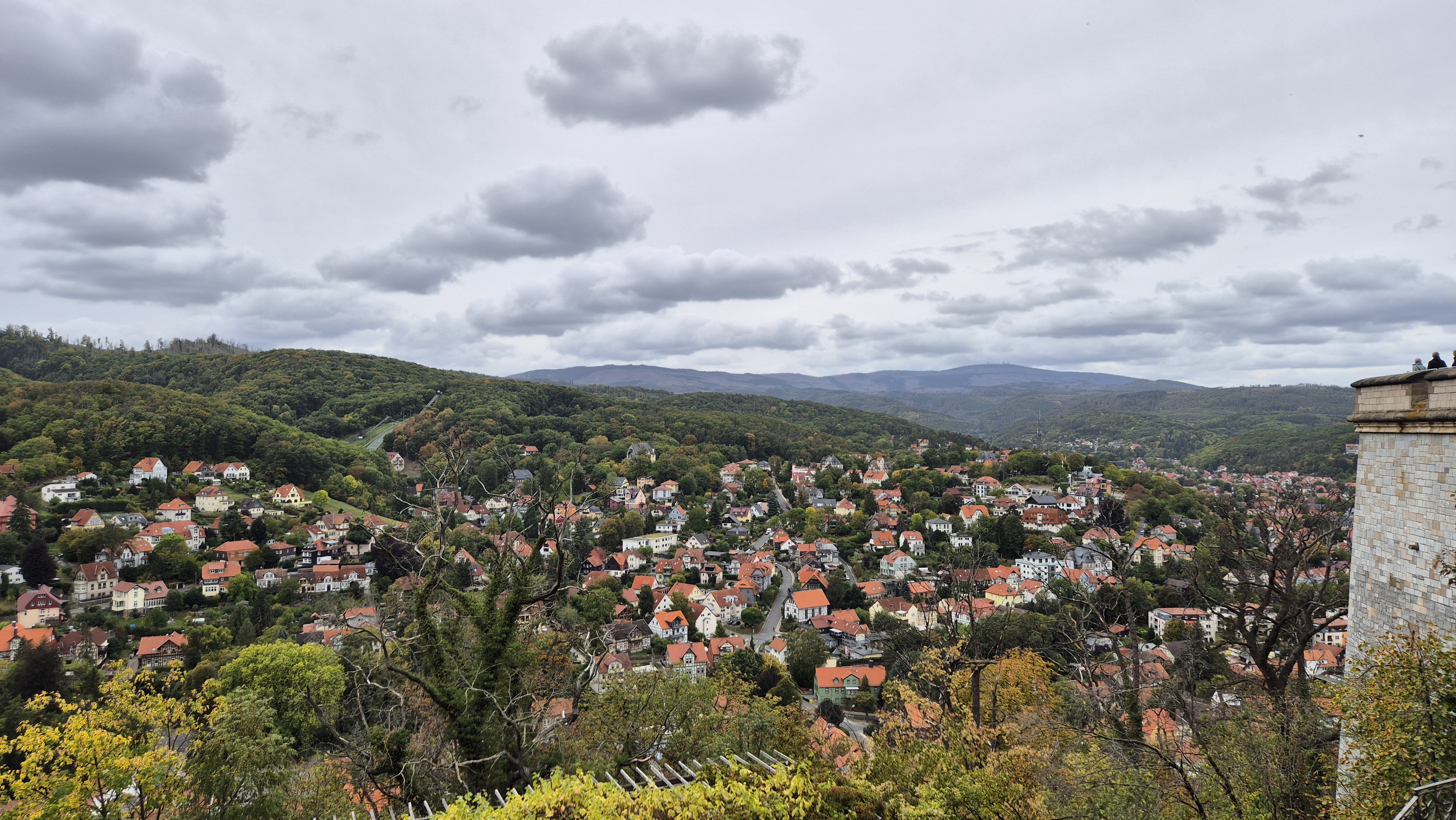
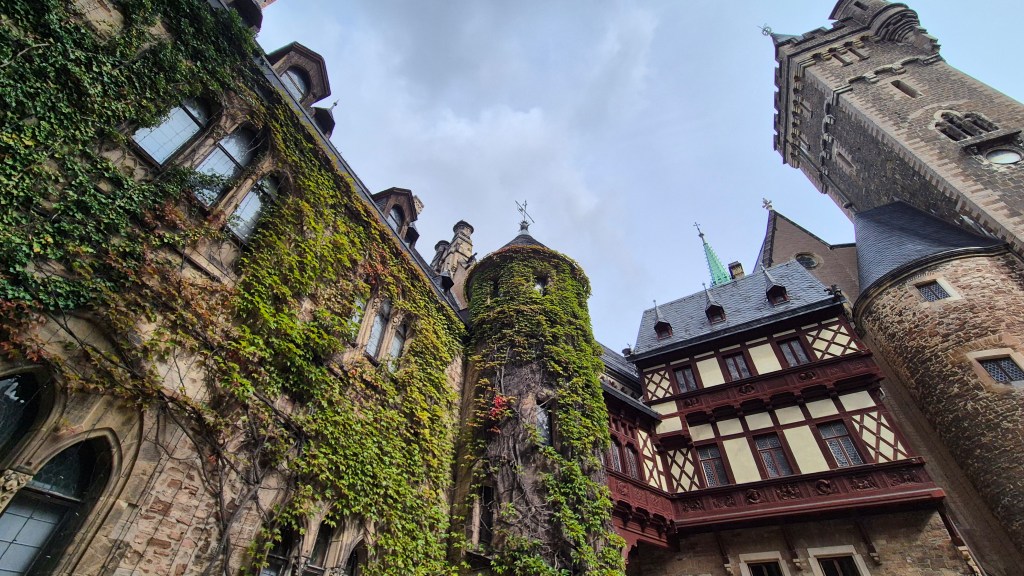
From the Martkplatz we jumped on board the Bimmelbahn (road train) to take us up Wernigerode’s castle which sits high above the town in the foothills of the Harz mountains. The road train is reasonably priced at €8 for a return journey and is a much more pleasant way of reaching the castle than climbing the hill on foot. The castle itself costs €9 to visit which turned out to be excellent value for money as it includes two circular self-guided tours of the castle covering the vast majority of the ground and first floors of the structure which include many of the grand state rooms and tell the story of the Counts of Wernigerode. If you don’t want to spend the €9 to explore the castle, the terrace area is free to explore and has stunning views out over the town and the Harz Mountains.
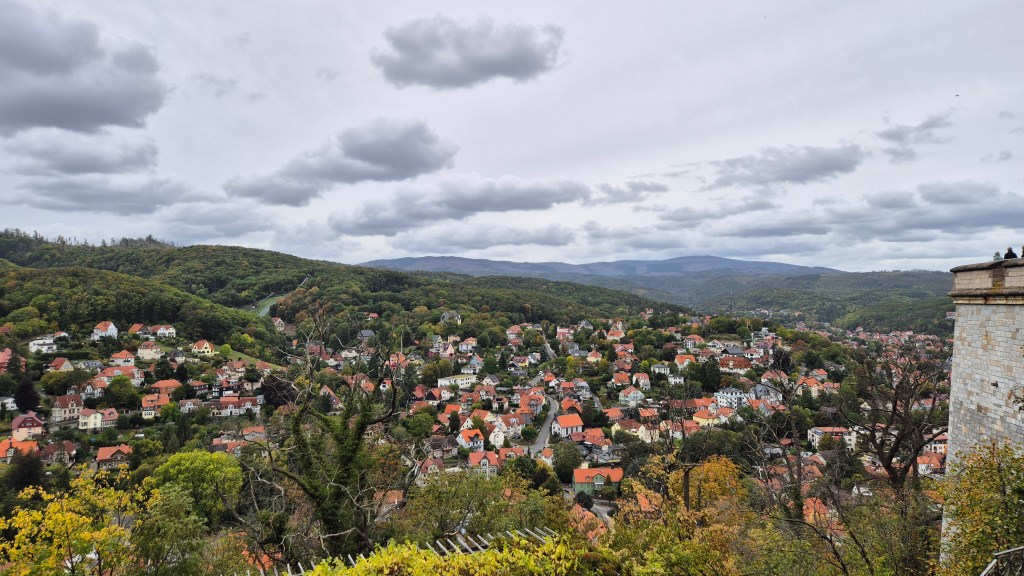
After spending a couple of hours exploring the castle we decided it was time for an early lunch and so headed for the castle restaurant and, despite the cold temperatures, decided to sit outside on the terrace so we could enjoy the views. Thankfully some blankets and a heat lamp kept us warm whilst we ate out food, which was pretty tasty and I thoroughly enjoyed the Blueberry Schnitzel that I had chosen. Obviously, you pay a bit of a premium compared to normal restaurants given the location, but it was all still pretty reasonably priced. After lunch it was time to head back into town and unfortunately our timing on this occasion wasn’t great as we ended up waiting for the Bimmelbahn with a large school group which meant we couldn’t all get seats. The rest of us enjoyed a nice 15-minute walk down the hill back into town and we ended up beating the train by about 20 seconds.
Our final stop in Wernigerode was Wiecker Café am Markt situated, as the name suggests, in the Marktplatz. This café has an amazing selection of cakes to accompany your drinks and if you’re feeling really decadent serves proper melted chocolate hot chocolates (which we all went for). Cake wise I got a mousse like mango cake which was just indescribably good and very light and I think we were all very happy with our choices. From the Marktplatz we had a final wander around the streets of Wernigerode to see some more of the town’s beautiful old buildings, including a couple of quick stops to get some souvenirs, before it was time to head back to the car and make the journey back west to Hildesheim.
Another place we visited from our base in Hildesheim was the city of Braunschweig (Brunswick) located 45km to the east and part of the second largest urban centre in Lower Saxony (after Hannover). The city is really easy to get to with plenty of train connections due to its location on the Hannover to Berlin high-speed line as well as its role as a regional hub for the south-west corner of Lower Saxony. From Hildesheim it was a direct 30-minute regional train, and so we decided to make the most of this connection and headed to the city by train rather than car. Whilst the Hauptbahnhof is slightly to the south of the city centre, there are good tram and bus connections, or it’s a 10–15-minute walk to the centre.
Unfortunately, Braunschweig is another city that was heavily bombed towards the end of World War 2 and large parts of the city were rebuilt using the ‘functional’ architecture of the 1950s and 60s. There are however some historic buildings in the city and we initially took a wander through part of the city centre close to the Rathaus, Dankwarderode Castle and Braunsweig Cathedral, with the Castle actually being a late 19th century reconstruction whilst parts of the Cathedral date from the late 12th century. Unfortunately, whilst the Castle is home to a museum it was closed for renovation during our visit, and so our wander of the city continued, although we did get to see The Brunswick Column nearby which celebrates 2000 years of Christianity through the depiction of various scenes.
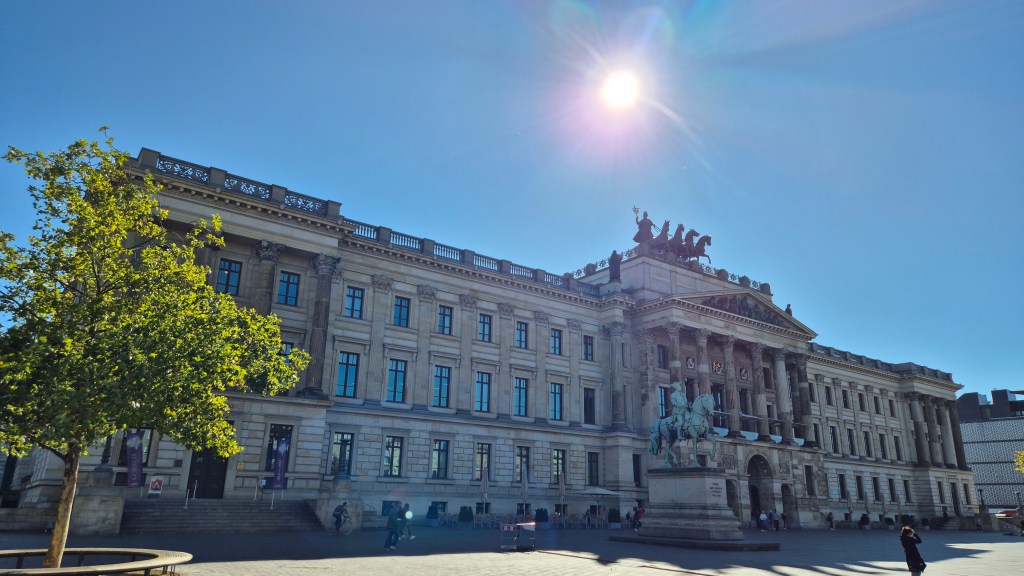
From the Castle and Cathedral is was a short walk to Schloßplatz where the city’s former Residenzschloss is located. Home to the Brunswick dukes, Brunswick Palace was originally constructed in the early 18th century however was destroyed by a fire in 1830 with a new palace completed in 1841. The second palace was heavily damaged during the WW2 bombing raids and was eventually demolished in 1960, with the present day façade being built in the early 2000s to disguise a large shopping centre built on the land. Despite the vast majority of the façade just being a disguise, there is a small museum at one end of the building where 8 rooms have been reconstructed to depict what the interior of the palace would have looked out. Entry to this museum costs just €5 and took us around 45 minutes to look around with the English printouts of what had been an audio guide.
After our morning explorations we headed back into the city centre for lunch, deciding on Wirsthaus am Kohlmarkt located close to the former Coal Market and under the Eulenspiegel Glockenspiel from which a clown/fool in a green hat appears as the melody plays. Disappointing rather than be seated in the main part of the restaurant that is atleast dressed as a traditional tavern, we ended up in a more modern extension, however this disappointment was soon made up for by the excellent food. I went for a dish that translated as the “Bavarian Slaughterfest” which seemed to essentially be a mixed grill of traditional Bavarian meats, and it was delicious! There was so much that I ended up leaving some, which people who know me will be shocked by.
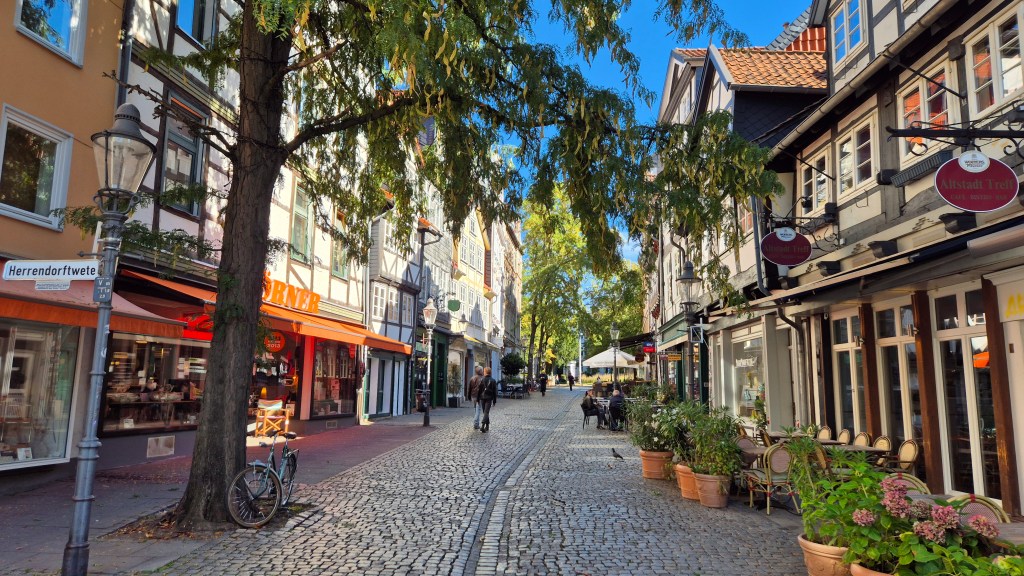
With a couple of hours until the train we were intending to catch back to Hildesheim, after lunch we headed to the City of Brunswick Municipal Museum which is located a bit out of the centre close to the river Oker. On our way we were able to head through the streets of the Altstadt, an area that managed to survive the WW2 bombings and contains a large collection of beautiful old buildings. At the museum, entry once again cost just €5 which, in addition to the permanent exhibits, included entry to a special exhibition on the works of artist Paul Eliasberg. Whilst this personally didn’t interest me, it was once again some excellent value for money. The permanent exhibition included various historical instruments, as well as an interesting display on the African/American collection and the provenance of artifacts. There were also collections of china and porcelain; pewter and brass; and lacquerware produced in Braunschweig along with lots of artifacts from the travels of Carlos Götting, a Braunschweig native.
As with Hildesheim, I found Braunschweig an interesting city to visit as a day trip, however I don’t think there would be much more than a day’s worth of things to do in the city. There are a few interesting old buildings or reconstructions, however as indicated previously much of the city is ‘functional’ architecture from its post-war rebuild so it isn’t a city for wandering and looking at beautiful buildings. On the other hand Wernigerode is a beautiful historic town and its location on the edge of the Harz Mountains would make it a great base for exploring the National Park and the lines of the Harzer Schmalspurbahnen narrow gauge railway. We are certainly considering planning a holiday in the area to explore this lesser-known part of Germany.

