
Having travelled from Dresden via Berlin by way of DB Intercity and ICE services, the Lower-Saxony town of Hildesheim was our base for the second part of our holiday. Located to the south-east of Hannover, Hildesheim was founded more than 1200 years ago, however, was unfortunately heavily bombed during the closing months of World War 2 with much of the city being destroyed. Following the end of the war, the city was rebuilt, with key buildings being restored to their historical conditional and as a result Hildesheim has been home to a UNESCO World Heritage site since 1985.
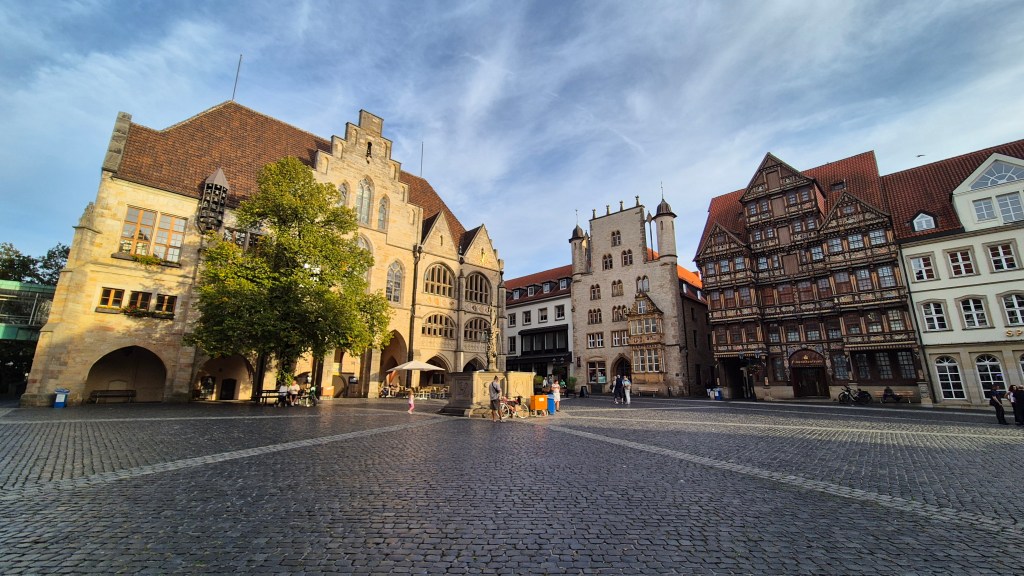
Having got a taxi from the station to our accommodation, our first real feel for the town was our first evening when Beth and I took the easy 20-minute walk into town to find somewhere to have dinner. Whilst the city may contain a UNESCO World Heritage site, much of the city centre is of the 1960s ‘functional’ architectural style as, like a lot of German cities, Hildesheim was heavily bombed by the Allies during 1945. The area around the Martkplatz has however had some of the ‘old’ buildings reconstructed (similar to Dresden but on a much smaller scale) and we ended up having Dinner at Ka 7 restaurant in what was the Knochenhaueramtshaus (Butcher’s Guild Hall). The food here was excellent, with us both opting for the slow cooked pork with fried potatoes, however the service was a bit slow, so don’t head here if you’re in a rush.
Our second day in the city, we decided to get a bus into town which cost us €11.30 for a day which covered up to five people (from memory I think a single ticket was €3 each) and took around 10 minutes on a slightly circuitous route. The Martkplatz which had been relatively quiet the previous night had much more of a buzz about it as it was market day and so we had a wander around the stalls before paying a quick visit to tourist information and then grabbing some Kaffee und Kuchen at Paximo on the main street. From Marktplatz we made our way towards the western side of the city centre, wandering past Andreaskirche (St. Andrew’s Church) and Kaiserhausfassade (Imperial House facade) on our way to St. Michael’s Church, one of two that form the UNESCO World Heritage site.
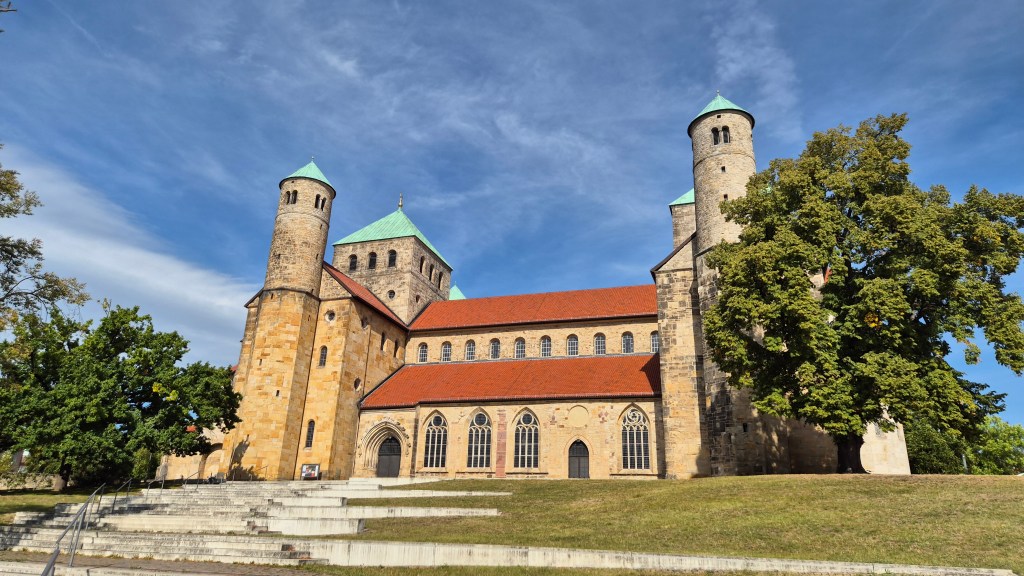
Consecrated in 1022, St. Michael’s is of the early-Romanesque era, and it is this architecture that sees it being part of the UNESCO World Heritage site. The timing of our arrival was abysmal, as we arrived at the church just as a small prayer service was starting and we had that very awkward whispered conversation with one of the volunteers whilst trying to blend into a wall. However, this turned out to be a bit of a blessing as, although I understood 0% of the German service, it did give us the opportunity to hear the organ being played and the stunning acoustics of the church.
Once the service finished, we were free to wander and look around the church, with highlights being the beautiful ceiling and the crypt that remains a Catholic place of worship despite the rest of the church becoming protestant at the reformation. The church was heavily damaged during an air raid in March 1945, however, was reconstructed by the West German government between 1950 and 1957. One of the main features is the ceiling of the church’s nave which depicts the Tree of Jesse, the ancestral line of Jesus, which was originally created in the early 12th century using 1,300 oak planks, and was restored in 2010.
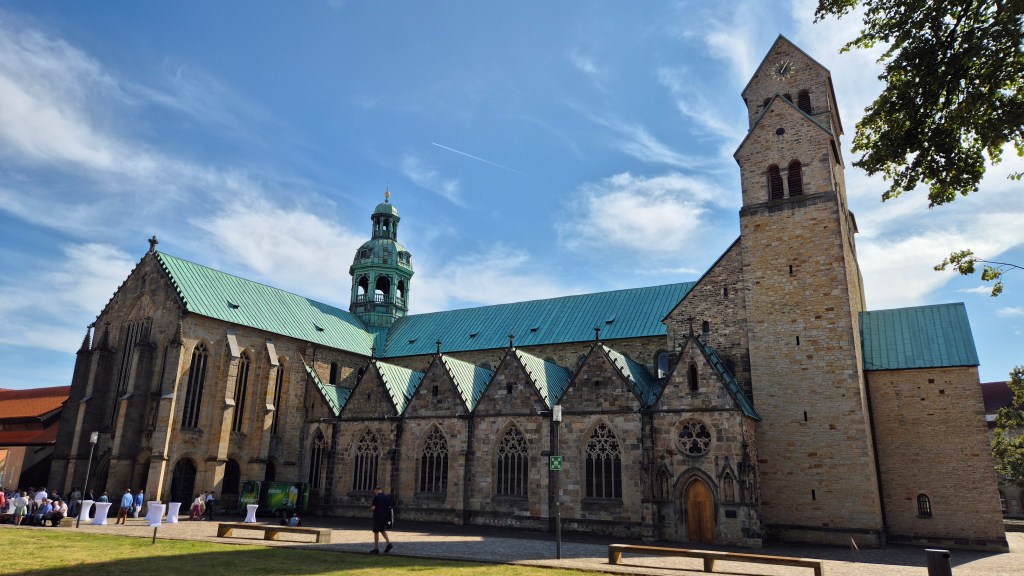
Leaving St. Michael’s, we took the five-minute walk to the other half of the UNESCO World Heritage site, St. Mary’s Cathedral, the seat of the Roman Catholic diocese of Hildesheim and home to a thousand-year-old rose in its cloisters. Interestingly, despite this church being Roman Catholic, the interior is much plainer than its nearby Protestant counterpart, although there are some impressive elements such as the chandelier. Another famous historical feature of church is the Bernward Doors, which feature bronze reliefs of scenes from the Bible. These were originally cast in the early 11th century for St. Michael’s but were moved shortly after to St. Mary’s, although in doing the additional research for this blog, its seems that when this move happened, if it did at all, is a matter of debate amongst researchers.
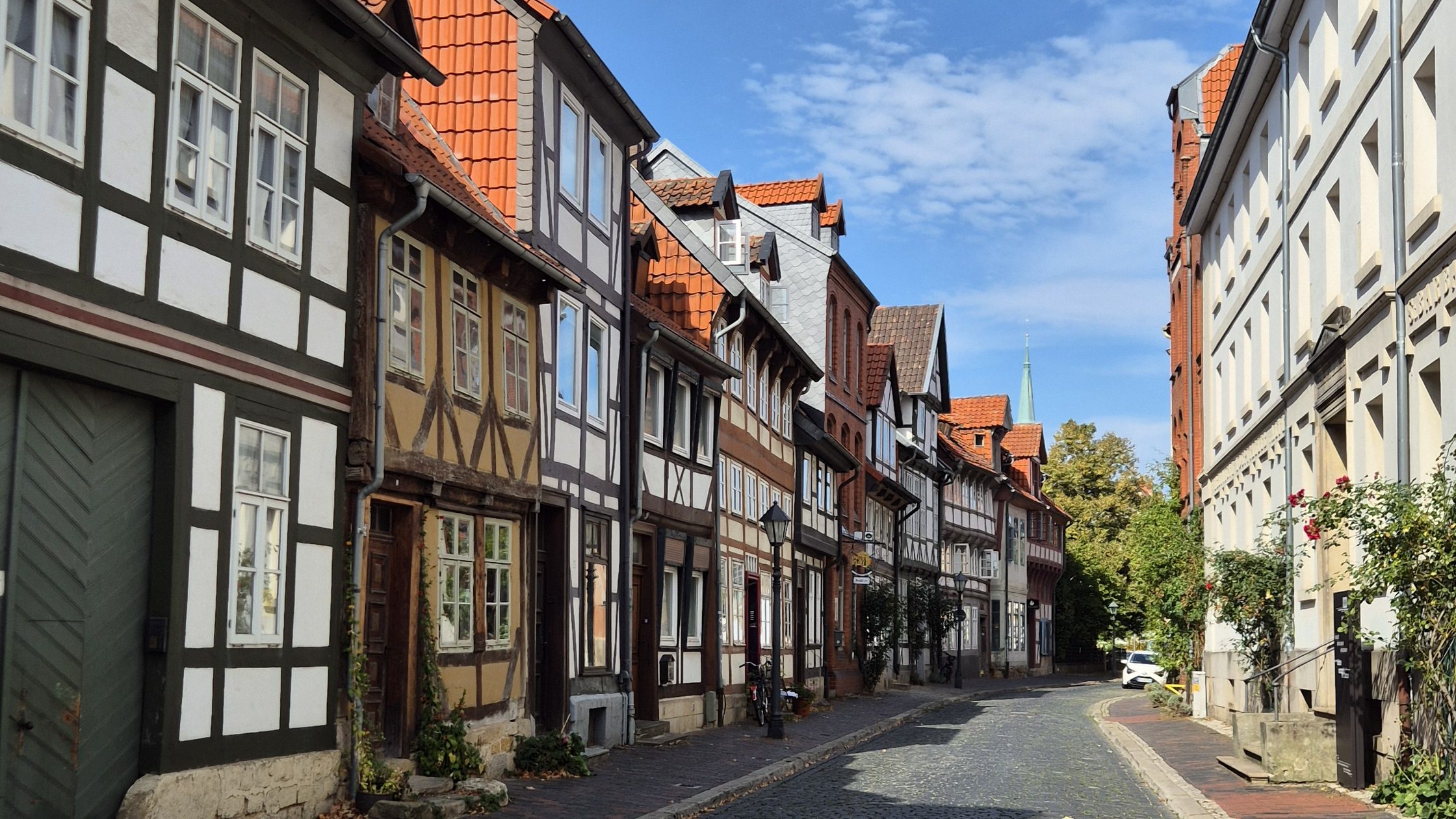
Having explored the churches that form the UNESCO Worl Heritage site, we decided to wander around the city some more, heading down the narrow, walled alley Stinekenpforte (named after the Stineken Gate the cathedral complex that used stand on the site) and along Hinterer Brühl, a historic street of 16th century half-timbered houses that somehow survived the Allied air raids towards the end of the Second World War. We also passed St. Godehard’s church which, whilst not part of the UNESCO World Heritage site, is still an important church within Hildesheim and Germany as a key example of Romanesque architecture and also as its role as the temporary seat of the bishop of Hildesheim during the rebuilding and later restoration of St. Mary’s Cathedral.
Having spent the morning exploring, it was time for a late lunch and after heading through the Neues Tor (New Tower) and along the old walls, we stopped at the Hildesheimer Biergarten Old Path for a very enjoyable meal outside in the sun. I think all of us went for some variation of schnitzel with fries, and it was all washed down with some local beers, whilst I also finished my meal off with a traditional salted pretzel. After lunch it was back into town via the Kehrwiederturm and, given our high step count from the morning’s explorations, a bus back to our accommodation. Ultimately Hildesheim is an interesting town to explore and its churches (both those forming the UNESCO World Heritage site and others) are definitely worth a visit. However, the town is not huge and away from the key historical buildings is largely a 1960s concrete jungle with not much for tourists. As such, I’d certainly recommend Hildesheim for a day trip from Hannover, however it is probably not worth visiting for longer than that.
 Flights & Times
One thought on “Hildesheim – The Town With a 1,000 Year Old Rosebush”