
After a wintery couple of days to start our mini-break in North Yorkshire, day 3 dawned much clearer and warmer, and we were optimistic for a less dramatic attempt at reaching Whitby than the day before. We had decided that rather than risk train cancellations again that we would drive directly to Whitby, which would also allow to stop off at other places on the way back if we wanted. If you want to check out what we got up to during the first half of our break in North Yorkshire, you can find that blog here.
The drive to Whitby was straightforward, with a quick run along the A170 to Pickering before taking the A169 across the moors to Whitby. Whilst there was still snow covering the moor itself, the roads were in much better condition and so the drive was much easier than the B roads to Battersby the previous day. After parking up on the Abbey side of the river, we took a slow wander across Whitby Bridge and along the harbourside to the end of the West Pier. Unfortunately, whilst the weather had improved compared to the previous couple of days, it was still quite windy resulting in the pier being closed off for safety reasons as the waves were breaking over the far end of it.
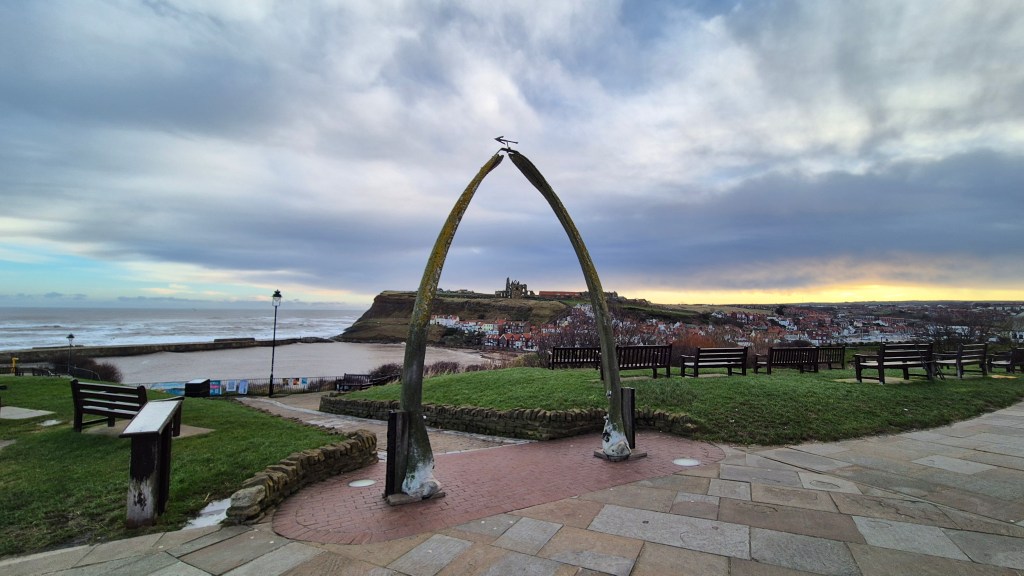
Just up the hill from the West Pier is Whitby’s famous Whalebone Arch, originally installed in 1853 to recognise the importance of the Whaling industry to the town. Whilst Whitby’s fishing fleet no longer participates in the whaling industry, the arch remains as a key part of the town’s history and is in fact now the third to have stood on the spot. The current arch was installed in 2003 and came from a Bowhead whale killed legally by native Alaskan Inuits. Close to the Whalebone Arch is a memorial to Captain Cook, the famous explorer, cartographer and naval officer who was the first European to circumnavigate New Zealand’s main islands. Cook grew up in a village near Middlesborough and started his sailing career in Whitby, as an apprentice onboard the colliers moving coal between the north-east and London.
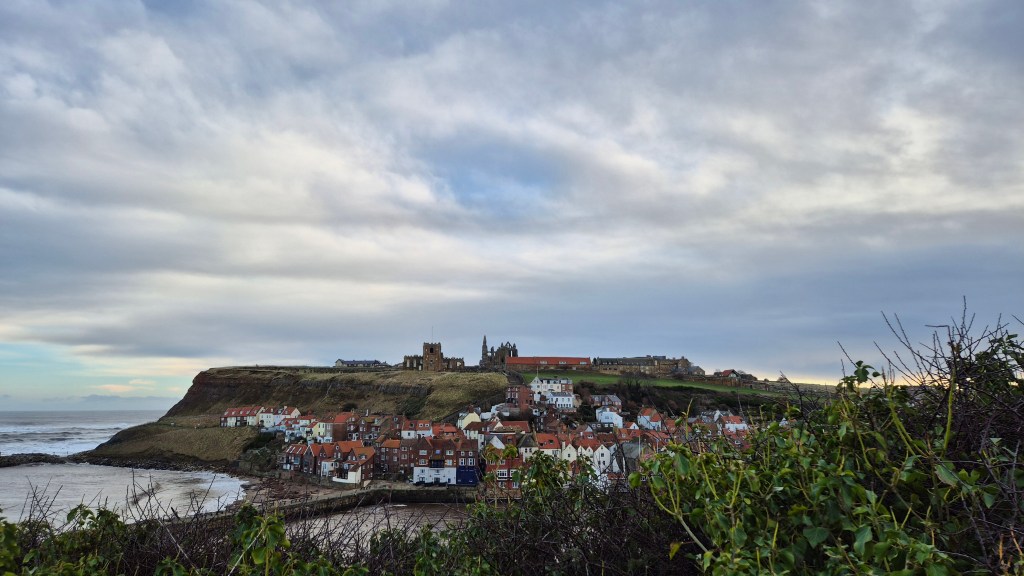
From the Whalebone Arch, if you continue along East Terrace and cross the Khyber Pass (the road connecting the harbour front and the West Cliffs is named after the Afghan pass) you can find Bram Stoker’s bench. The plaque on this bench commemorates the view of Whitby that the author saw which inspired the world-famous Dracula with it and the bench being installed on the 68th anniversary of his death in 1980. Whilst the climb up the Khyber Pass to the West Cliffs can seem a bit daunting, it is definitely worth it for the views it provides over the town and Abbey, and you can certainly see where Bram Stoker got his inspiration!
Heading back down to the harbour front, we had hoped to pay a visit to the RNLI museum however unfortunately, with us visiting in the off season it was closed. Deciding it was time for a break and a warm up, we headed to Hopes and Beans café, close to Whitby Bridge, to grab a hot drink and some cake and were able to find a table by the front window so we could watch the world go by. Having warmed up a bit, we headed to one of the few ‘tourist’ things that was open during the off-season, the Marine Discovery Centre and Lobster Hatchery, which is located on the harbour front about halfway between the bridge and the west pier.
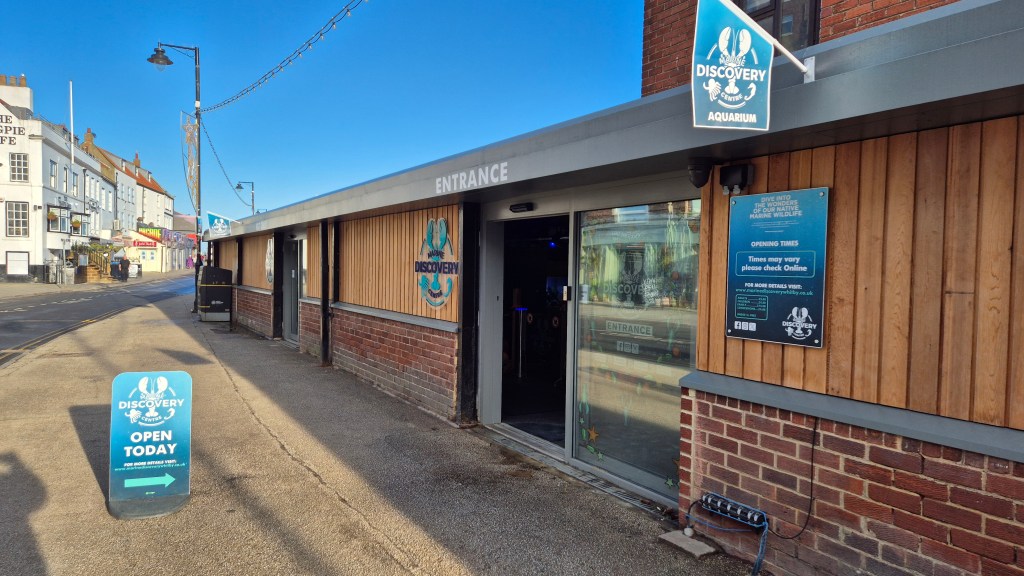
The Marine Discovery Centre is essentially a small aquarium but focuses more on the education aspect than some major aquariums might, whilst the Lobster Hatchery is in its third year and is working its way up to releasing 100,000 juvenile lobsters into the sea each year to help support a sustainable lobster catching industry. Whilst the Lobster Hatchery is just a few tanks at one end of the building, we spent ages talking to one of the very knowledgeable members of staff learning about how the process works. Entry to the Marine Discovery Centre and Lobster Hatchery costs just £6 per adult (£4.75 for Children) and I would say is definitely worth a visit, especially at that price.
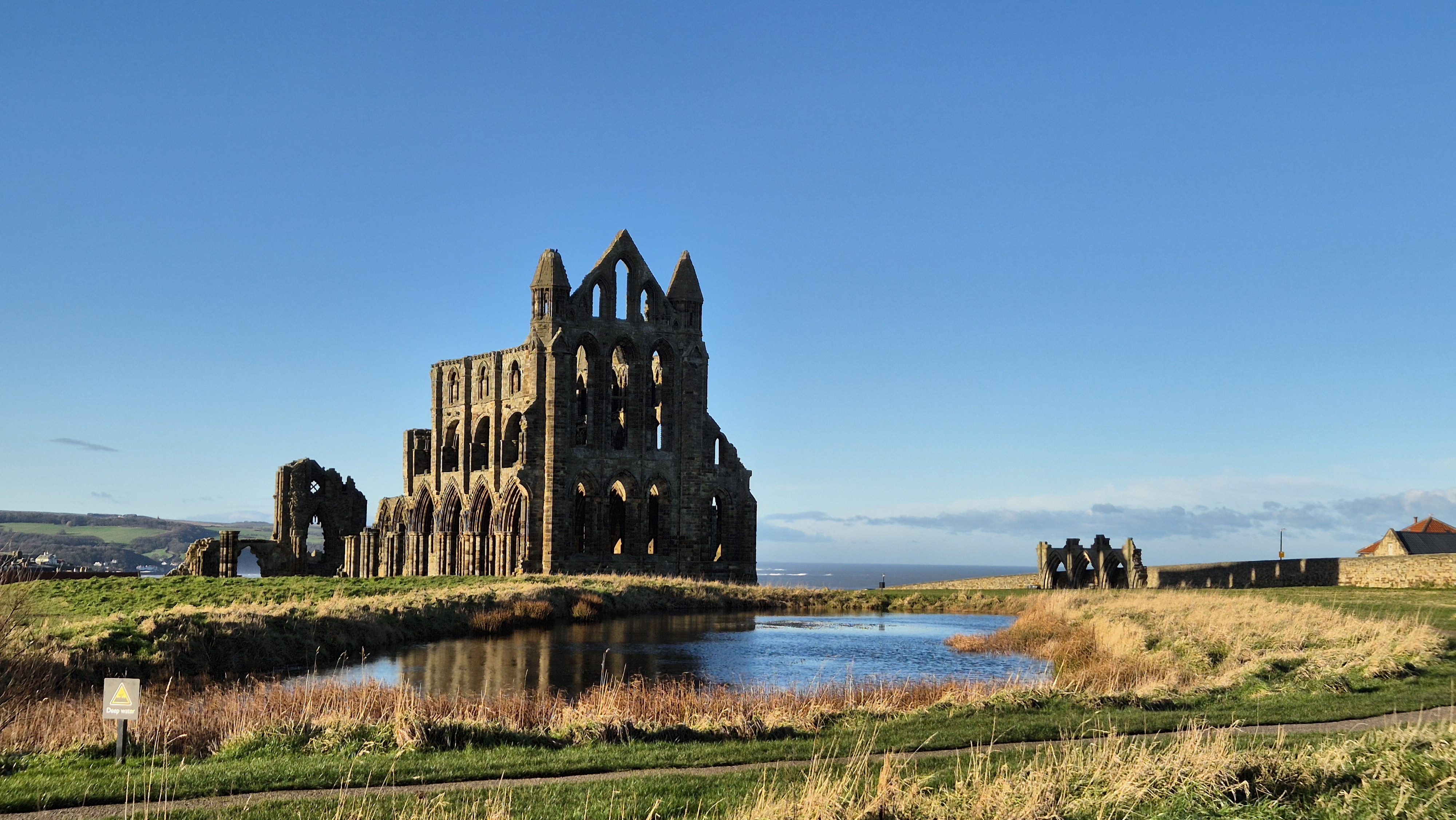
Having explored Whitby town centre and harbour side, it was time to head up to the Abbey and for this we decided to cheat and rather than climb the 199 steps, moved the car to the Abbey car park. Whether it was because it was the off-season or just because the machine was broken, I’m not sure, but parking at the Abbey car park was free, however does usually charge, so make sure you double check before ending up with a fine. During the winter months Whitby Abbey is closed on Mondays and Tuesdays, and our visit unfortunately fell on a Tuesday so we were unable to go into the Abbey grounds themselves, however we decided to make the most of it and walk the circuit round the outside to enjoy the fresh air and great views.
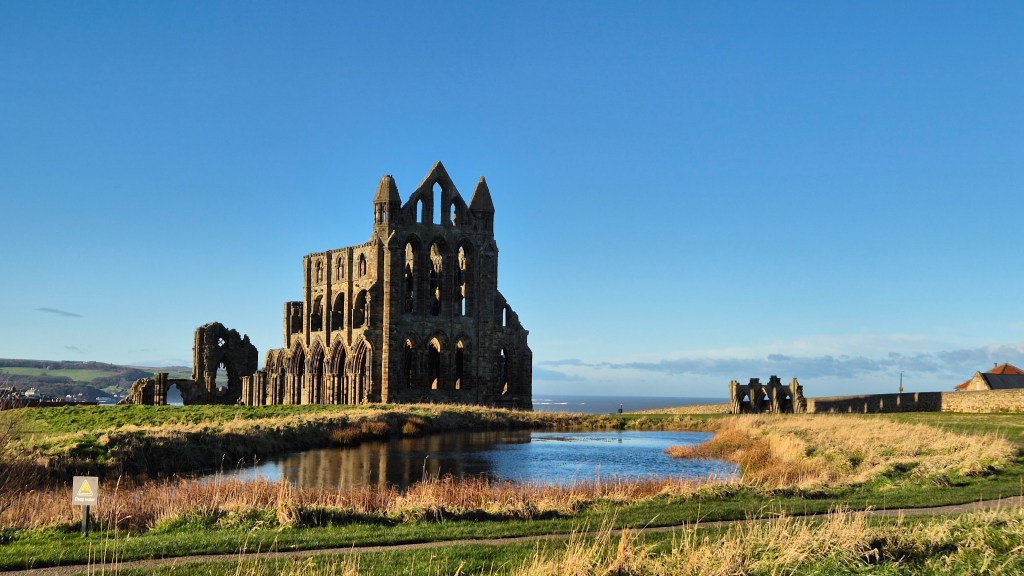
If you start the circuit around the Abbey by heading towards town, you’ll soon reach the ‘Donkey Field’, which archaeological digs have shown used to be the site of jet workshops and a medieval road. The field is now a scheduled ancient monument and holds ‘village green status’ to ensure it is protected both as a historic site and a green space for years to come. Next to the ‘Donkey Field’ is St. Mary’s Church, a Grade I listed parish church dating from around 1100. The church is open every day for people to look around from 1000 until 1500, although it opens later on Saturdays (1115) and Sundays (1300) and you can of course join a service at other times. The 18th century interior is a bit overwhelming and seems very chaotic, with enclosed pews filling the space and making it feel quite crowded.
Continuing on round the circuit, we passed the other entrance to the Abbey and the point at where the Cleveland Way coastal footpath leaves the streets of the town and once again becomes a proper coastal footpath. Our last stop in Whitby was at the northern end of the Abbey, where we visited the Whitby Brewery for a quick pint and to purchase some beers to take home, before continuing back round to the car. On the eastern side of the Abbey, between the Brewery and car park, the boundary wall of the Abbey lowers for a bit and you can get stunning views of the ruins without having to pay to go in.
Rather than head directly back to our cottage the way we came to Whitby, we decided to head back via the coast road to Scarborough, making a couple of stops enroute. The first of these was at the picturesque fishing village of Robin Hoods Bay, which clings to the cliffs as they drop from the headland down to the harbour and beach. Unfortunately, once again, our visit during the off-season meant that most of the shops within the village were closed, but nonetheless it was nice to wander down the slopes to the harbour, take a walk and some photos at the beach, and visit The Bay Hotel for some excellent scampi and chips. The climb back up from the harbour to the car park, not so nice!
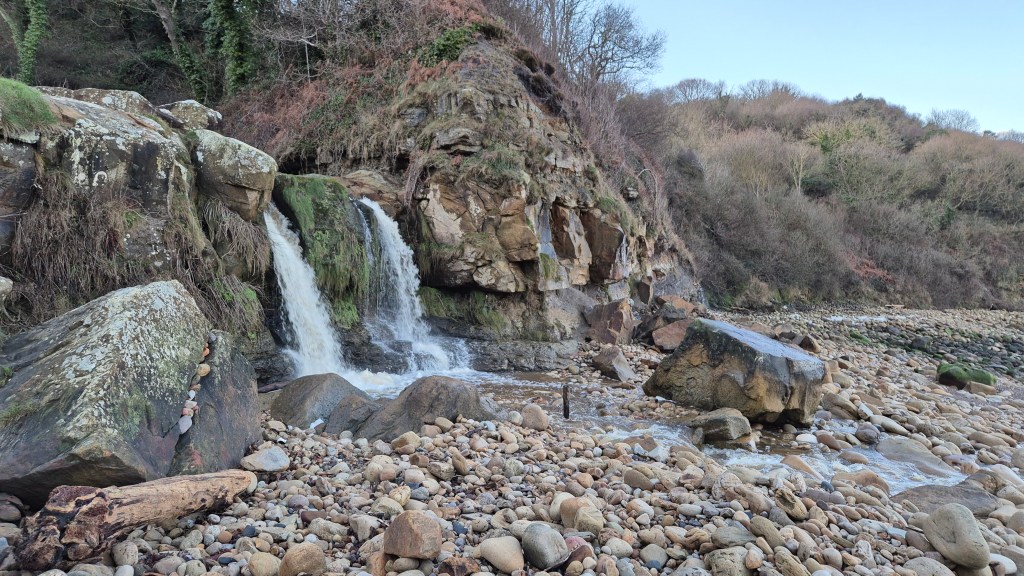
The final stop of the day was a bit further down the coast, at a car park next to The Hayburn Wyke Inn, a little way off the main A171 north of the village of Cloughton. From here there is a footpath that leads into the wooded slopes and down to the shingle beach below, where the Hayburn Beck meets the sea by way of a waterfall on the beach. The path down was a bit muddy and slippy, although I’m sure in the summer months it would be a lot firmer, and despite the steepness of the climb back up, it was well worth it. Sitting on the beach with only two other people, listening to the waterfall in the last of the winter sun was just amazing, and I can imagine that sitting on the beach watching a summer sunrise would just be magical.
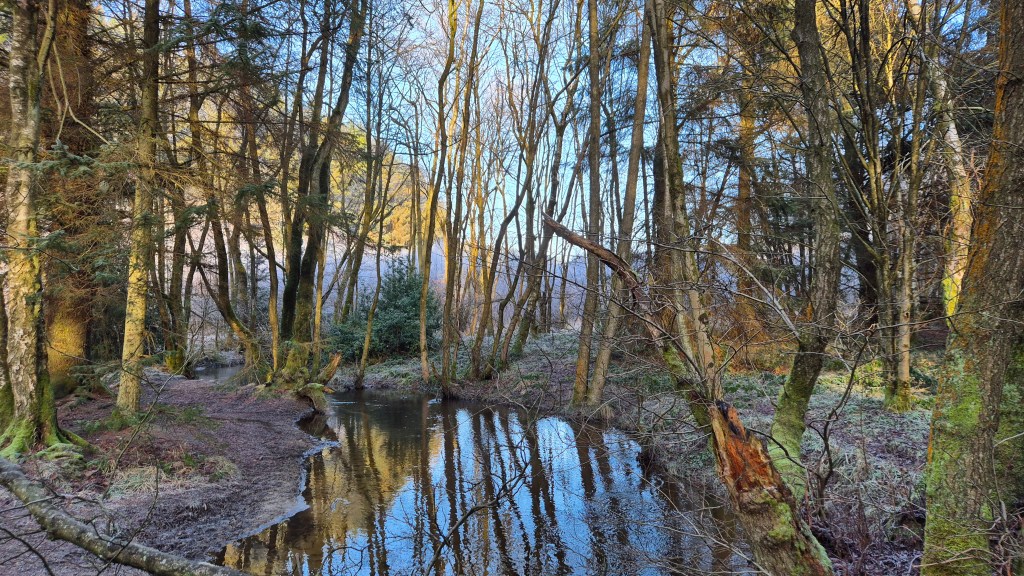
Our final day in Yorkshire dawned with some more beautiful winter sun and, whilst we had a long drive home ahead of us, we didn’t want to waste our final day away. Just north of Pickering, on the southern slopes of the moors is Dalby Forest, a Forestry England site covering more than 8,500 acres and containing four Sites of Special Scientific Interest (SSSIs) and more than 80 schedule ancient monuments. Across the forest there are numerous marked trails, although during our visit some were closed following damage caused by Storm Darragh and others were marked as hazardous following the snow and ice of the previous week. We decided to follow the Ellerburn Trail, which is advertised as 4.5km but ended up being 5.7km starting from and ending at the visitor centre. This trail takes you along one of the SSSIs at Ellerburn Bank, to Ellerburn pond at the far end, before bringing you back through the Lower Dalby valley.
After a brisk and refreshing walk, we stopped for a drink and look around the visitor centre’s shop, before heading half an hour or so south to Old Malton and The Royal Oak pub for lunch. Owned by South African chef Steve, the pub has a menu that is a mix of classic English pub grub combined with some traditional South African dishes. We of course decided to try some of the South African cuisine, with Beth opting for the ‘Chicken Bunny Chow’, a type of curry served in a bowl of bread, whilst I went for the ‘Steak Gatsby’ mega sandwich. The food was all absolutely amazing, although we had to get ‘doggy bags’ as we had no chance of finishing the huge servings.

We thoroughly enjoyed our time in North Yorkshire and felt that we barely scratched the surface of exploring the area. I’d 100% recommend both a visit to Whitby and a meal at The Royal Oak in Old Malton, and Dalby Forest is certainly worth a visit for a walk if you’ve got the time/inclination. We’ll certainly be back to visit North Yorkshire again in the future, perhaps in the spring or summer when more things will be open and we’ll (hopefully) be treated to some warmer weather.

