
Whilst Normandy has plenty of destinations for day trips (read about some of my favourites here), our location in the west of the region meant we were not far from the border with Brittany and only an hour or so from the Breton capital, Rennes. Deciding to take a day to explore the city, we made a relatively early start and drove to the outskirts, planning on heading into the centre using the city’s metro.
With the single line of the Rennes Metro having opened in 2002, the city identified a number of stations to establish park and ride services, including the north-western terminus at J.F.Kennedy. With just 15 stations, Line A connects the main parts of the city centre, such as Saint-Anne and Republique, with the railway station and outskirts, running roughly north-west to south-east. Not long after our visit, on 20th September 2022, Line B of the Metro opened along with 13 new stations, running roughly north-east to south-west.
Using the metro was very easy, with multi-lingual ticket machines and the disposable tickets being re-loadable, allowing you to ‘top up’ with additional journeys throughout the day. You can also buy day tickets or tickets for ten journeys, however given we intended to explore most of the city on foot, these didn’t seem worth it for us. A one-hour ticket costs just €1.50 and allows unlimited connections within this time, including onto the bus network.
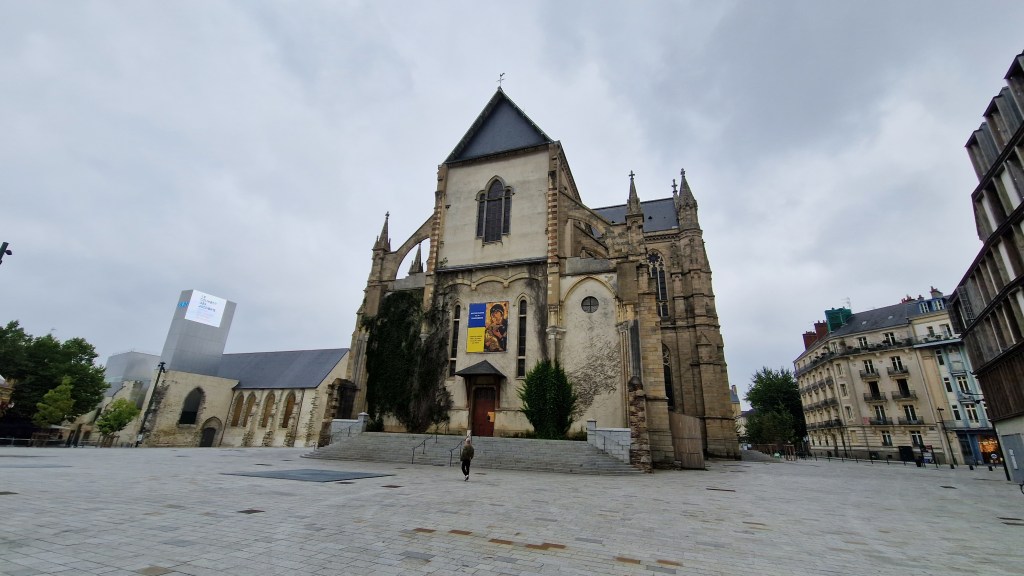
One of two stations where Lines A and B now connect is Saint-Anne, one of the main tourist areas of the city and it was here we decided to jump off to start exploring. Saint Anne’s square contains the Basilica of Notre-Dame-de-Bonne-Nouvelle, a relatively new (construction started in 1884) church that stands unfinished on the north side of the square. The square is also home to the Convent of the Jacobins, a former convent (and barracks) that is now home to the city’s convention centre and is where you can find the tourist information office. Most of the remaining buildings around the square are half-timbered, with five of these being listed historical monuments.
From Saint Anne’s we headed down one of the streets leading away from the square, towards one of Rennes’ oldest buildings, the Portes Mordelaises. Enroute we stumbled upon Place des Lices, home to Halle Martenot, a market hall that is used as an event space, hosting conferences, fashion shows and of course a market, the Marche des Lices, every Saturday.
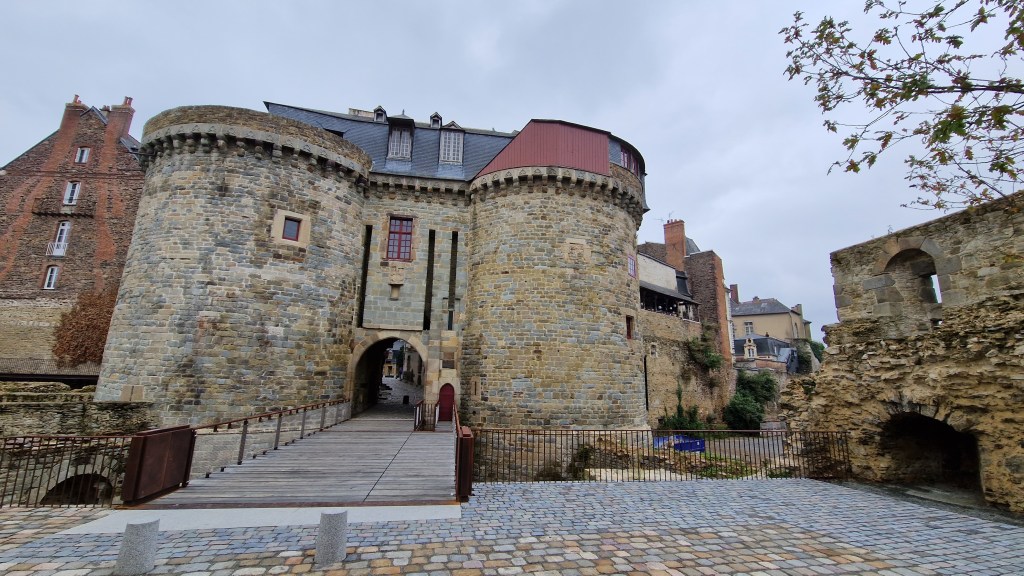
The site of the Portes Mordealises has hosted a gatehouse of sorts since the 3rd century, however the present gatehouse and rampart remains were constructed in the 15th century. Dukes of Brittany had to undertake oaths in front of the gates, leading to them sometimes being known as the Royal, Ducal or Episcopal Door. The Portes Mordelaises also served as an entrance for processions, whilst its drawbridge provided a double layer of protection for the town of Mordelles, now a part of the city of Rennes.
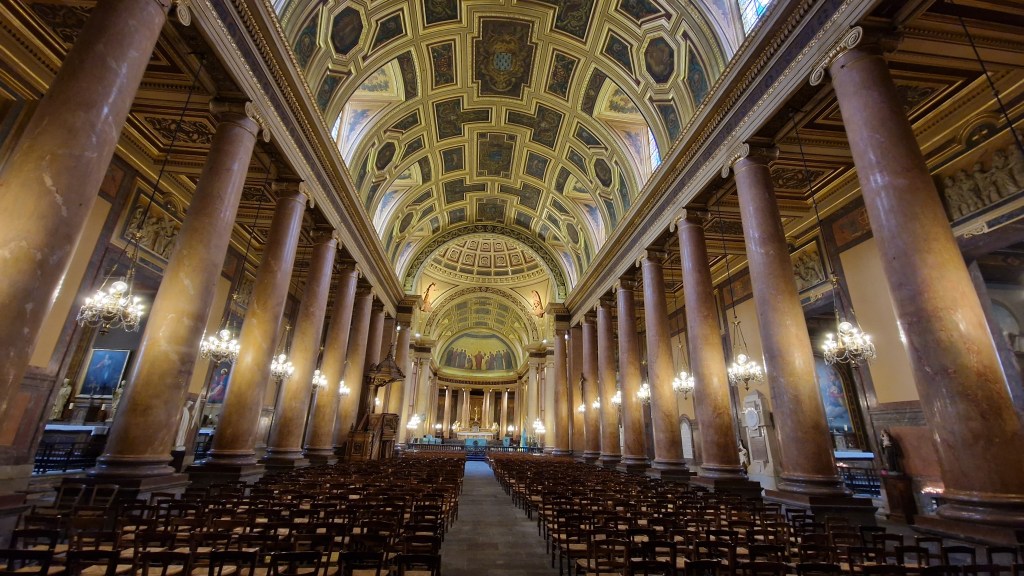
Its easy to tell why the Portes Mordealises was used as a starting point for processions, with the street behind leading directly to the Cathedral Saint-Pierre de Rennes, seat of the Archbishop of Rennes, Dol & Saint-Malo. The present cathedral building is a mix of architectural styles owing to the fact its construction spanned more than 300 years, with the nave and choir not being finished until 1845. On my travels I’ve been into many churches and cathedrals and Rennes is certainly one of my favourites, making my jaw literally drop as I entered.
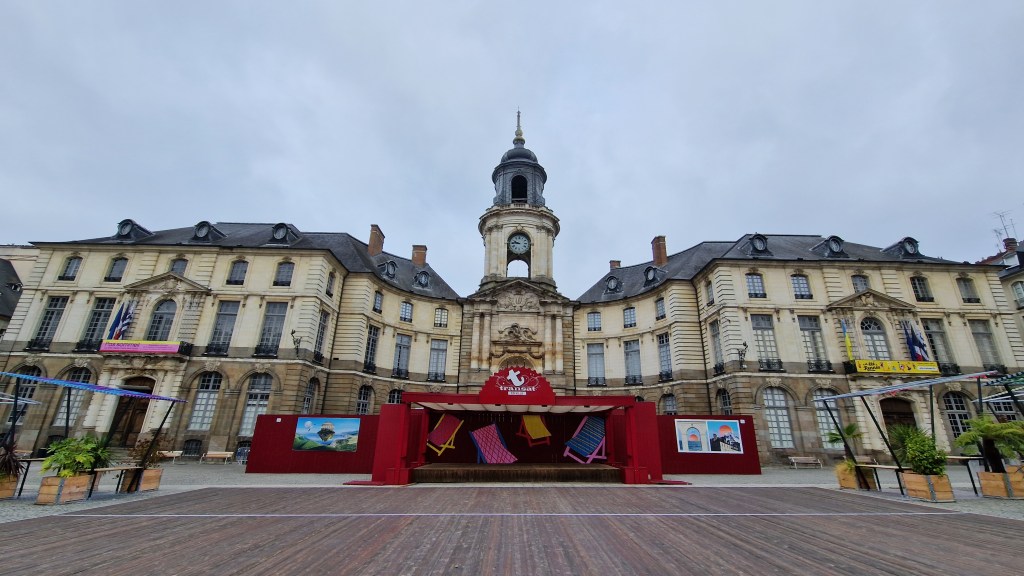
After spending a while inside the cathedral, we continued on our self guided tour of the city, heading towards the Place de la Mairie, a square in the centre of the city that where both the Mairie de Rennes (Rennes City Hall) and Opéra de Rennes (Rennes Opera House) are located. Both building were once again stunning, although certainly newer than a lot of the city centre, both having been constructed in a period of 40 years at the turn of the 18th & 19th century.
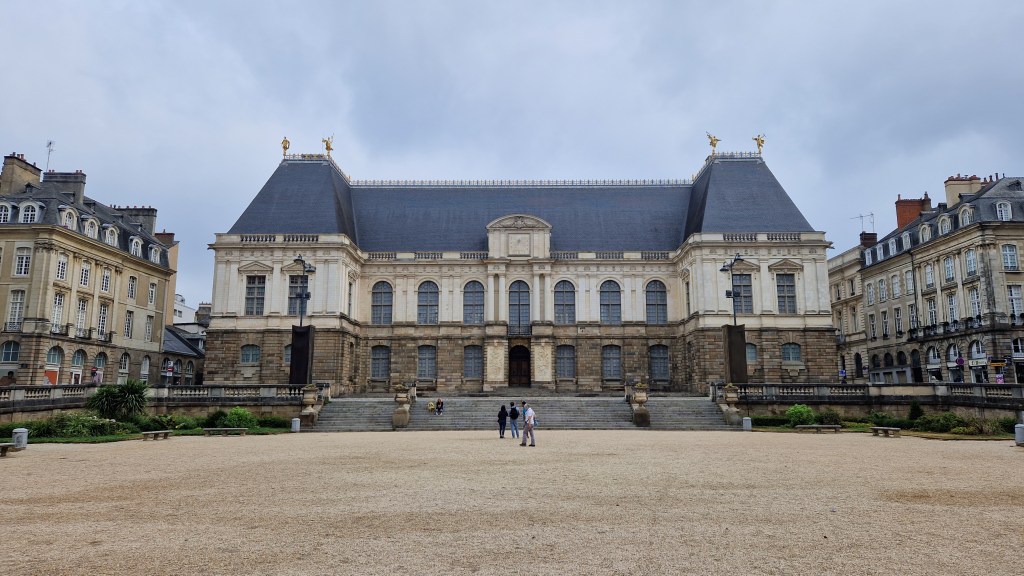
With a lot of elements of French history the French Revolution forms the point of change and this is true for the regional parliaments, with the Parlement de Bretagne being unilaterally dissolved by the French Constituent Assembly in 1790. Whilst the parliament is no longer in existence (the French regions are now administered by Regional Councils), its former home of Le Palais du Parlement de Bretagne, still stands in the centre of the city not far from the Opera House. It’s a very grand building matching the prestige of its use, however the large square now seems to be a rather wasted space, covered in gravel and not a particularly enjoyable public space.
Continuing east through the city, we came upon the Church of Saint-Germain, with its Gothic architecture making it much darker than the city’s cathedral. Originally the church of rich merchants, it is home to the oldest stained glass windows in Rennes whilst its bell tower used to form part of one of the city’s gatehouses. Despite being smaller and darker than some other churches I’ve been in, it is still worth a visit if you have a spare half-hour.
Having been unsuccessful in finding some coffee on our wanders, we decided to head towards what seemed to be the true centre of the city, République, a large square constructed over the River Vilaine, bordered on its south side by the Palais du Commerce. The Palais du Commerce was built at the end of the 19th century and was home to a Stock Exchange and a Post Office. Whilst the latter still calls the building home, it now shares the space with a library and telephone exchange.
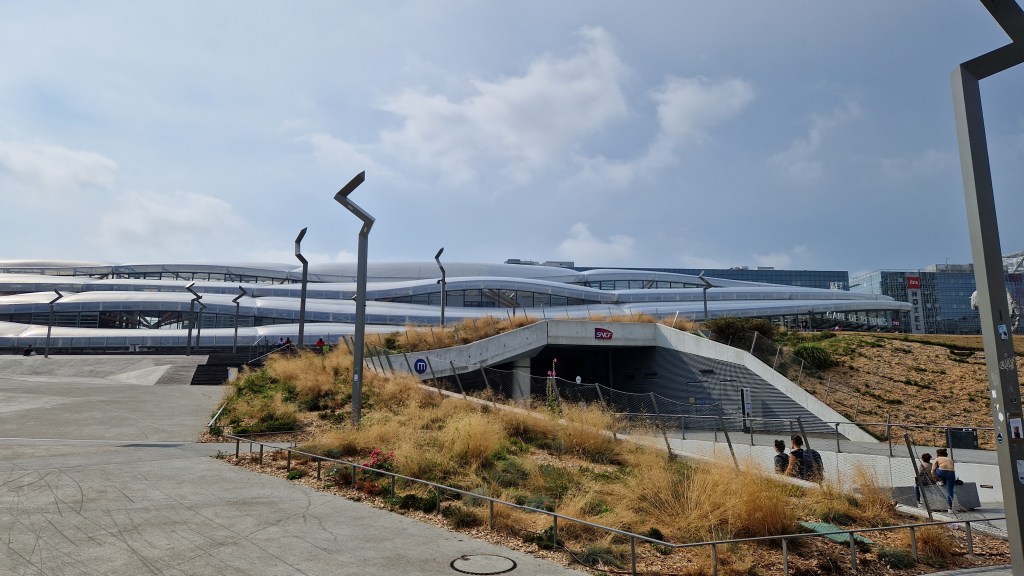
With a lot of Rennes’ attractions being closed owing to the French Bank Holiday, we decided to make one last ditch attempt to find a coffee and croissant and headed to the railway station. Personally this diversion was a double success, with coffee being found and us also getting the chance to see the extremely impressive Gare de Rennes. Whilst a station has existed on the site since 1857, the current building is a very modern creation, having only opened in 2019. It is also home to a sculpture representing the mythological horse Morvarc’h which, a week after its installation, was vandalised by the addition of a tag indicating “This is ugly”. Enough said.
Having had our fill of the city (there’s loads to do, unfortunately we hadn’t planned our visit well given the Bank Holiday meaning most places were closed), we walked back to République to see a bit more of the city (including the also closed Central market) before catching the metro back out to J.F. Kennedy. Having only spent the morning in the city, we decided to head back to base via another must see Bretton location, the town of Fougères.

The biggest attraction in Fougères is possibly the most castley castle I’ve seen, and this is definitely somewhere I intend to return to, with us not ending up with time to go inside and explore. Intending to find somewhere for lunch and then explore the town, we ended up on a march around the town trying to find a restaurant that had a table. Once again our ignorance of the Bank Holiday had scuppered us, with it seemingly being tradition for families to go out for lunch.
Despite the frustrations around food (verging on Hanger…), it was great to explore the town, with the views of the caslte from the upper town being absolutely stunning. There are also some beautiful public gardens behind the Church of Saint-Leonard which wind down the hillside, leading to the old town and River Nançon. Essentially you can take a circular walk from the castle, up into the main town, along to the gardens and then back down to the castle.
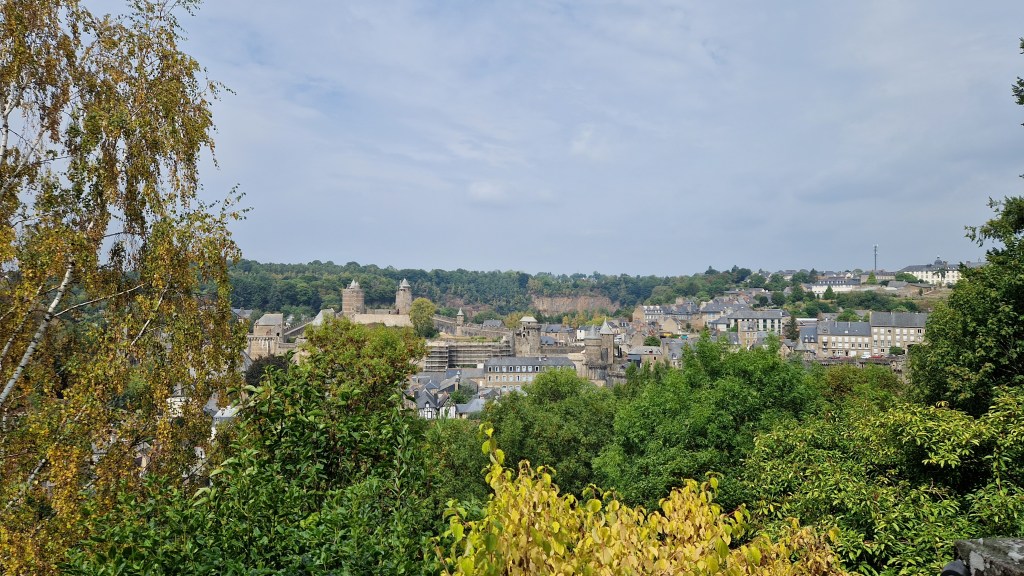
Alongside the castle, there is also a water mill and mill stream, with the Nançon forming both the castle moat and then powering a chain of four water wheels. Unfortunately, owing to the largescale drought across northern Europe, the river’s flow was minimal, with most of the moat having been blocked off and the water wheels turned off to maintain the natural flow of the river.
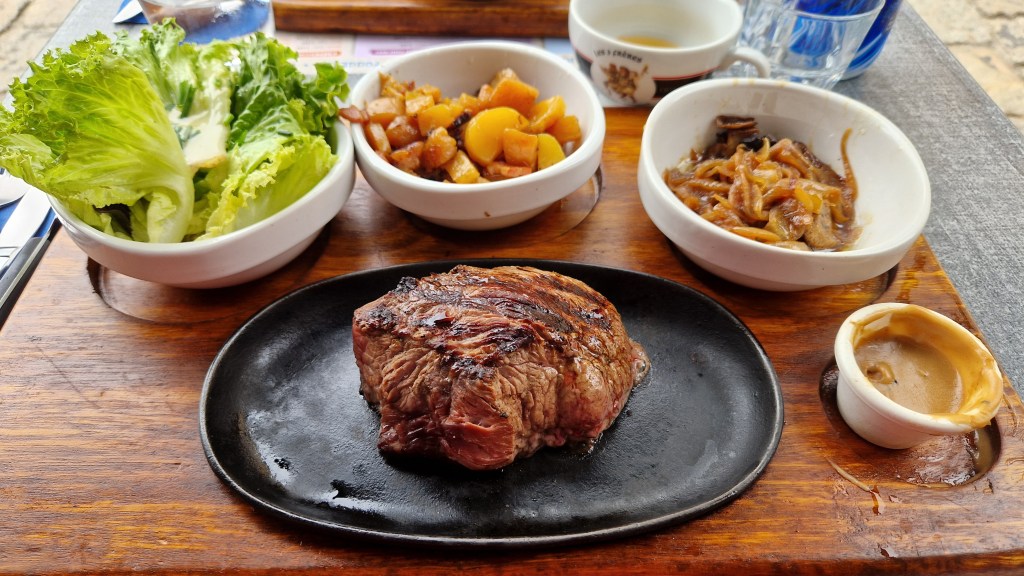
Whilst our visit to Fougères was relatively brief it was great for getting a flavour of the town and certainly made we want to visit again and explore it properly. I also want to return to the restaurant we did get a table at (ironically back at the castle after completing the full circuit) as the food was excellent. If you do visit the town and castle, make sure to eat at Café de la Duchesse Anne for great food and great views of the castle.
Whilst our visits to both Rennes and Fougères were brief, both firmly added themselves to the ‘re-visit’ list, with the former looking like a great base for a wider tour of Brittany. Hopefully this and the other destination blogs from our holiday (here and here) provide plenty of inspiration if you do decide on a holiday to northern France.
 Flights & Times
Good entry, and definitely agree that both Rennes and Fougères are well worth revisiting, preferably not on a French Bank Holiday. I definitely also agree that the food was excellent once we finally found somewhere to eat!
LikeLiked by 1 person