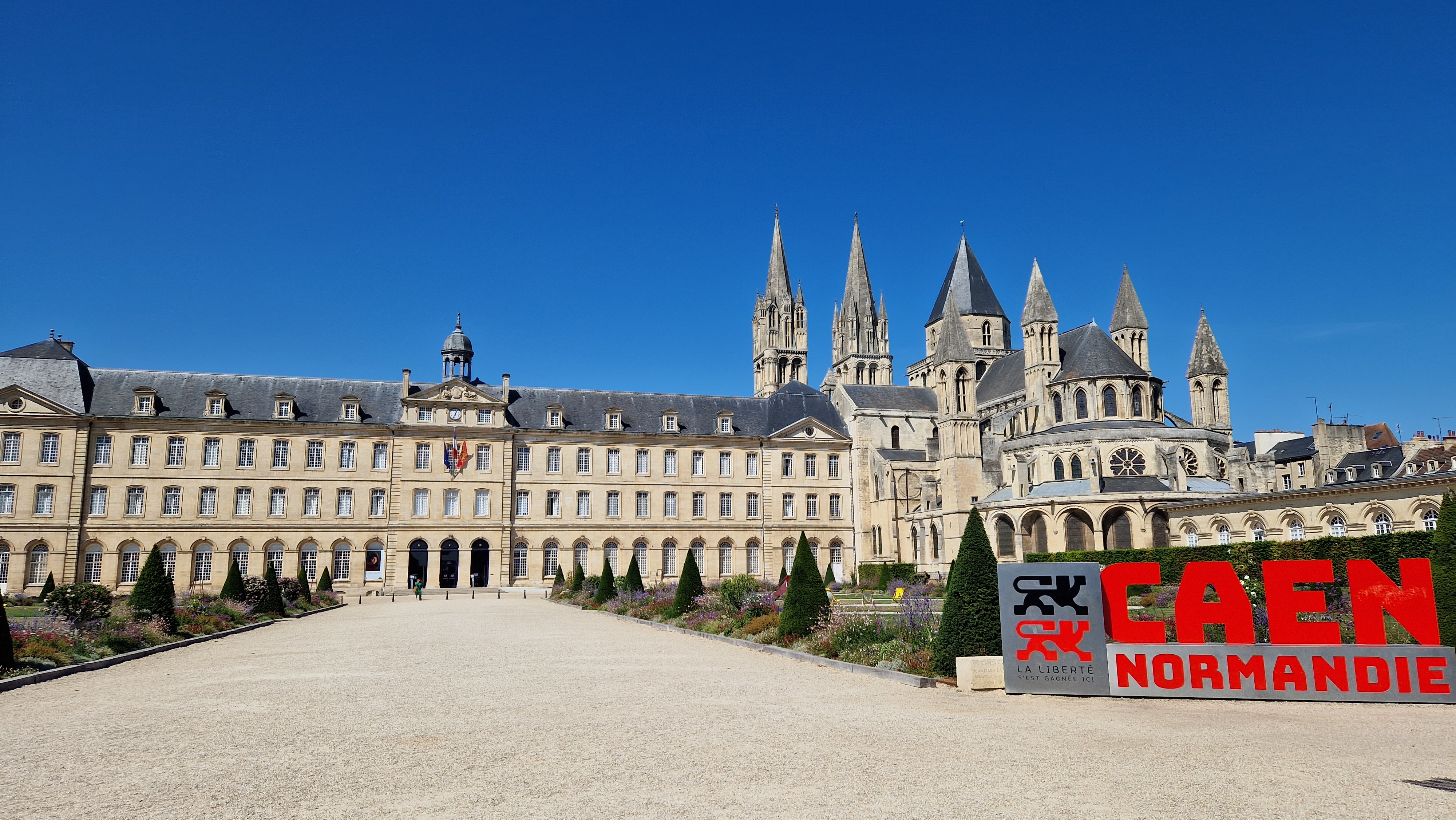

Caen, the capital of Calvados and the second largest urban area in Normandie, is famous for being the historic seat of the Dukes of Normandie, including William the Conqueror, as well as being the centre of the Battle of Caen during the liberation of France in WW2.
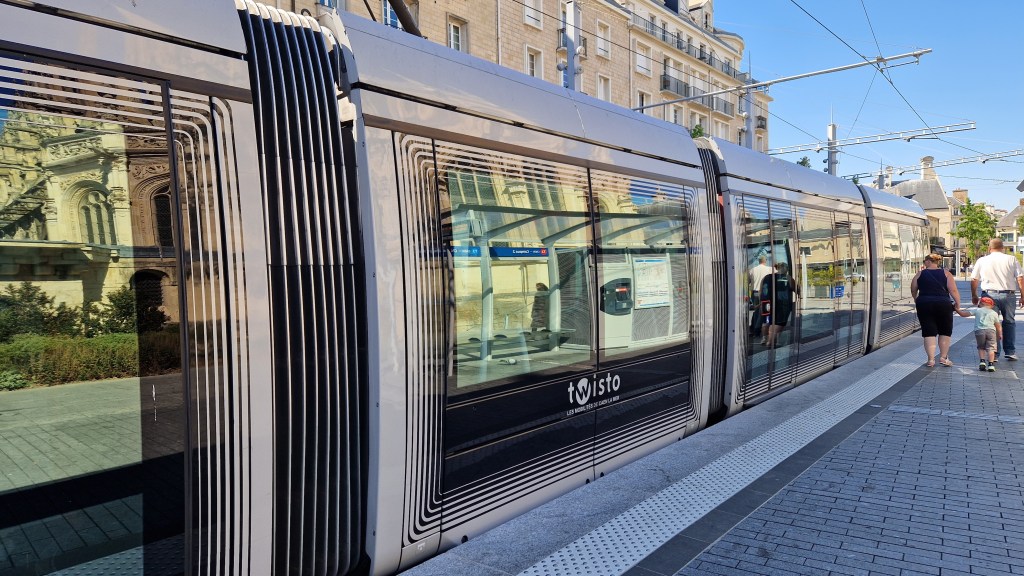
Although Caen was on our to-do list for the holiday, our actual visit was unplanned, with us heading to the city following our aborted to trip to Paris (more about that in a later blog!). Having driven two sides of a triangle to get to the city, I had made an executive decision not to drive into the city centre and so headed for one of the Park & Rides on the outskirts of the city.
Boarding the tram at the Line T1 terminus of Jean Vilar, the journey into the city centre took about twenty minutes and costing just €1.60 each, although I’ve since we could have got a family return for €6.40 which would have saved us 50%! Nonetheless, the journey into the city by tram was painless and a great way to see some parts of the city we wouldn’t have chance to explore.
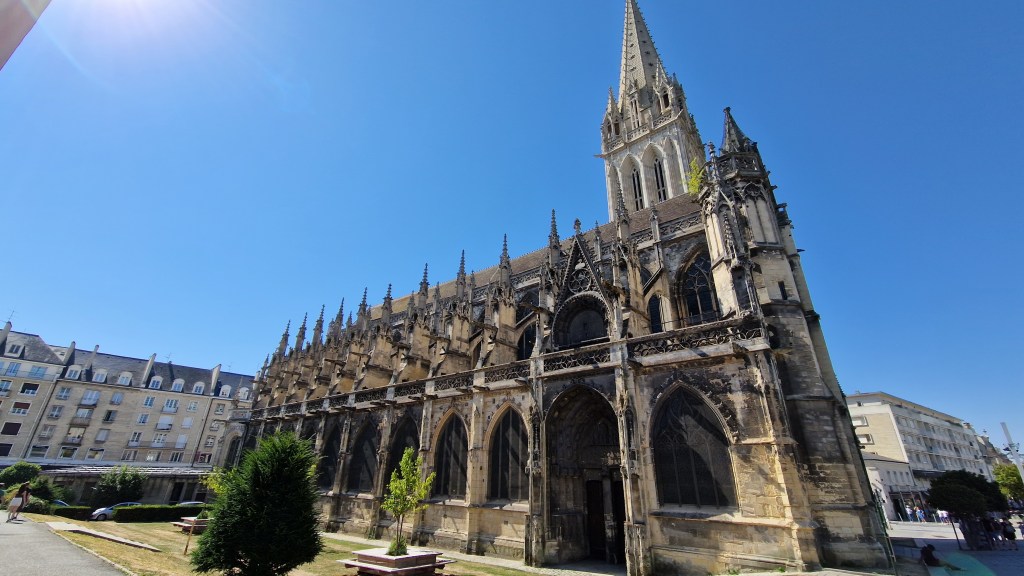
Jumping off the tram at Saint Pierre, we were just meters from the Cathedral of the same name, and a couple of minutes from the city’s Château. Deciding first to have a sit down and a snack, we headed across the road to Café Henri to have a late breakfast of coffee, croissants and fresh bread. With views of the Cathedral along with the King William Tower, it was enjoyable to sit and watch the world go by for a short while.
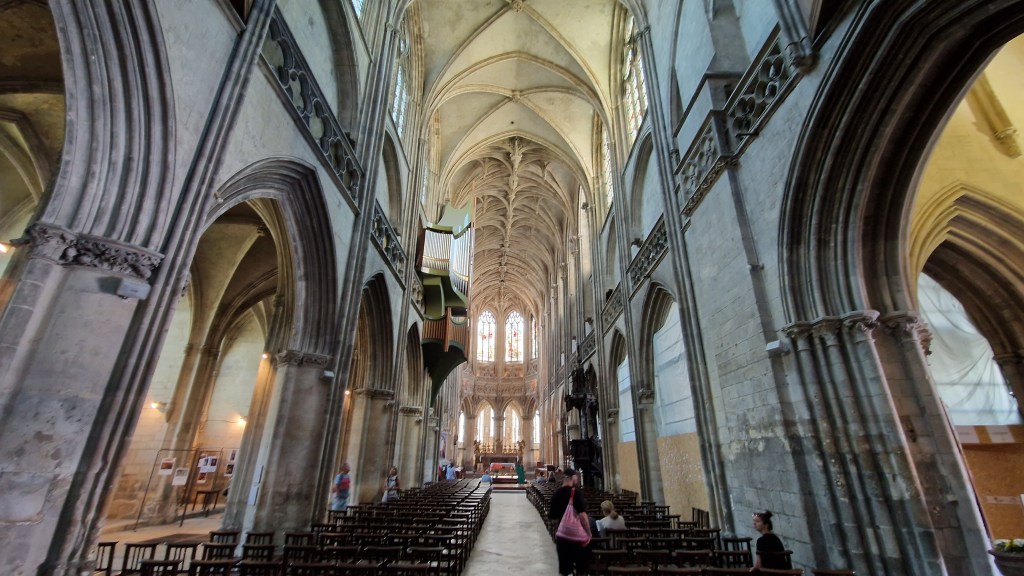
Deciding to first tick off the cathedral, which unlike some English cathedrals, was completely free to enter. I actually discovered during writing this post that I had made the same mistake as many others in assuming Saint Pierre’s to be a cathedral whereas in fact it is ‘just’ a church. It is however a rather grand church (despite its wonky nave…) and is notable for having an off-centre tower and spire, with the later having been reconstructed following its destruction in WW2.
When looking on Google to see what there was to see and do in Caen, the satellite view of the Hotel du Ville & surrounding gardens caught my eye. Surrounded by the darker colours of the nearby buildings, the white of the paths around the gardens provided a stark contrast on Google’s satellite view and so we decided to head to the west of the city centre to see how it looked at ground level.
I’ll be honest in that the combined sight of the Hotel du Ville, Gardens and L’Abbaye-aux-Hommes awed me slightly and I paused for a minute to admire the view. Clearly the city of Caen is aware of the popularity of the view as, located in the centre of the gardens with the Abbey as a backdrop, were large letters spelling the city’s name.
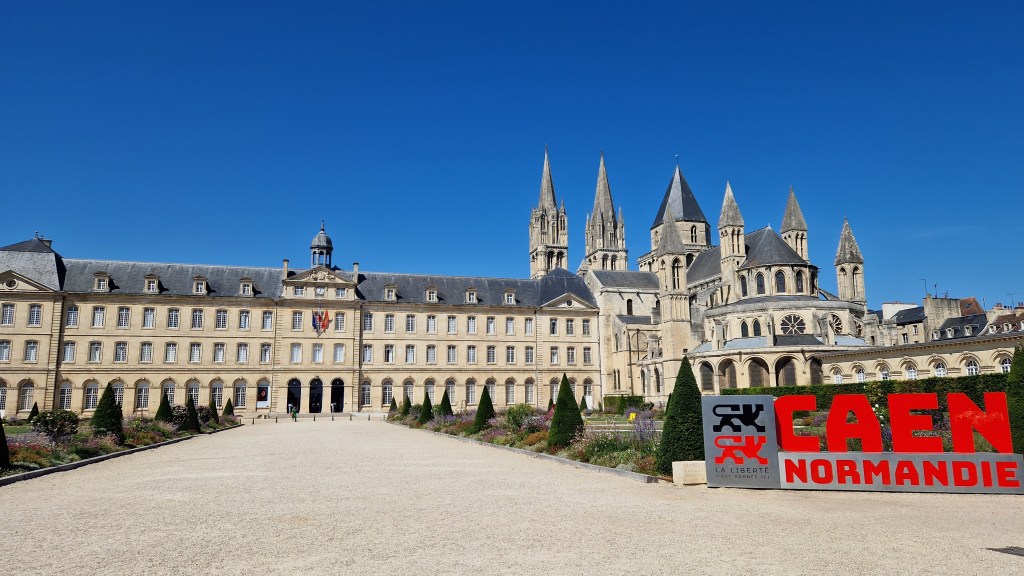
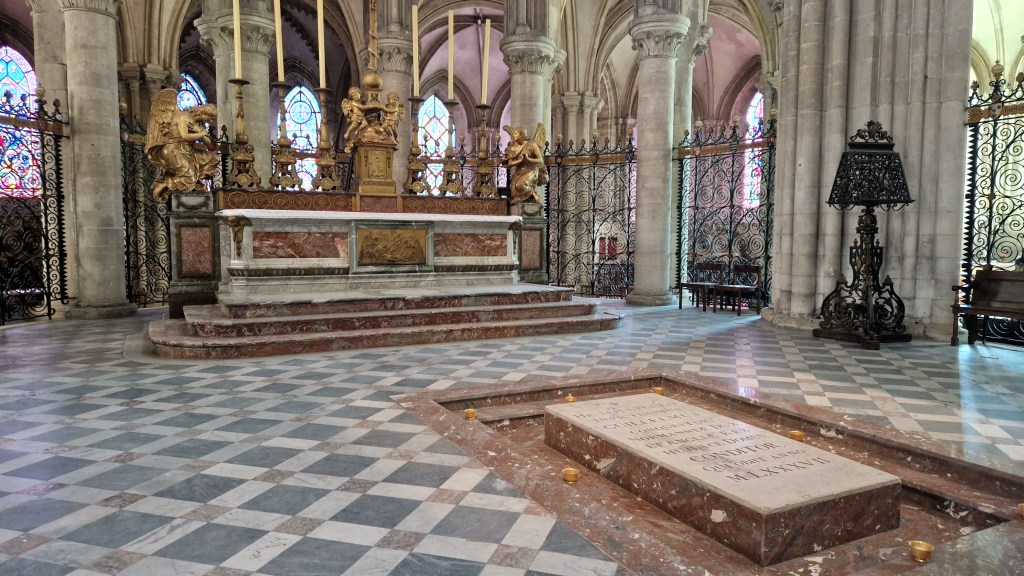
Having stopped to take plenty of photos, we decided to take a break from the heat (the gardens had zero shade) and head inside the Abbey. Whilst most churches, abbeys and cathedrals have plenty of history, L’Abbaye-aux-Hommes is particularly famous as it contains the grave of the most well-known invader of England, William the Conqueror.
With construction beginning in 1066, the same year as William headed to England, L’Abbaye-aux-Hommes (also known as the Abbey of Saint Étienne) was dedicated just 11 years later. When William died in Rouen in 1087, his body was transported to the abbey for burial, although the funeral was supposedly interrupted by an angry Caen local who alleged the land the abbey was built on had been stolen from their family.
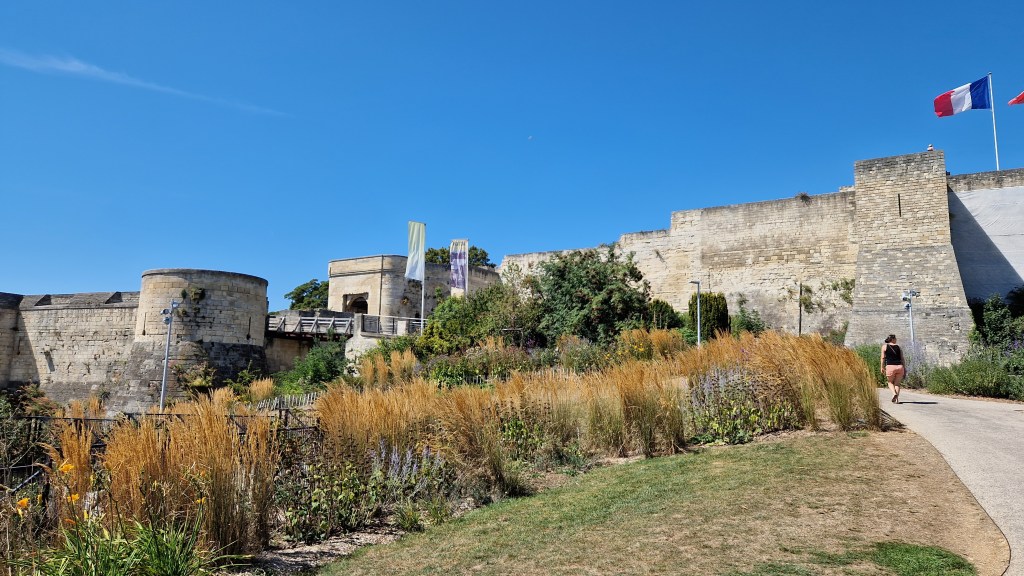
Heading back into the centre of city via some lunch, we decided to spend the afternoon exploring Caen’s impressive Château and the complex of buildings it contains. As with the Cathedral, entry to the castle is free, although there is a cost for the museums contained within the walls. There is step free entry to the castle via ramps, which start just over the road from the Cathedral.
The Château de Caen is a classic example of a Norman fortress and was constructed around 1060, just a few years before William the Conqueror headed across the channel. Whilst some parts of the castle, including the keep, are in ruins, it is largely intact, with the dried up moat now providing a circular walk and a large portion of the ramparts being accessible to visitors. Infact, a small part of the ramparts even has step free access, allowing all visitors to enjoy the views of the city that the walls provide.
The remaining buildings within the castle, along with a modern addition, have been repurposed as various museums, with the Musée des Beaux-Arts de Caen and Musée de Normandie calling the castle home. There is also an information centre/ticket office housed within the former Saint George’s church whilst the Échiquier de Normanide (which formerly housed the Court of Normandy) is used as a temporary exhibition hall.
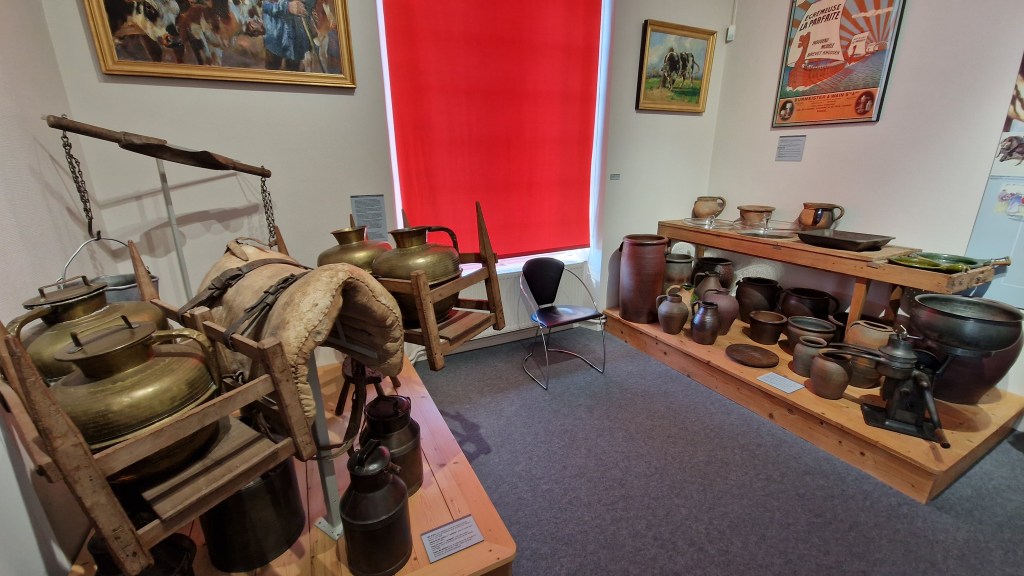
I decided to give the Museum of Fine Arts a miss, however headed to the Museum of Normandy to find out more about the history of the region. Along with the usual archeological collection telling the story of early residents of Normandy, the museum also had an interest section showing how farming practices changed throughout the century, along with an area covering the various industries of the region (Wool, Metal, Textiles & Candle making). There was also a room that contained a LOT of pots!
With our visit to Caen having been rather impromptu after a stressful morning, and the temperature continuing to rise in the late afternoon, we decided it was time to cool down with a drink and an ice-cream before catching the tram back to the car. Caen had been a must-visit for me on the holiday and I was certainly impressed, although I’d like to revisit outside of the heat of the summer and explore the streets and castle complex some more.


2 thoughts on “Caen – The Capital of Calvados”