
Well, if we’re honest, my first impressions of SNCF’s Transport Express Régional (TER) weren’t great. The morning of our planned trip to Paris, I woke up to an email (in French of course) from SNCF advising me that owing to our train taking a diversionary route, we would have to take a rail replacement bus to the next station.
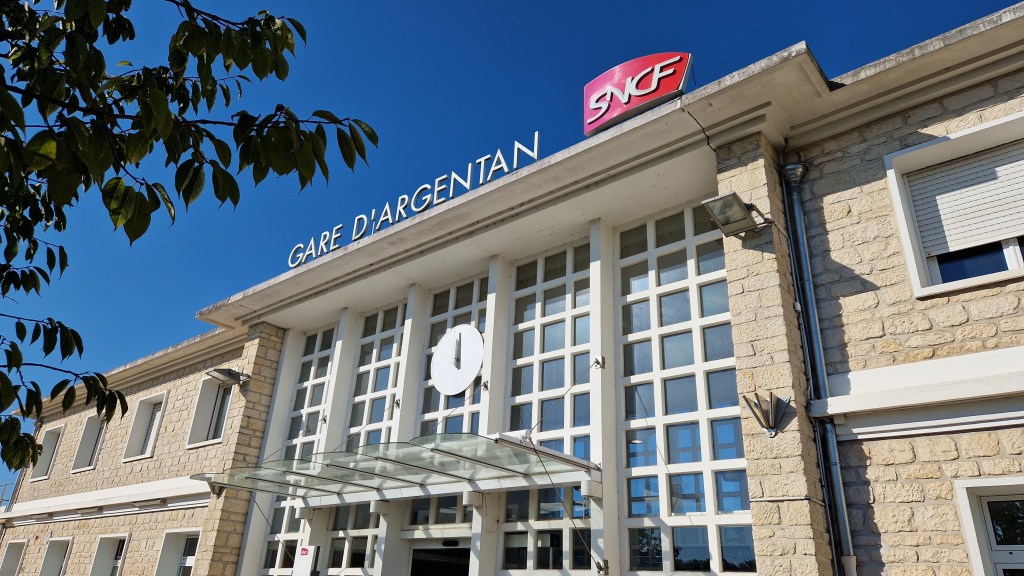
Deciding to avoid this, we drove the extra 30-minutes to the Argentan to find that the train was also delayed by 90+ minutes and that our time in Paris would have been reduced to just 3 hours. Giving up on a bad job, we headed to Caen instead (read about that here) and I decided I’d find another opportunity to try the TER.
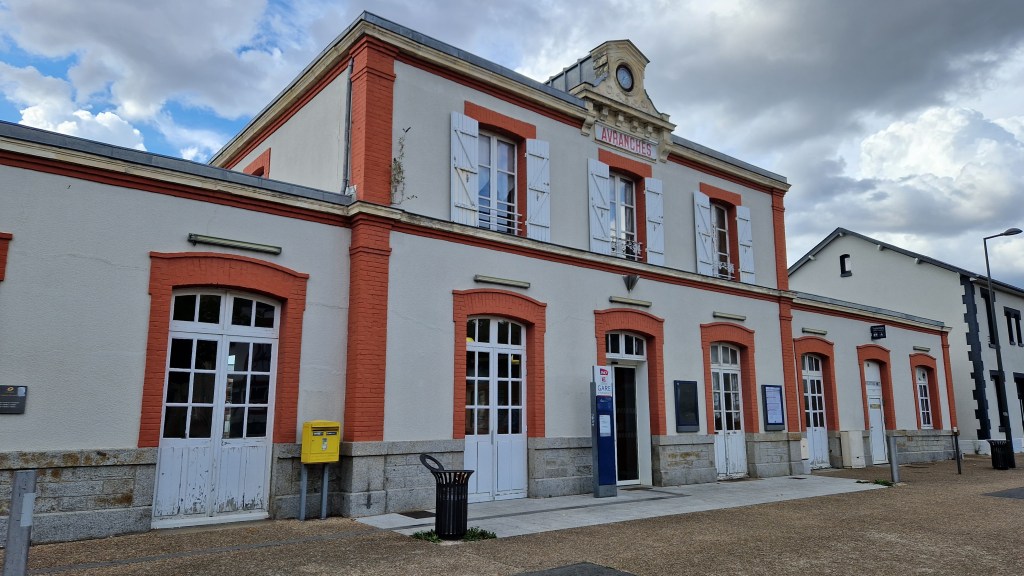
That opportunity presented itself with a trip to Avranches, a town about 15 miles from where we were staying and two stops down the line from our nearest town, Villedieu-les-Poêles. This would give us a 40-minute journey each way to try out TER in this part of Normandy.
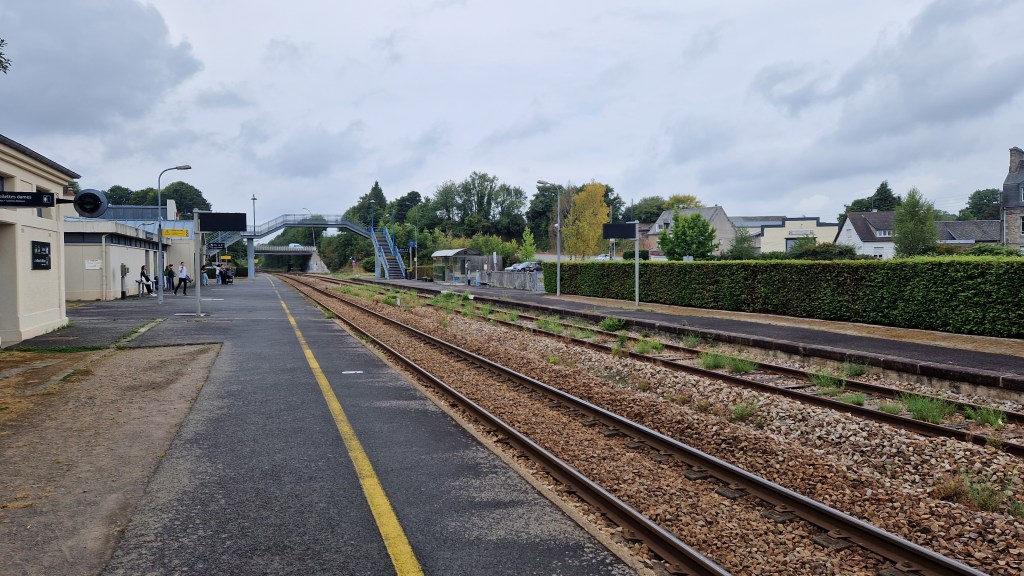
Villedieu-les-Poêles is on the Granville-Paris line, whilst Avranches is on the Granville-Rennes line which means that the few trains that run between the two are required to reverse at the village of Folligny. This unfortunately means that rail journeys between the two towns take longer than you’d expect for the distance they are apart and that very few trains actually traverse the route.
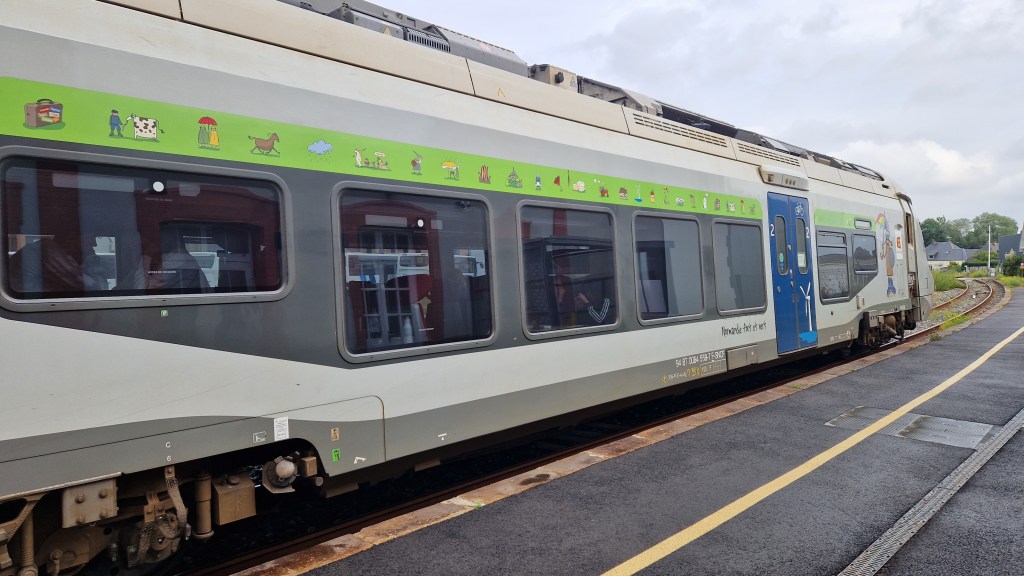
With no previous experience of TER services, I had been expecting a pair of reasonably modern diesel units of two or three carriages, similar to the class 755s of Greater Anglia, or the regional services I’ve travelled on elsewhere in Europe. What I was not expecting was two six-carriage units very similar to those operated by Intercités that I had travelled on between La Rochelle and Nantes (read about those here and here).
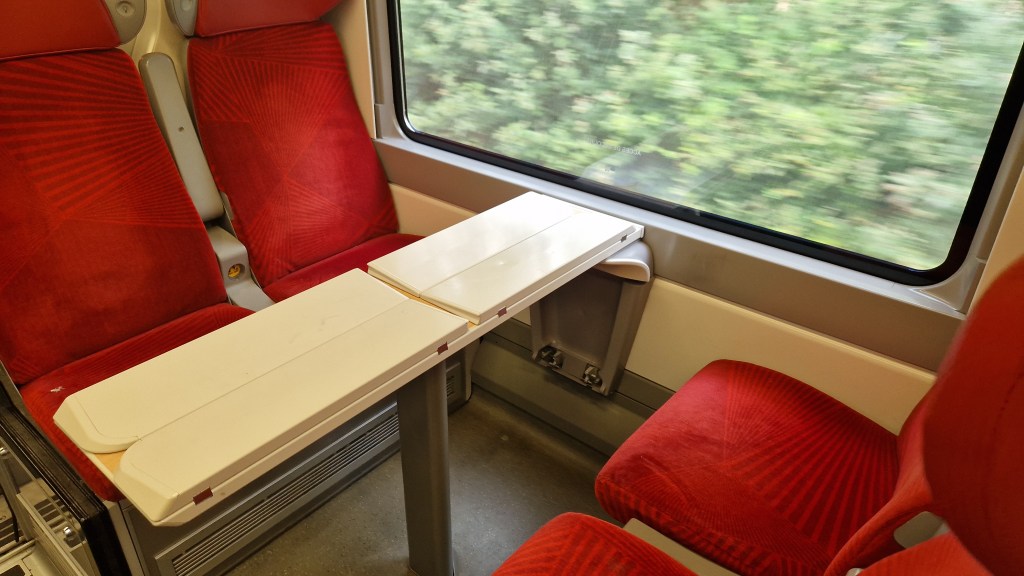
Providing both 1st and 2nd class seating, these units have a mix of airline style and table seating in 2nd class, with each seat having its own reading light and a standard European socket being shared between each pair. Table seats had folding tables, allowing easier access to the seats, whilst also providing a solid surface to work on if desired.
Really I shouldn’t have been surprised by the units operating services on this route given it is a route to/from Paris, connecting the capital with some of the top Normandy tourist destinations. Whether smaller units operate on these routes in the off-season, I don’t know, however the full 12-carriage train operates between Paris and Folligny, where the train then splits. The front unit continues on to Granville, with the rear unit reversing and continuing to Rennes via Avranches.
The other reason there may be such large trains running on this route is that the frequency of services is quite poor. Whereas ‘most’ secondary and tertiary routes in the UK get an hourly service, there are only five trains between Paris and Granville via Villedieu each day, with only three of these having portions to Avranches. In comparison, the West Highland Line route between Glasgow and Oban sees six trains a day…
The journey in both directions between Villedieu and Avranches was perfectly comfortable and pain free once we’d established which part of the train we needed to be in. This was displayed well on each portion of the train, however due to our surprise at the size of the train, we were too far up the platform, requiring a bit of a rush to get into the correct portion, especially as you can’t walk through between the units.
All in all, the TER seems to be a mixed bag. Our experience trying to get to Paris was obviously quite negative, however SNCF did do their communications well and tried to provide alternatives. The trains are clean, modern and comfortable and generally journey times are okay, however travel is hindered by the limited number of services. If you can incorporate travelling by train on TER routes then I’d certainly recommend doing so, however make sure you plan it well and have a plan B for if it fails.
 Flights & Times