
Having arrived in Munich late the night before (read about that flight here), it was nice to be able to wake up in the city rather than at an airport hotel ready for an early flight. The first thing on our plan for our stay was to join a free walking tour, as these are a great way to see the sights and learn some of a city’s history. And so, after a bit of a lie in, we made the 15-minute walk into the city centre to Marienplatz to find some breakfast and join the tour we had booked.
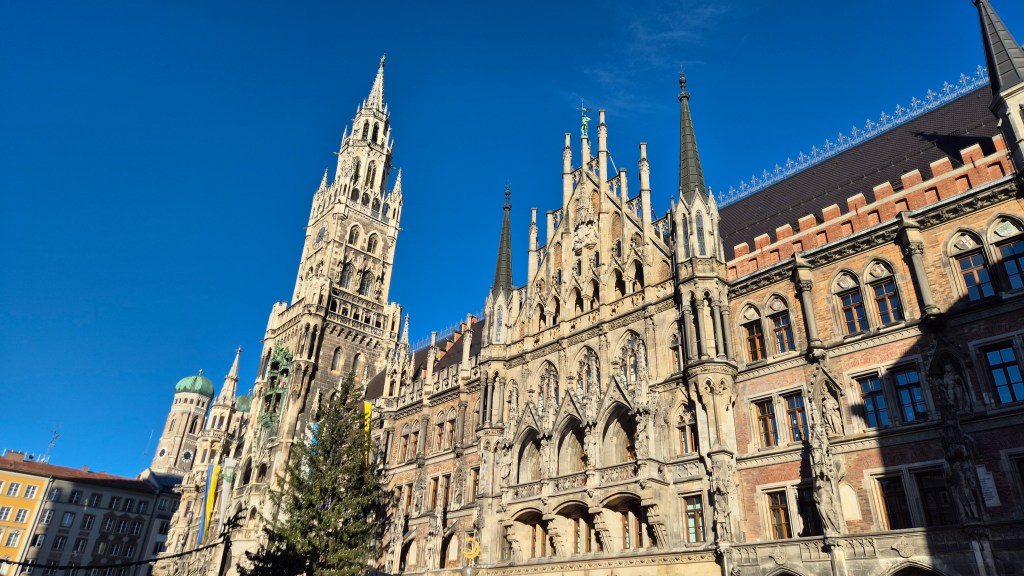
Our tour started outside St. Peter’s Church, just off of Marienplatz and our guide, Jean, started off providing us with some of the history of the city before we headed into Marienplatz itself in time to see the 11 o’clock display of the Rathaus Glockenspiel. The Rathaus Glockenspiel tells two stories through its life-size characters, the first being the marriage of Duke Wilhelm V to Renata of Lorraine in 1568 and the second being the coopers’ dance, also known as the Schäfflertanz. One of Munich’s most famous sights, the Glockenspiel displays play twice a day throughout the year at 1100 & 1200, with an additional 1700 performance between March and October.
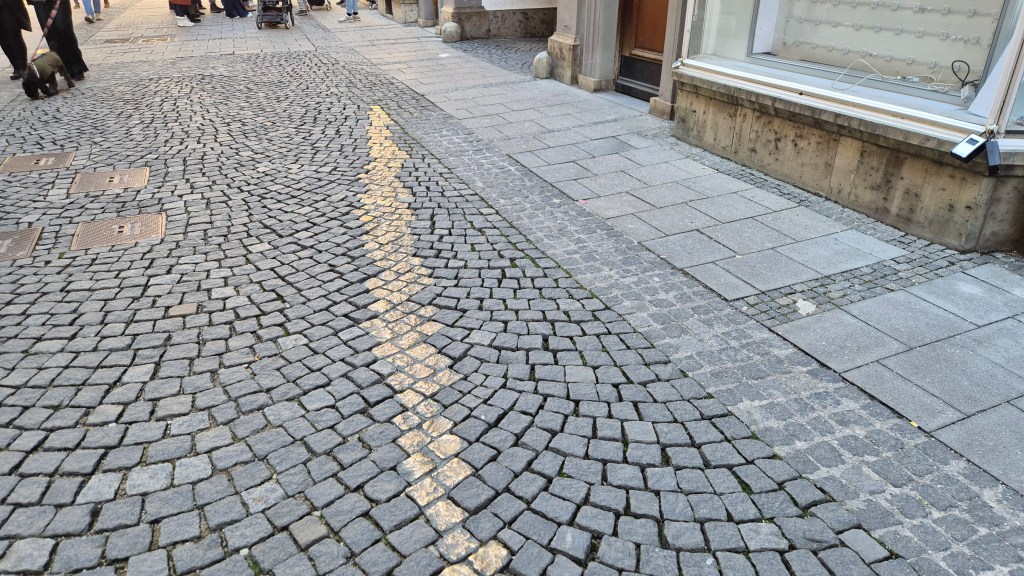
Heading through the gated passageway into the courtyard of the Neus Rathaus, we learnt a bit more about the history of the building and the glockenspiel before heading out to Odeonsplatz. Here we were told about Munich’s darker past, being a key location in the rise of Hitler and the Nazi party, and also about those that resisted the Nazi regime who are commemorated by the golden pathway on Viscardigasse. In Odeonplatz we were also close to the Residenz München which dates from the time of King Ludwig and Queen Therese, whose marriage celebration was also the original Oktoberfest, the popular beer festival that is held annually on the Theresienwiese outside the city centre.
Staying on the theme of beer, the tour then took us via Max Josef Platz (where there is a statue of King Maximillan I Joseph of Bavaria which looks like he is using the toilet) to the Hofbräuhaus, one of Munich’s oldest beer halls. Here we learnt about the six Munich breweries as well as getting a chance to look inside the Hofbräuhaus and admire the stunning decoration on the walls and ceiling. The tour then took us past the Alte Rathaus to Viktualienmarkt, a permanent food market located just a short distance from Marienplatz where you can buy all sorts of fresh food.
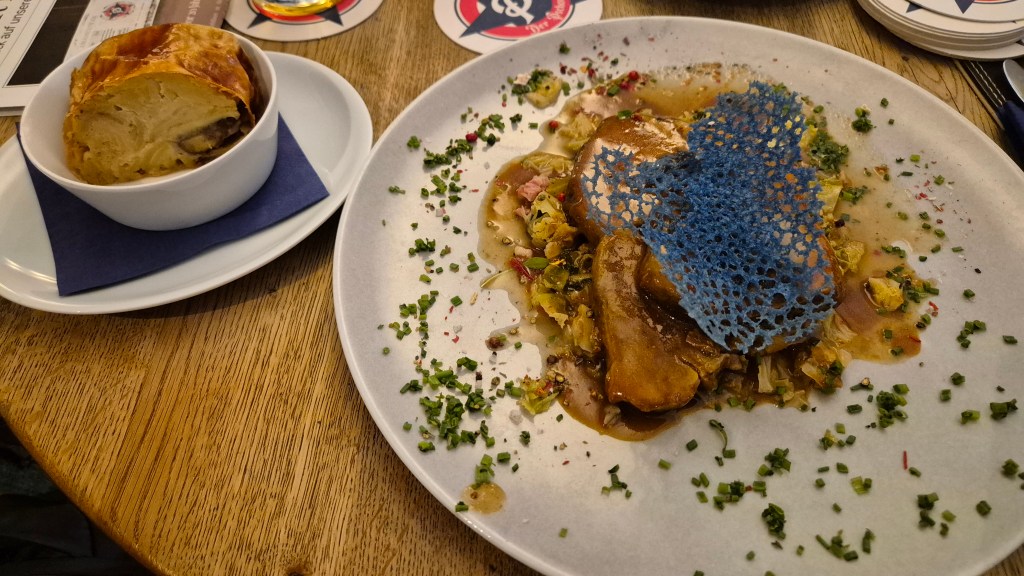
At the far side of the Viktualienmarkt is Der Pschorr, a beer hall run by the Hacker-Pschorr Brewery (one of the six Munich breweries) where we decided to stop for lunch. We were sat up on the mezzanine floor so had a nice lazy lunch whilst people watching, with the pretzel carpaccio being my starter and both of us choosing the veal shoulder for our main. I don’t know what it is about German beer houses, but I am yet to have a bad meal at one and Der Pschorr was no different as we enjoyed an excellent meal. Obviously being in a beer house we went for the home breweries beer, starting a mini challenge to try all six breweries before we went home.
After dinner we headed back into the heart of the city, making our way through Marienplatz and along Neuhauser Straße to the Frauenkirche, Munich’s 15th century cathedral. Entry to the cathedral is free and you can wander around at your leisure unless a service is on, with access to the top of the south tower via some steps and a lift costing €7.50. However, rather than just visit the cathedral for a look around, we had timed our visit to coincide with the free 30-minute organ recital that the cathedral hosts weekly at 1600 on a Friday. This concert is great as you get to enjoy the music of the cathedral’s stunning organ whilst also getting to sit down and rest for half an hour, all completely free (although they do ask for donations as you leave.)
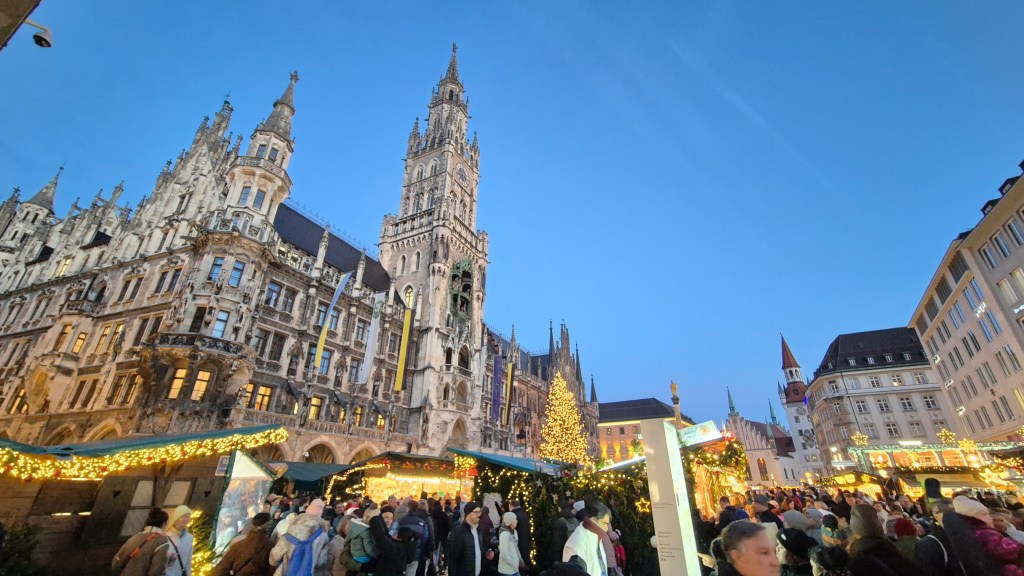
With our first full day in the city coming to an end, we wandered back through the Marienplatz Christmas Market to have our first Glühwein and Eggnog of the trip, which cost us €11 plus a €10 deposit for the two mugs. This allows you to either keep the mugs as a souvenir (which we did) or return them and get your money back, but either way means the vendors aren’t getting through 1,000s of mugs at a loss. After our warming drinks we headed down to the S-bahn to catch a train two stops to Rosenheimplatz, the closest stop to our hotel. The Munich S-bahn has short distance tickets for journeys like this which cost just €2 each, great for if you’re only making one or two short journeys each day. They also do day tickets if you think you’re going to use public transport a lot more or are staying further out.
Day 2 in Munich started with another nice walk from our hotel to Marienplatz where we headed to Cafe Glockenspiel for breakfast. With fifth story views out over Marienplatz and the Rathaus Glockenspiel, this is a very popular café and so its important to either get there early or book a table, especially if you’re intending on visiting around the time of one of the Glockenspiel shows. Whilst Beth went for the ‘Glockenspiel Breakfast’ which had a selection of meats and chesses along with some salmon and an egg, I went for the traditional Bavarian breakfast of White Sausage. These boiled sausages require a bit of deconstruction to eat but are very tasty, especially with a bit of the sweet mustard that they are traditionally served with.
After breakfast we headed to the Hauptbahnhof ready to see some more of the city, this time via a couple of bus tours. City Sightseeing do three different tours that are included in one ticket, and we decided to start with the Schwabing tour as this one only departs every two hours. The Schwabing district is a neighbourhood of Munich that has traditionally been home to many of the city’s artists and creative professionals, and with its location slightly out of the city centre, the tour also includes some other sights that wouldn’t fit in a city centre tour. The tour took us our past the Old Botanical Gardens (now a park with a beer hall) and the eternal flame of the Monument to the Victims of National Socialism before heading down the 1.3km long boulevard of Ludwigstraße which is lined with a multitude of official buildings.
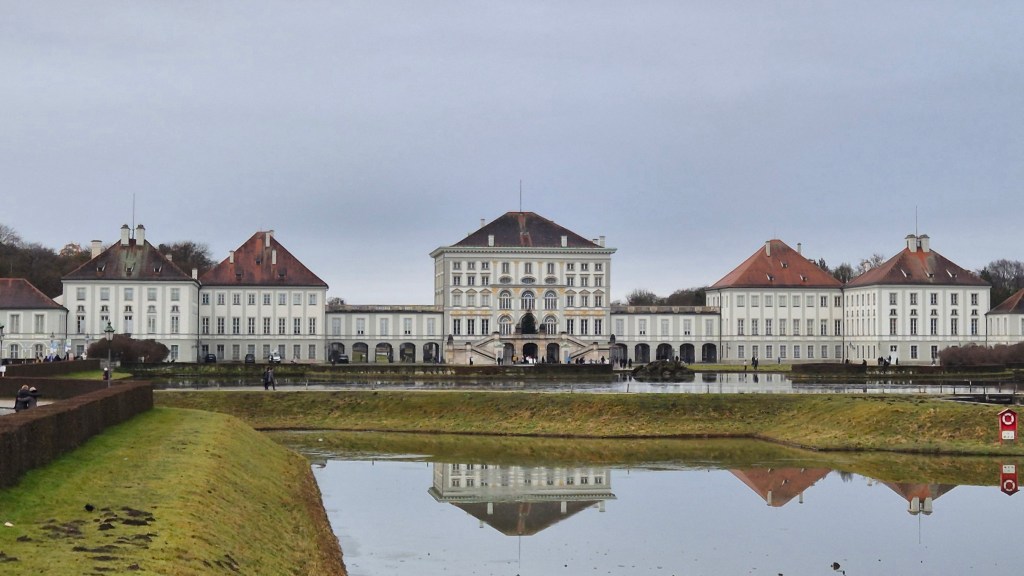
The Schwabing tour also takes in the edge of the Englischegarten, a huge park to the north-east of the city centre, which is home to the Chinese Tower beer garden, which can serve up to 7,000 people at once. After heading around the Schwabing district and seeing where the artists lived, the tour then takes you via the area hosting many of the city’s art galleries (Pinotek Modern, Nues Pinotek & Alte Pinotek) before finding its way back to the Hauptbahnhof just under an hour later. The second tour we decided to do was the Nymphenburg/OlympiaPark tour, which as the name suggests takes you out to the Nymphenburg Palace and Munich’s Olympic Park. This tour also connects with other key tourist destinations such as the Löwenbräu Brewery and Beerkeller as well as the BMW headquarters and visitor’s centre.
With two bus tours under our belt it was time for lunch, but I feel this is a good point to pause the blog and end part 1. Part 2 of our time in Munich will follow next week and will include some more great food, some more Christmas Markets and a stunning view of the city. Please subscribe and follow me on social media to be reminded when the post is live.
 Flights & Times