
Hamburg is one of my favourite cities in Europe and so when I had the opportunity to visit it again as a day trip during our holiday in Germany back in September, I wasn’t going to turn it down. Whilst I arrived in the city pretty much on time onboard a DB ICE service from Hannover Messe (read about that here), the timings didn’t realistically work for me to make it over to the Rathaus in time for an 1100 walking tour. However, there’s still plenty to see and do in the city and so I started my day by heading outside and jumping on one of the sightseeing bus tours.
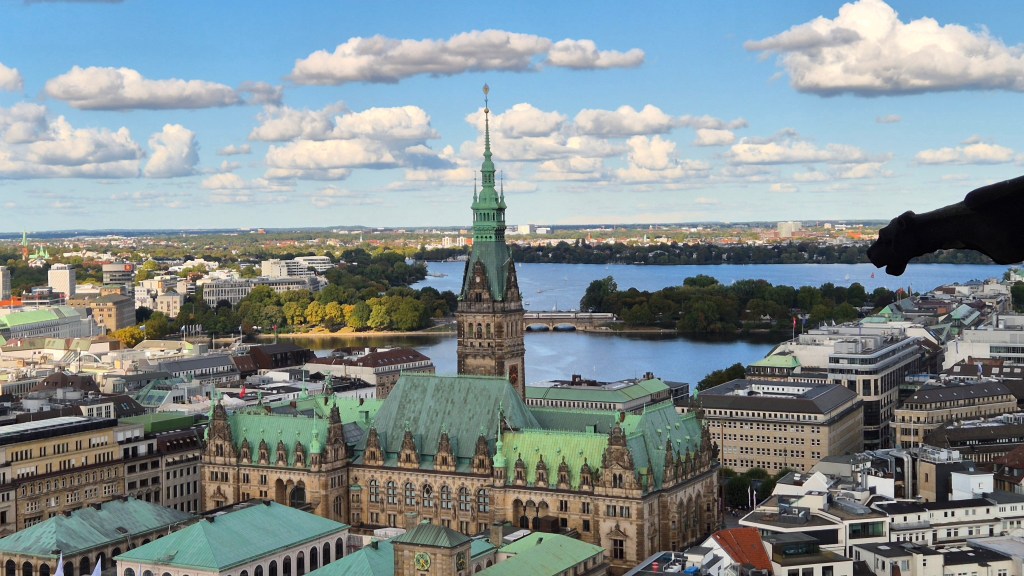
The first stop on the sightseeing tour was weirdly the bus station, I assume mainly to capture the market of those arriving in the city by coach, although the commentary did highlight the electric buses that are recharged by pantograph. From there the tour headed along the Mönckebergstraße shopping street to Hamburg’s oldest church, St. Peter’s, one of the five main churches in the city. Whilst there has been a church on the site since the late 12th century, the current church was constructed in the years following Hamburg’s great fire of May 1842, with the tower being completed in 1878. This tower, used as a navigation landmark by the allies, meant that the church survived World War 2 relatively unscathed and the building you see today is vastly unchanged from the 19th century. Mönckebergstraße is also home to the Rathaus and Rathausmarkt, with the former being a 19th century replacement for the original which, as with St. Peter’s church, was destroyed in the great fire.
From the Rathausmartk we headed towards the docks and for a while followed the route of Line 3 of the Hamburg U-bahn. Line 3 is the oldest of the Hamburg U-bahn lines, having been in operation since 1912 and is known as the Panoramabahn for the views it provides as it heads around the city mostly above ground. Ironically in Hamburg the vast majority of the U-bahn lines (traditionally seen as the metro/underground) are above lines, whilst the S-bahn lines travel mostly underground. The bus tour continued towards Damntor station, an important station for both the S-bahn and national/international rail services and one that used to be used when VIPs arrived into the city by train.
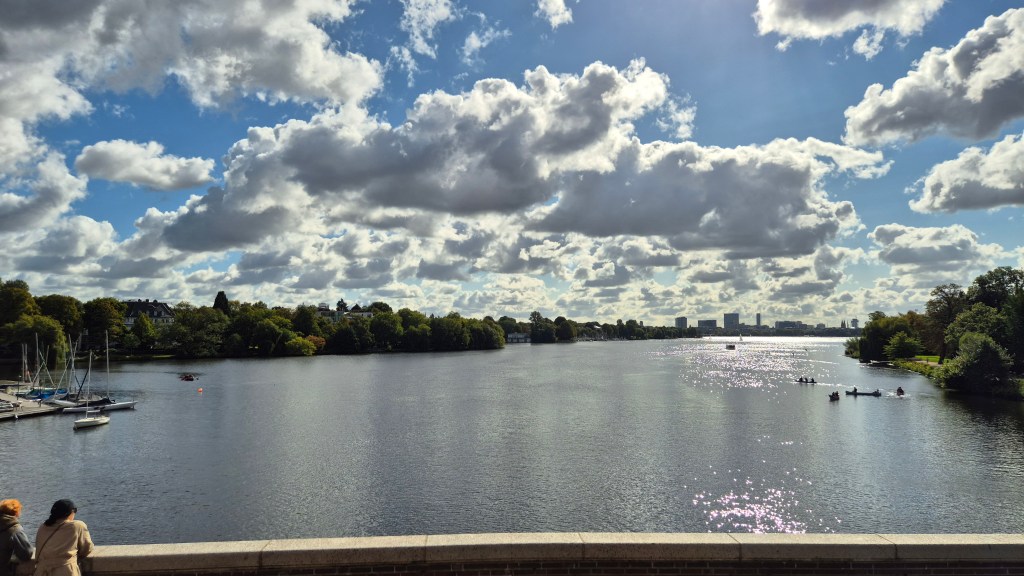
After a lap around the Außnalster lake which provided great views of the city and TV Tower, the bus took us back towards the Rathaus, passing the Alsterpavillion, a rather unlucky building that had been destroyed six times throughout its history, and the Altser shopping arcade full of high-end shops. Upon leaving the Rathaus at this point in the tour, we headed out to the docks again, this time via the Reeperbahn and passing the oldest canal bridge in the city, a toll bridge dating from 1633. We also passed the ruins of St Nikolai church, left in place as a memorial to World War 2, and the very much not ruined Michaeliskirche, another one of Hamburg’s five main churches. As we made it into the area of the docks that forms the UNESCO World Heritage site it was time for me to jump off the bus and head to my next destination, Miniatur Wunderland.
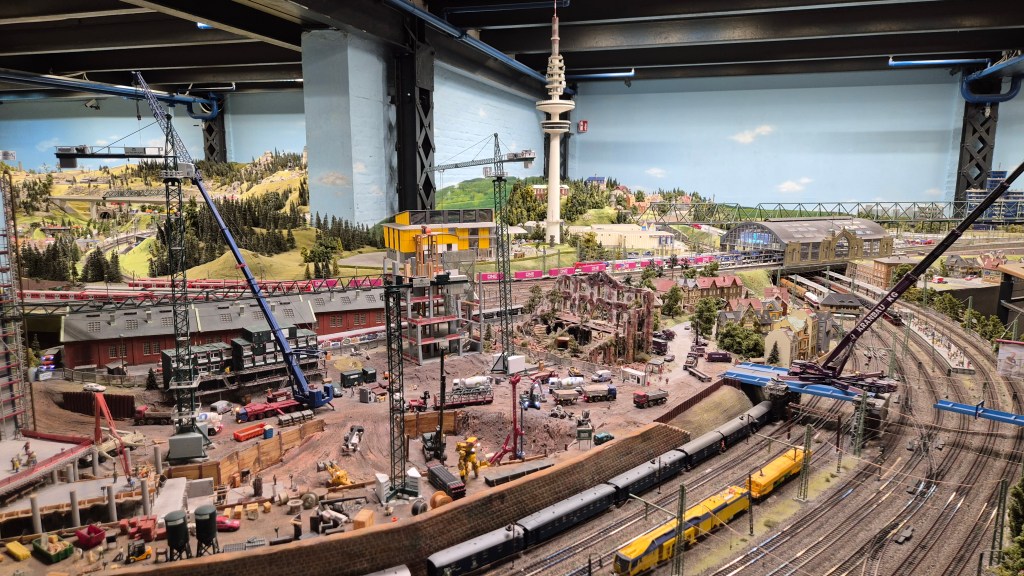
Located above the Hamburg Dungeon in a dockside warehouse, Miniatur Wunderland holds the Guinness World Record for being the largest model railway system in the world. Originally opened in 2001 with a model railway based on Central Germany, Austria and the fictional German town of Knuffingen, Miniatur Wunderland has continued to grow and grow and in 2020 expanded into another warehouse across the dock, connected by a bridge, with the space used to create models based on Antarctica and South America. All in all there is more than 16km of track, 3600 sets of points and 1400 signals across twelve zones including Hamburg, Scandinavia, Switzerland, Monaco and North America. The Hamburg zone alone has more than 200 trains in operation!
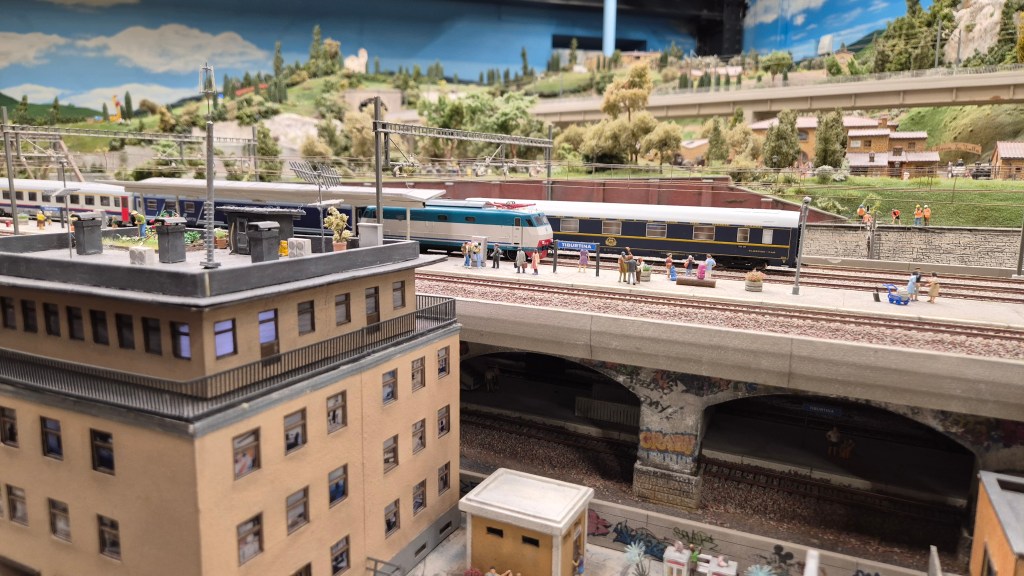
The level of detail is just incredible and although I’ve visited a few times now, I find things I haven’t seen before on every visit and that’s just in the zones that were there before. During my visit the Austria zone had a thunderstorm, whilst one zone (I can’t remember which) had a working ship lift. Of course, there’s also Knuffinglen airport to have a look at with its arriving and departing aircraft, including the Millenium Falcon. With Miniatur Wunderland constantly expanding, you could easily visit regularly and still enjoy yourself. Due to its popularity, general entry to Miniatur Wunderland is via timed tickets, however you can also book onto guided behind the scenes tours of Miniatur Wunderland or try out the VR Experience, both of which allow you entry into the main experience at any time.
After plenty of time spent exploring and also ticking of the VR experience which was ok but not something I’d bother with again, I had a late lunch in the café before heading back outside to finish off the bus tour. Heading into HafenCity, a ‘new town’ built on a former area of docks, we learnt that the whole area had had to be raised by around 10m for flood protection as it sits outside the city’s protective dykes. The newest part of HafenCity, and the final piece of redevelopment for this area, is the Übersee quarter which only opened in 2025 and has a focus on sustainability, aided by the newest U-bahn line, the U4, which opened in 2012 when the stations of Überseequatier and HafenCity Universität in the HafenCity also opened. The HafenCity is also home to the International Maritime Museum, located in the oldest warehouse in Hamburg and home to a collection of more than 40,000 model ships and other maritime related objects. Unfortunately, I didn’t have time to visit on this occasion, but its certainly one to consider in future.
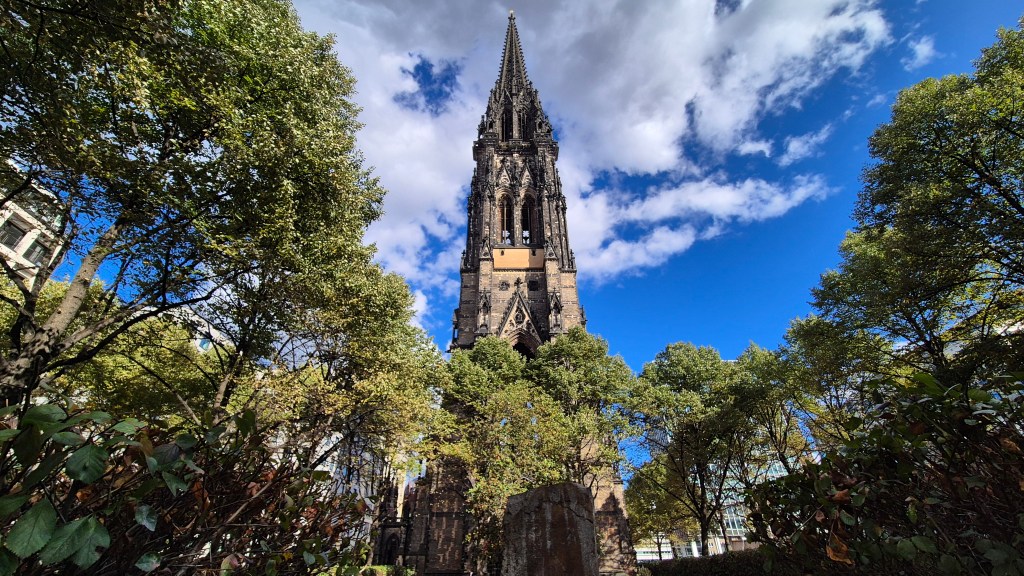
With the bus tour ending back at the Haupbahnhof I was well placed to head back out into the city to do some more exploring and so jumped straight onto the U-bahn to Rödingsmarkt to visit the ruins of St. Nikolai church that the bus tour had passed earlier. Replacing a earlier church that, as with many buildings in Hamburg was destroyed by the 1842 fire, St. Nikolai’s reconstruction was completed in 1874 and for two years held the title of being the tallest building in the world. Designed by famous English architect Sir George Gilber Scott, whose works include the Albert Memorial in Kensington Gardens and the Midland Grand Hotel at St Pancras Station, St. Nikolai’s was one of the five main churches of Hamburg until it was destroyed during the bombing of Hamburg in World War 2. Rather than rebuild the church, the ruins were left in place as a memorial, with the crypt being opened as a museum focused on the bombing of Hamburg and the tower now open as a viewing platform.
It costs €6 for a ticket to the museum and to take the lift up the tower, whilst you can wander around the former nave and view any temporary exhibition its displaying for free. The church’s spire stands at 147m and is still the 2nd tallest building in Hamburg and the 5th tallest religious building in the world, with the lift taking you to a heigh of 75m at the top of the tower. I certainly think its worth a visit for the viewing platform alone which provides stunning views of the city, whilst the museum is also really interesting especially to read about events from a German point of view. For €6 I really do think its well worth the money to visit.
From St. Nikolai’s I headed back to the U-bahn to catch a train to Landungsbrücken where I could walk through the Elbe Tunnel under the river. Built in 1911, the Elbe Tunnel was an engineering marvel with two 6m diameter tunnels running 24m below the surface and provided a vital connection between the city centre and the dockyards for tens of thousands of workers. Since 2023 the tunnel has been closed to motorists, allowing pedestrians and cyclists a safer and cleaner route under the Elbe. Passage through the tunnel is free, so it’s great way to see some of Hamburg’s history up close and, following a recent refurbishment, the white, cream and green tiled walls are beautiful to look at and much nicer than the Greenwich foot tunnel. It also clearly still popular as there were lots of pedestrians walking the 426m long tunnel and every time one of the lifts reached the bottom, there was a wave of bikes exiting.
Whilst the dockland area on the south side of the Elbe is not the most touristy destination, it does provide good views of the cityscape across the river and the Brücke 10 food truck has set up shop next to the viewing point to feed those that do come for the view. I decided to get a traditional Fischbrötchen (fish in a bread roll) to eat whilst I enjoyed the view and, whilst not my usual choice of snack, it was pretty tasty with very fresh fish! Unfortunately, my time in Hamburg for this visit was coming to an end as it was time to head back to the Haupbahnhof to catch my train and so, after hiring one of the city bikes, headed back through the Elbe Tunnel to Landungsbrücken where I could catch the S-bahn back.
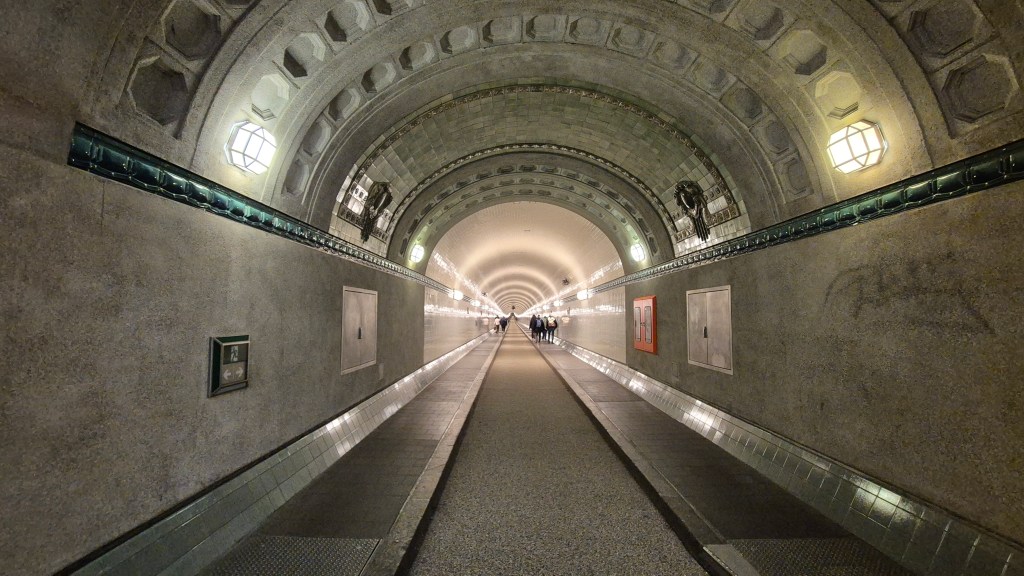
I really can’t emphasise how much I love visiting Hamburg as there’s so much to do and it’s just got an excellent vibe. Every time I visit I find something new to do, even if that’s just head through a 100+ year old tunnel under the Elbe, and of course Miniatur Wunderland is one of my favourite things to do. Whether it’s a day trip, a weekend away or a longer holiday, Hamburg is a great place to visit and I’d 100% recommend it as somewhere to go. Until next time Hamburg, Bis Später!
 Flights & Times
One thought on “Hamburg – Tor Zu Welt (Gateway to the World)”