
This is the second of two posts covering our time in and around the Irish city of Cork, so if you haven’t yet read the first part (here), I’d recommend doing that first. As a re-cap, after a late-night arrival into Cork, we’d spent our first morning taking part in a free walking tour, before enjoying a delicious lunch in the English Market. Now, after a nap and refresh at our hotel, it was time to head back out into the city, to meet a friend for dinner at a highly recommended restaurant.
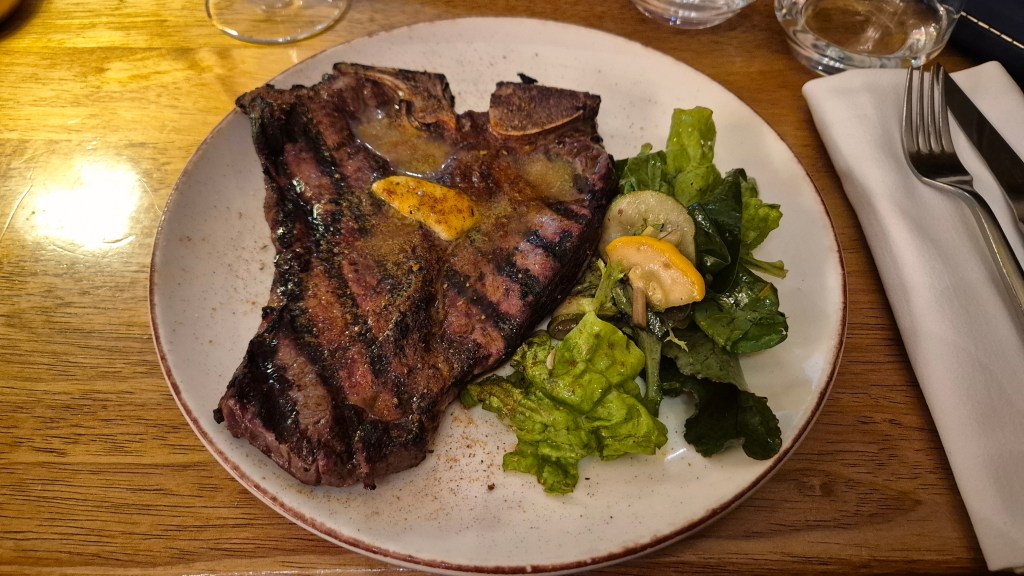
Elbow Lane Brew and Smoke House is located at the eastern end of Oliver Plunkett Street, Cork’s main thoroughfare, and was chosen by Beth’s friend due to the rave reviews it had been getting in the few weeks since it had re-opened. With a nano brewery located at the back of the building and an open kitchen where you can see the meat being flame grilled, Elbow Lane has a chilled atmosphere and serves absolutely amazing food. It’s not the cheapest place to eat, but if you’re looking for a special meal it is certainly the place to go. All of the produce is sourced locally, with the vast majority from County Cork or neighbouring County Waterford, and the furthest being the malt for the brewery which comes from County Kildare!
Of course, the only correct option for dinner at a smoke house is the steak, which was cooked to perfection and I accompanied with some crispy chunky chips. Finishing off with a beautifully light pannacotta and all washed down by a tasting board of the beers brewed just a few meters from where I was sitting, all in all it was an excellent meal! After dinner, we headed to a local bar, Sin é, for drinks accompanied by traditional Irish music, which rounded off a wonderful day. It was here I also tried my first pint of Beamish, Cork’s stout, and a good pint is always better the closer you get to where its brewed.

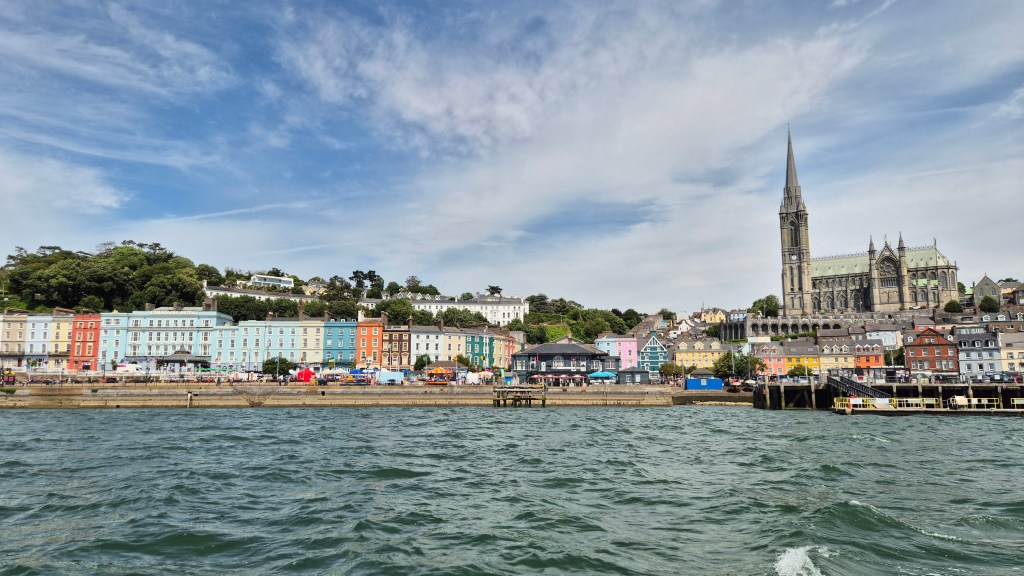
Our second day in Cork started as a glorious summer Sunday and so rather than stay in the city, we decided to head out to the town of Cobh on the edge of Cork Harbour. Cobh is famous for the being the final port called at by the Titanic before her fateful voyage across the Atlantic, and in its role as the modern-day Port of Cork, is a regular stopping off point for cruises around the British Isles. Just a 25-minute train ride from Cork Kent station, with return tickets costing less than €7, Cobh is cheap and easy to get to from the city and is a great place to head to for the day.
As well as being a pretty coastal town, Cobh has plenty to see with memorials to both the Titanic and Lusitania, and the stunning St Colman’s Cathedral sitting above the town centre. If you fancy dipping your feet in the water, you can head out the eastern end of the town to Cuskinny Beach, which is about a 3km walk from the station, or if you’d rather not get too wet, you can do as we did and catch the boat out to Spike Island. Tickets to Spike Island cost €27.95 and include the return ferry, entry onto the island itself and a guided tour of the former fortress that sits atop the island.
Spike Island is located in the middle of Cork Harbour, the second largest natural harbour in the world, opposite the entrance from the Celtic Sea. Originally the site of a monastic settlement, the island first had fortifications installed in the early 17th century before a permanent fortress was constructed in the late 1700s. The present Fort Mitchell was constructed in the early 19th century, shortly after the Acts of Union came into force, meaning for the first time the construction was planned by the Board of Ordnance in London. From 1847, the Fort also saw use as a prison, at one time becoming the largest prison in the British Empire and gaining a reputation as Ireland’s Alcatraz, continuing to be used as both a garrison and a prison throughout the Irish War of Independence.
Following the establishment of the Irish Free State in December 1922, Spike Island remained in the hands of the British as one of three ‘treaty ports’ before finally being ceded to Ireland in July 1938. The island remained as a prison and military base after being passed into Irish control, with the prison facility lasting much later and being the site of the 1985 riot, eventually closing in 2004. In 2009 the island was transferred into the ownership of Cork County Council and following redevelopment as a tourist attraction, summer tours to the island started from Cobh in 2015.

The boat from Cobh takes around 20 minutes to reach Spike Island via a circuitous route of Cork Harbour, passing Haulbowline island which is still be in use by the Irish Naval Service. When you arrive on the island there’s a welcome briefing by a member of staff covering the return boat time and bits of health and safety, before you’re allowed to start wandering. A suggested time for the guided tour is provided, however you can join any of these, and I’d certainly recommend joining one to make the most of your visit. The tour covers a lot of the outside of the fortress, telling the history of the island and including some stories such as the escape of internees during the Irish War of Independence and the 1985 riot. If you don’t fancy joining a tour, you can freely wander around most of the fortress including some of the ‘modern’ prison cells.
With it being a tourist attraction, there is of course a café and shop within the fortress, along with a little refreshment kiosk by the boat jetty. In addition to the fortress, the rest of the island is free to roam around, with two different circular walks giving great views out around most of Cork Harbour. We did part of one of these walks taking us the long way back from the fortress to the jetty, getting to see a few of the island’s ruined buildings such as the Schoolmaster’s Cottage, although all these buildings are in ruins and are unsafe to enter. Unfortunately for us the glorious weather we had started the day with turned as we were on our way back and we got a bit of a soaking as we got close to the jetty for our timed boat back across to Cobh.

Arriving back on the ‘mainland’ (Cobh itself is on a large island), we had just missed the hourly train back to Cork (its half hourly Mon-Sat) and so headed to one of the town centre coffee shops to dry off whilst we waited. Cuppacity Coffee ended up being our coffee shop of choice and they did some excellently unhealthy drinks and cakes which was just what was needed. The train back to Cork brought an end to our visit to the beautiful town of Cobh and also our time in Cork, as it was time to collect our bags from the hotel and grab a taxi to the airport.
My second visit to Cork left me with a completely different feeling to the first, and I’d argue that is once again due to not having done a walking tour on my first visit, but doing one the second time round. On this trip I had felt a real connection with the city and was sad to be heading home, having had a great time exploring both Cork and Cobh. We’ll certainly be back in the future, and hopefully we’ll have time to visit some of the city’s museums or take a trip out to nearby Blarney Castle. But until next time Cork, Slán go fóill!
 Flights & Times