
With our arrival in Cork onboard an Aer Lingus flight from Heathrow (read about that here) being just before midnight, our first day in the city started with a relaxed breakfast at the hotel before we ventured out into the city. Whilst I have visited Cork before (check out that post here), this was Beth’s first time in the city and so rather than wander aimlessly like I had done, we decided to make sure we saw some of the real city. As such, our first destination was the Opera House on Emmett Place to join a walking tour with Yellow Umbrella Tours which would show us both the touristy highlights of Cork as well as hopefully some hidden gems!
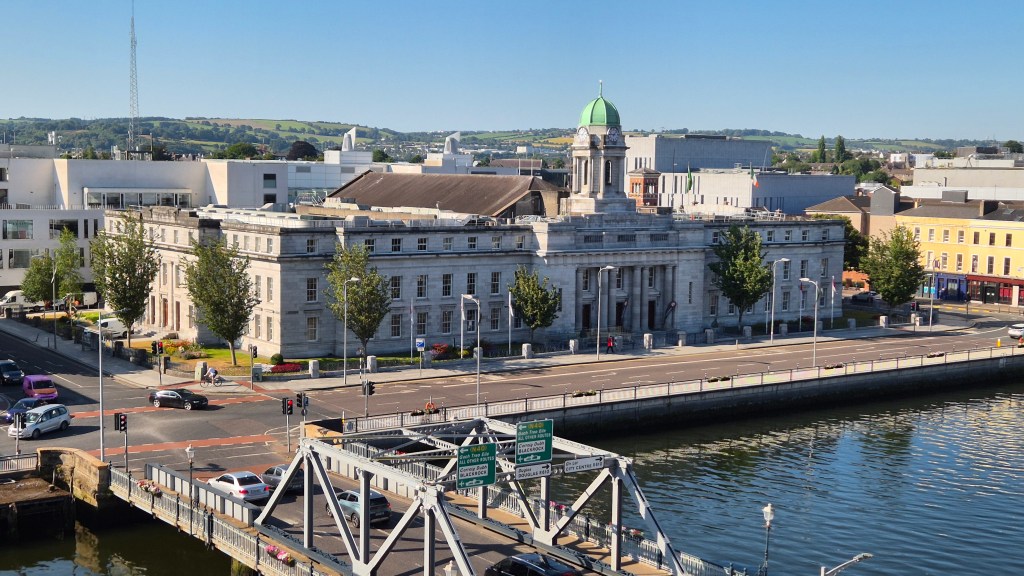
Our hotel was located at the eastern end of the island that forms Cork city centre, with views over the southern branch of the River Lee as well as Cork City Hall and the regenerated East Albert Quay. From here it was about a ten-minute walk via the city’s main thoroughfare, Oliver Plunkett Street, to the Opera House where we joined the walking tour. Our guide, Owen, started by telling us some of Cork’s history, including its founding in the 6th century by Saint Finbarr and its establishment as a proper settlement by the Vikings 300+ years later. Legend has it that Saint Finbarr chased off a serpent named Lú from the lake at Gougane Barra in the west of County Cork, and the creature’s trail created the large channel that is now the River Lee. It is also said that Saint Finbarr was led by an angel from the source of the river Lee at his monastic site to its marshy mouth where he built a monastery “out of which grew the Sea and the City of Cork”.
Whether you believe the legends of how Cork was founded or not, the city has certainly been around for over a millennium and in 2035 will celebrate 850 years since the granting of its charter by Prince John. Cork is now Ireland’s second city, located in its largest county (County Cork), with more than ½ million residents across the city and county (about 10% of Ireland’s total population). Rather than heading into the city centre, the tour started off by crossing the northern branch of the River Lee into the Shandon area of the city, climbing the hill until we were outside one of Cork’s top attractions (#15 on Tripadvisor), The Butter Museum. During the 1700s, with a large agricultural population across County Cork, and a prime location for trade across the Atlantic, Cork became one of the world’s largest producers and traders of butter. The Cork Butter Exchange, located next to the museum, became the largest butter market in the world, helping to grow Cork’s prominence on the world stage. Today, agriculture and food export still play a massive part in Ireland’s economy, contributing more than €20billion.

Just a stone’s throw from the Butter Exchange is St. Anne’s Church, a protestant church with a bell tower and the home of the Shandon Bells. Made famous by Francis Sylvester Mahony’s song “The Bells of Shandon”, members of the public can now ring the eight bells by climbing to the first floor of the bell tower. St. Anne’s has another unique feature, its weathervane, which rather than featuring the traditional cockerel, features a fish, symbolising the area’s former importance as the home of Cork’s fishing community. Whilst outside St. Anne’s our guide also gave us a brief introduction to Irish Sport, prompted by the plaque commemorating Jack Lynch, a Shandon native who had a successful inter-county Hurling career before going on to become Taoiseach (Primer Minister) of Ireland.
As we headed back down towards the River Lee and the city centre, we learnt more about Ireland’s and Cork’s history, including about the potato famine, 1798 revolution and the city’s role in the Irish War of Independence which resulted in it gaining the nickname “The Rebel City”. We also learnt about the production of Irish Whiskey and the recent increase of artisan distilleries such as the Rebel City Distillery which opened in a former Ford factory building in 2020, tours of which are now one of the top things to do in Cork. Crossing back onto Cork island by way of the Giffin Bridge, we headed towards the city centre along Main Street, stopping briefly to look at the metal plates on the pavement which mark where alleys used to come out between the buildings.
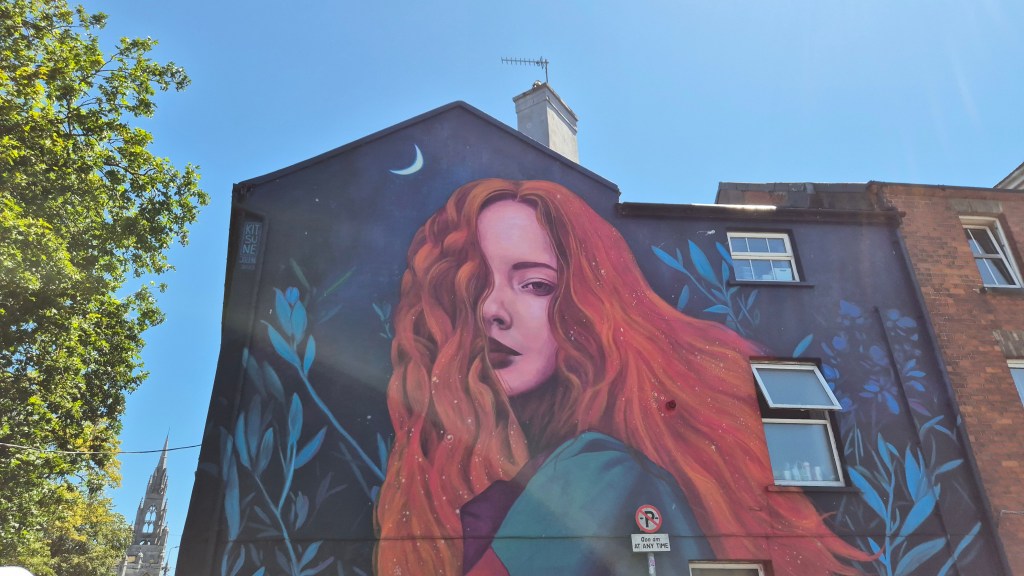
Stopping opposite Bishop Lucey Park, which has been undergoing renovations since before my last visit to Cork, our guide spent some time telling us about the history and importance of the Catholic Church in Ireland, with its ideology ingrained within the Irish institution. We also learnt about the role that referendums play in changing the country’s constitution, most famously in 2018 where the prohibition of abortion was removed after a 66.4% vote in favour of the amendment in a nationwide referendum. After a brief stop at Soma Coffee Company for some very welcome iced drinks (not included in the tour), we continued on down Main Street to the Nano Nagle Bridge and mural. Honora “Nano” Nagle was an 18th century religious sister who founded the Sisters of the Presentation of the Blessed Virgin Mary and was a pioneer of Catholic education in Ireland despite legal prohibitions. Having opened her first school for 30 pupils, within nine months, she was educating 200 girls and within a few years, she had opened seven schools, five for girls and two for boys.
The final stretch of the tour took us onto the South Mall, where we saw the entrance steps on the buildings leading up from the street to the main entrance, a relic from the days when the River Lee used to flood the area. We ended on the other side of the Nano Nagle bridge on Grand Parade, a street that’s English name is not a direct translation of its name in Irish, which is Street of the Yellow Horse. Overall the tour of Cork was interesting and covered a lot of history that I didn’t know, whilst showing us some areas that we probably wouldn’t have visited. Owen, our guide, was knowledgeable, however was let down by his lack of speed and very quiet voice, and the stops being on busy street corners wasn’t the best. Probably a 6/10 overall for the tour.
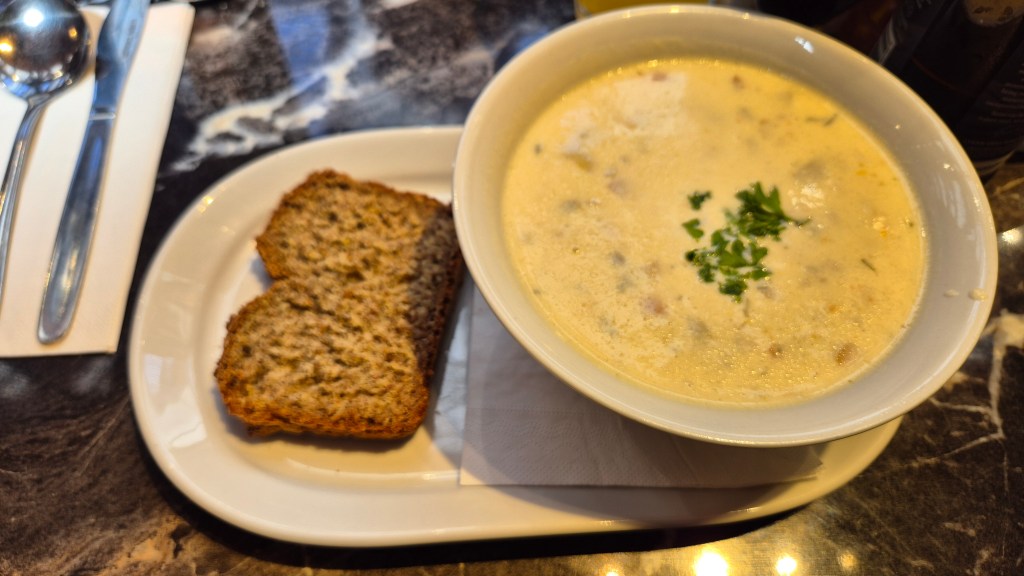
With the walking tour ending on Grand Place, we were just a stone’s throw from the English Market, Cork’s famous food market which has been described by chef Rick Stein as the “best covered market in the UK and Ireland”. Our first stop was to the Farmgate Café on the market’s mezzanine floor for lunch, where Beth went for a sandwich and I, despite the warm weather, went for the seafood chowder. I was glad I did, as it was deliciously creamy and an excellent meal, which I washed down with a pint of Stag Stout from local brewer 9 White Deer. The only downside of eating at Farmgate Café on a hot day is that heat rises and in the glazed section of the English Market, it did get a bit warm! After lunch, we had a wander around the market looking at the various stalls and picking up some cakes, before heading back to the hotel for a break and refresh.
I was originally going to put all of our trip into one post, however I’ve written more than expected for the walking tour and this post is going on a bit. So, if you want to see what else we got up to whilst in Cork, including some more excellent food and a trip to the seaside, then check out part 2 which will be live next week on the blog.
 Flights & Times