
Having arrived at Eindhoven airport on a Ryanair flight from Stansted, getting into the city itself was pretty simple, with two bus routes (the 400 and 401) connecting the airport and main railway station in about 25 minutes. I bought my ticket in advance online, but you can also buy them on the bus, with a return costing me around £8.30. The journey into the city was stress free, although I should have probably jumped off at the penultimate stop (Eindhoven Piazza) as its closer to the actual city centre and you also don’t have to work your way back across from the other side of the railway lines.
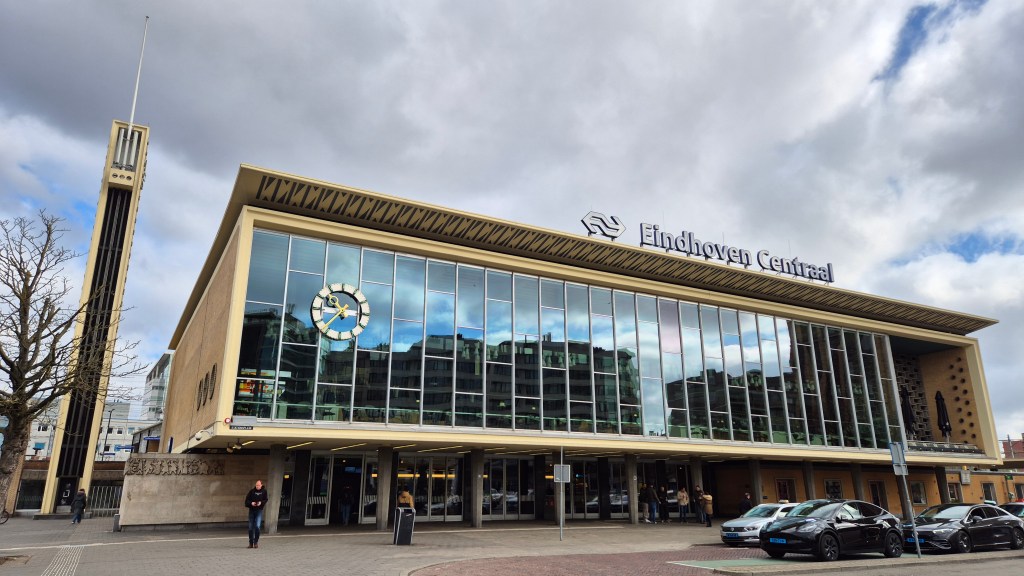
If you do end up going all the way through to the railway station, be warned that you can’t cut through the station itself unless you have a train ticket. To cross from the bus station side of the railway to the city centre, you need to head to the ‘M’ end of the bus station and then follow the foot/cycle path under the railway bridge. Reaching the city centre, I took a walk down what appeared to be one of the main shopping streets, however everything was still closed, with 1000 seemingly being the time most shops opened.
Eindhoven’s city status dates back to 1232, when the then small town was granted city rights by the local Duke and has grown from a town of just 170 houses then to a city with a population of almost a quarter of a million people now, making it the fifth largest city in The Netherlands. Although the city’s history dates back over 800 years, there are not many historic buildings in the city owing to it being heavily bombed by both sides during World War 2. Following the war, Eindhoven was rebuilt, however the post-war brutalist architecture was favoured, meaning Eindhoven is a great place to visit if you’re a fan of concrete!
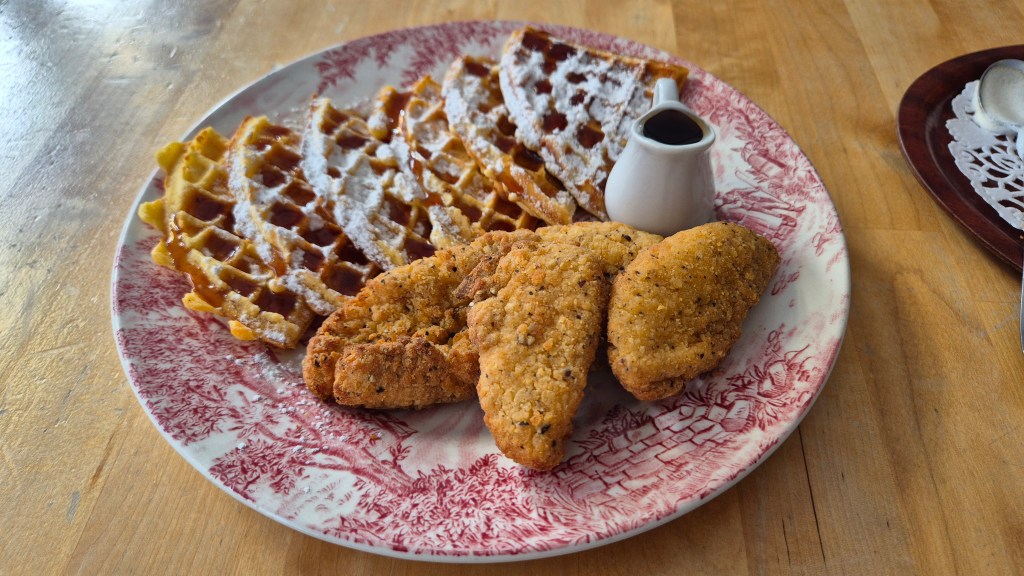
My first stop for the day was Meneer de Boer, a breakfast restaurant on the edge of the city centre near St. Catherine’s Church, where the city wall once stood. Having had a very early start to get to Stansted, I was in need of something ‘hearty’ to boost my energy and so had an excellent breakfast of Chicken Waffles along with a Macchiato for a hit of caffeine. Meneer de Boer had a relaxed atmosphere with friendly staff and was very reasonably priced, so I’d certainly recommend it if you’re in Eindhoven.
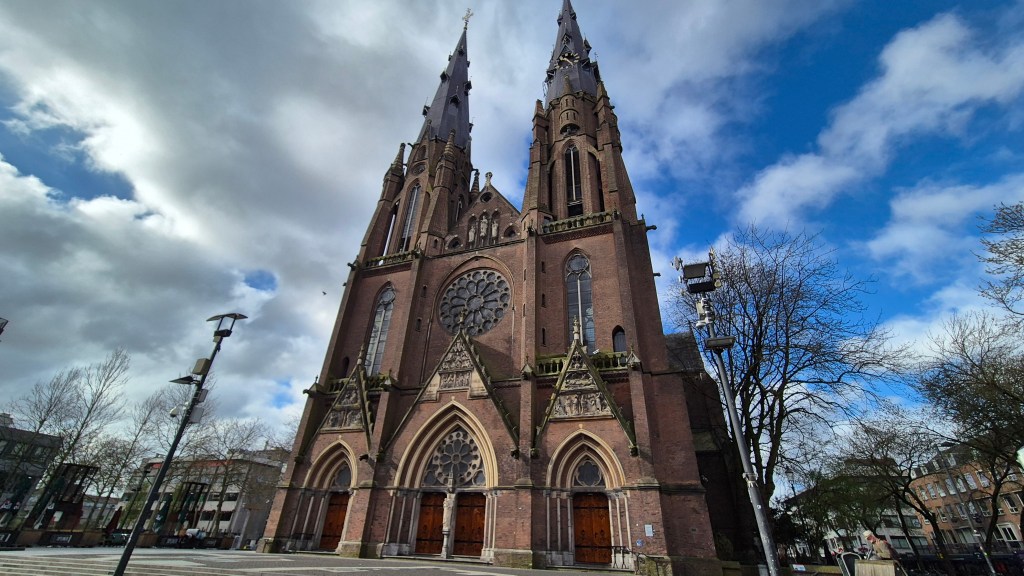
Unfortunately, after having had breakfast, my plans went a bit awry. Although there are a few different museums and tourist ‘attractions’ in Eindhoven, such as St. Catherine’s Church, the DAF Museum and the Philips Museum, it turned out that all of these are closed on a Monday. Of course, my day trip to the city fell on a Monday. The only museum on my list to visit that would be open during the day was the museum of local football club PSV Eindhoven, and even that wouldn’t open until after lunch, leaving me with a few hours to kill and not much in the city to do.
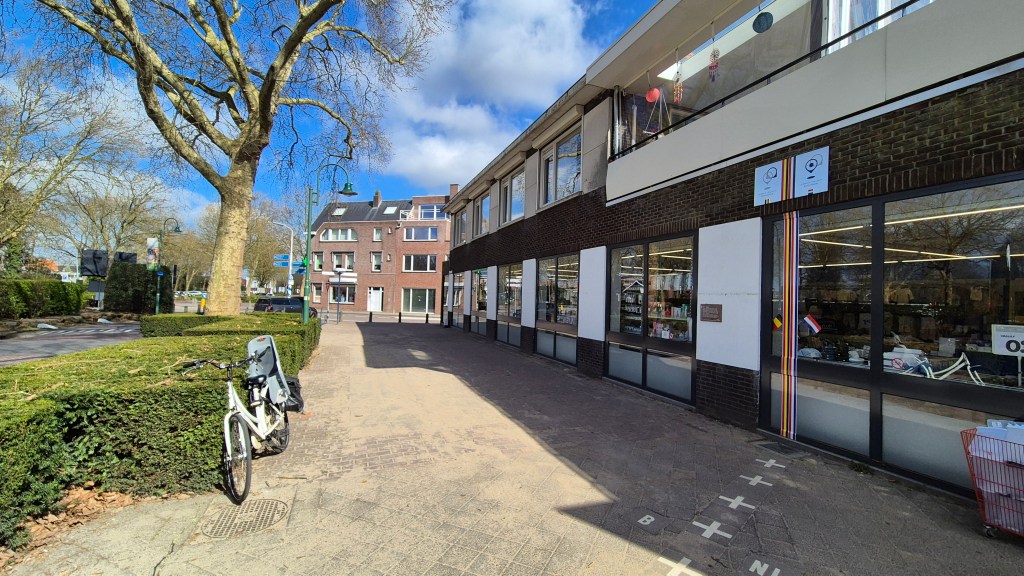
Making the best of a bad situation, I decided to head back to the station, from where I could start a trip to a geographical oddity that I’ve been wanting to visit for a while. The town of Baarle-Nassau is located a few miles from the main border between Belgium and The Netherlands, however the Dutch town is home to some 26 separate Belgian enclaves which form the town of Baarle-Hertog, which in turn have eight Dutch enclaves dotted throughout. This has led to a town which is essentially half Dutch and half Belgian, but in a very scattered manner, with plenty of houses straddling the border and a situation where you can cross the street and have crossed from The Netherlands, into Belgium and back into The Netherlands.
To get to Baarle-Naasau, you need to head by train to either Tilburg or Breda and then catch a bus to Baarle-Naasau. From Breda the buses are every 30 minutes, whilst from Tilbury they are only hourly, however if like me you are coming from the Eindhoven direction, then the wait for the bus from Tilburg ends up being about the same as if you take the train the extra 15-20 minutes to Breda. There is also a bus that crosses the main border to the Belgian town of Turnhout, linking the enclaves with the bulk of Belgium.

During my hour wandering around Baarle-Nassau, I think I must have crossed the border atleast a dozen times as I took a circuitous route around the town to visit some of the enclaves within enclaves. The two towns’ churches are just a stone’s throw away from each other, with Baarle-Hertog’s St. Remigius Church sitting just inside the main largest Belgian enclave, whilst Baarle-Nassau’s Onze-Lieve-Vrouw van Bijstand-kerk sits on a street that lies in ‘mainland’ The Netherlands, however at both ends is cut off by the Belgian border. Essentially, I spent my time being a geography-geek and thoroughly enjoying the madness that is the Dutch/Belgian border here!
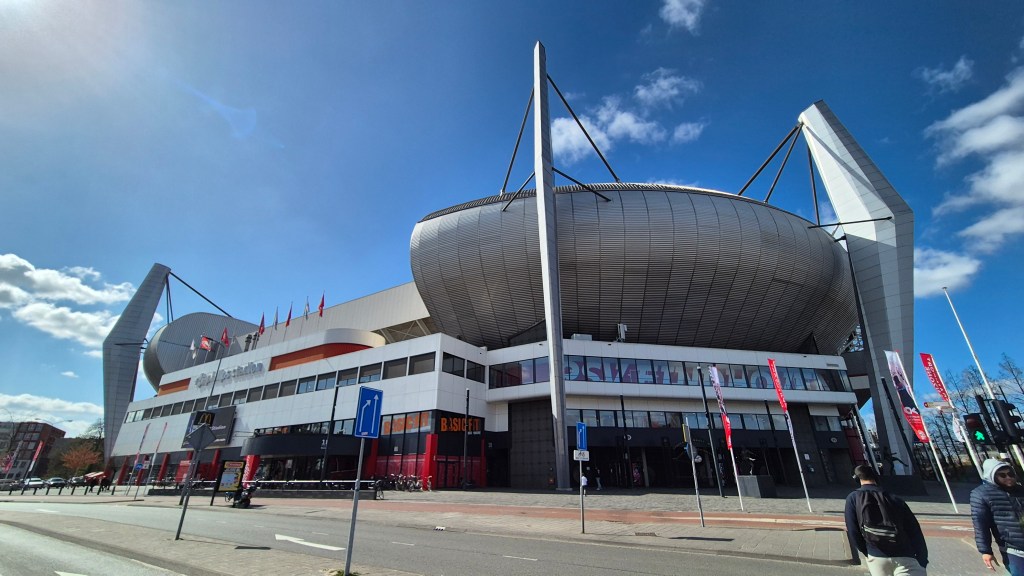
By the time I’d made way back from Baarle-Nassau to Eindhoven via Tilburg, the PSV Eindhoven Museum had been open for little while and so I made my way across town to pay it a visit. Founded in 1913 as a team for employees of Philips, PSV has become one of the most successful clubs in The Netherlands, having won the Eredivise (Dutch top flight) 26 times, KNVB Bekker (Dutch Cup) 11 times and the Johan Cruyff Shield (Dutch Super Cup) 14 times. Entry to the club’s museum costs just €5 and tickets can be bought on the day from the club shop, from which you also access the museum. You can also book to tour the stadium, however unlike when I visited San Mamés (home of Athletic Club Bilbao) these tours are guided and so you have to pre-book.
The museum was quite interesting to wander around, although there were very limited English translations, leaving me to resort to Google translate to get a full understanding of the history. As well as the history of the club, the museum also has a section covering the development of the stadium, Philips Stadion, over the years as it has grown with the club. As well as hosting PSV and Jong PSV home games, Philips Stadion also hosted the UEFA Cup final in 2006, and group matches of the UEFA European Championships when the tournament was hosted by Belgium and The Netherlands. The final section of the museum is PSV’s trophy room, with their 51 domestic trophies and 2 European trophies on display. Whilst the rest of the museum was a bit underwhelming, seeing this much silverware on display was genuinely impressive and at the end of the day, I’d only paid €5 to wander round so wasn’t too fussed.
With Eindhoven’s one open tourist attraction ticked off, I had a bit more time to kill until I had to head to the airport and so decided to head back to the railway station and take a ride on some more trains. Although I didn’t really have time to explore any other towns, I decided to catch the train to the region’s capital, ‘s-Hertogenbosch, purely because I’m fascinated by the name. It turns out the name is a contraction of archaic Dutch and translates roughly as ‘the forest of the duke’, with the city having been granted city status in 1185 by Henry I, Duke of Brabant. It was a shame that I didn’t really have time to leave and explore the city as from the view out of the train window, and my research whilst writing the blog, it retains a lot more of its architectural history than Eindhoven.
Unfortunately, owing to it being heavily bombed in World War 2, its not really a city you can enjoy just wandering around and look at historic buildings, as there aren’t any, so my visit to the city only really consisted of visiting the PSV museum. I was glad of the opportunity to head to Baarle-Nassau, however all in all my visit to Eindhoven really didn’t do the city justice, as many of the ‘attractions’ that I’d have liked to visit were closed. I think I’ll have to come back to Eindhoven again in future, and perhaps stay a night or two to allow me to explore nearby ‘s-Hertogenbosch as well.
 Flights & Times
2 thoughts on “Eindhoven, North Brabant and a Tiny Bit of Belgium”