
Having enjoyed a day on the Isle of Wight exploring both the Island Line and the Isle of Wight Steam Railway, it was time to head back to the mainland. On my way to the island I had caught the Wightlink Catamaran from Portsmouth Harbour to Ryde Pier Head (read about that here), and so for my journey back across the Solent it only seemed right to try out the competitor, Hovertravel. Whilst Wightlink’s Catamaran is pretty speedy, Hovertravel do one better, with their Solent crossings being operated by the UK’s only commercial Hovercraft.
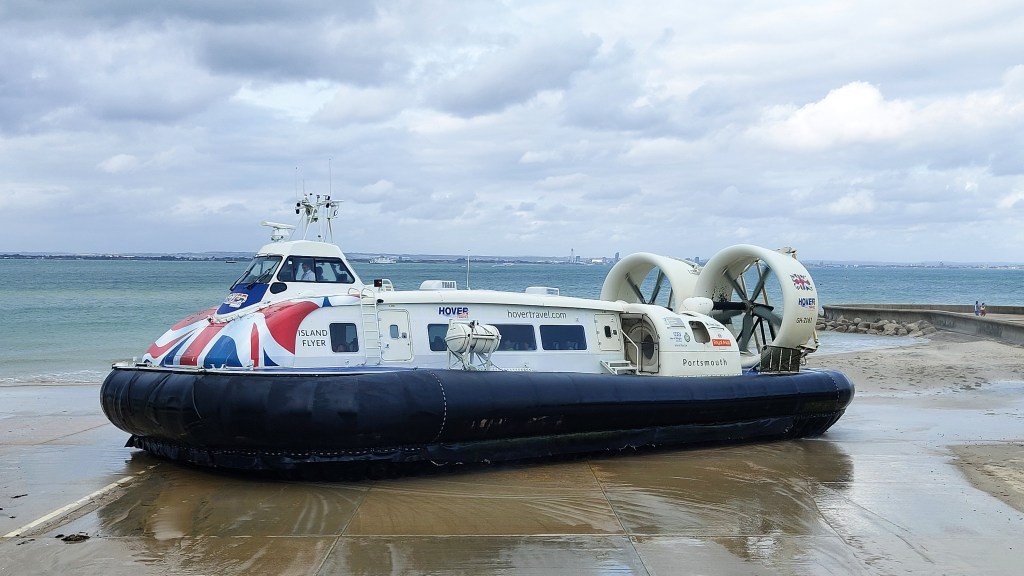
Whilst Wightlink operate between Portsmouth Harbour and Ryde Pier Head, both of which have direct connections to the rail network, Hovertravel operate between Southsea on the mainland, and Ryde Esplanade on the island. The latter is just a short walk from the Island Line station of the same name, through the bus station and over the railway, however at Southsea Hoverport, a bus connection is required to link to the mainline at Portsmouth & Southsea station. Unfortunately, this does mean that, whilst generally Hovertravel’s journey times are shorter at 10 minutes vs 22 minutes on Wightlink, the train-to-train journey time can end up being a bit longer.
As with Wightlink, a ‘rail and sail’ ticket can be purchased which includes the ferry crossing, however if you do this Wightlink advise making a reservation for a specific crossing. This needs to be done 48 hours before travel, and if you don’t have a reservation, you get sent to join the ‘standby queue’ which allows you to board the next service that has capacity. Whilst I haven’t got an issue with this in principle, I wasn’t particularly impressed with the member of staff at the entrance to Hovertravel’s terminal who was quite rude about the rail ticket being a ‘3rd party booked’. Unfortunately, this wasn’t the only poor experience I had with staff during the journey with them generally coming across quite grumpy.
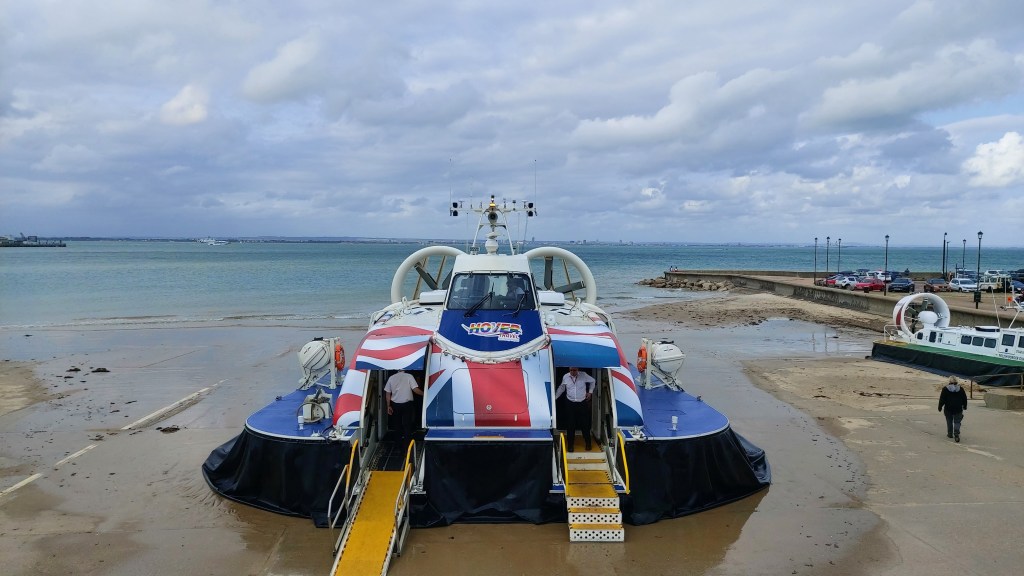
Hovertravel have two Hovercraft in their fleet, Solent Flyer and Island Flyer, both of which are Griffon 12000TDs. These can carry 76 passengers and have step free access with a ramp built into one of the two bow doors. The hovercraft also have space onboard for bicycles storage and some freight, with Hovertravel providing the connection for Royal Mail and other critical deliveries to the Isle of Wight. Unfortunately, during my visit, Solent Flyer had broken down and was parked up at Ryde awaiting an engineer’s attention and so Island flyer was doing double duties. Whilst the peak timetable can theoretically be operated with a single hovercraft, it does cause delays and, on this occasion, the 1645 departure left at 1715.
Hovertravel’s departure lounge at Ryde is very small and definitely not large enough for a full hovercraft’s worth of people and the majority of people end up standing. It also requires everyone not on the next sailing to wait outside until the previous one has departed, which during nice weather isn’t much of a problem, however I wouldn’t want to be waiting in ‘traditional’ British weather. Inside the departure lounge there’s some toilets, a small shop selling souvenirs, as well as a coffee machine and vending machine, although these provide fairly limited options.

Island Flyer arrived back at Ryde at 1749, with the inbound passengers quickly alighting and the boarding of the 1715 departure starting at 1751. With Hovertravel having their training and engineering base at Ryde, the hoverport also occasionally seeing other hovercraft visiting for maintenance or training. As we began boarding I saw that there was another hovercraft parked on the ramp, with this being SG-414, a new hovercraft belonging to the Polish Border Guard. Boarding was complete fairly quickly and the 1715 departure eventually left at 1755, 40 minutes late.
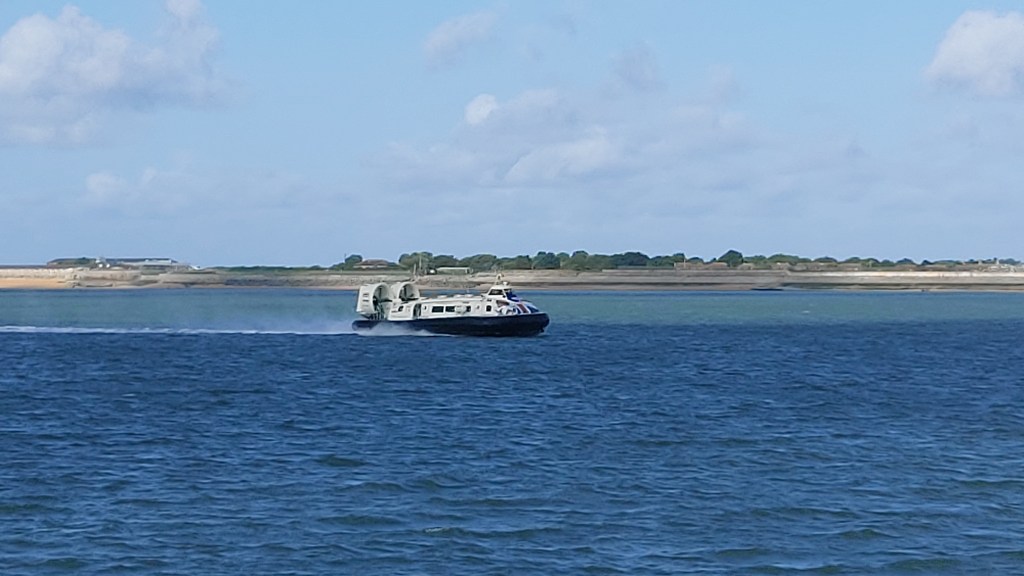
With it approaching the time of high tide, the expansive sands and mudflats that surround Ryde and necessitate the need for the pier for conventional vessels weren’t obvious as we departed. With these expansive mudflats, hovercraft have been a key part of the island’s travel connections since 1965, and for a few years a service was also operated between Cowes and Southampton. After a warm and sunny day on the island, the weather was beginning to become quite blustery with some light rain, meaning the 10 minute ‘flight’ across the Solent was quite a choppy and bumpy crossing.
Southsea Hoverport, the mainland terminal for Hovertravel, is close to Southsea Common and, at the time of my journey, the site of the Victorious Festival. Located about a mile from Portsmouth & Southsea railway station, there is a shuttle bus that is included in ‘rail and sail’ tickets, although if the hovercraft is delayed the connections start to not work quite as well. We arrived at 1806, 41 minutes later than booked and, with a half hourly bus service timed to meet the half hourly hovercraft crossings, I had a 20 minute wait for the bus to arrive. With a 10 minute journey then around Portsmouth to the station, it was almost 1900 by the time I arrived at Portsmouth & Southsea and was able to catch a train.
Overall I’d say that travelling onboard one of Hovertravel’s hovercraft is great for the novelty, but generally not the best option if you’re visiting the Isle of Wight as a tourist. Whilst the connection at Ryde is ok, the connection at the Southsea end leaves a lot to be desired and compared to the Wightlink connections is certainly a lot more hassle. I was disappointed with the general attitude of the staff which wasn’t particularly helpful or welcoming and obviously the delays to the services weren’t great for anyone trying to make train connections on the mainland. As I’ve said, if you haven’t experienced a hovercraft, its probably worth doing the journey once or twice for the experience, but otherwise I’d generally recommend doing the crossing between Portsmouth and Ryde with Wightlink.
 Flights & Times