
Back in August, we headed south to Tonbridge one Friday after finishing work to stay a couple of nights in the Kentish market town. Despite the town having plenty to see and do in the vicinity, we weren’t staying in Kent to do any of that, we were staying to enable us to get an early start and leave the Garden of England by way of doing something a bit different. Saturday 17th August was the day in 2024 when old London buses took over the town of Warminster and the nearby Salisbury plain and so we were heading to Imber, by Hastings!
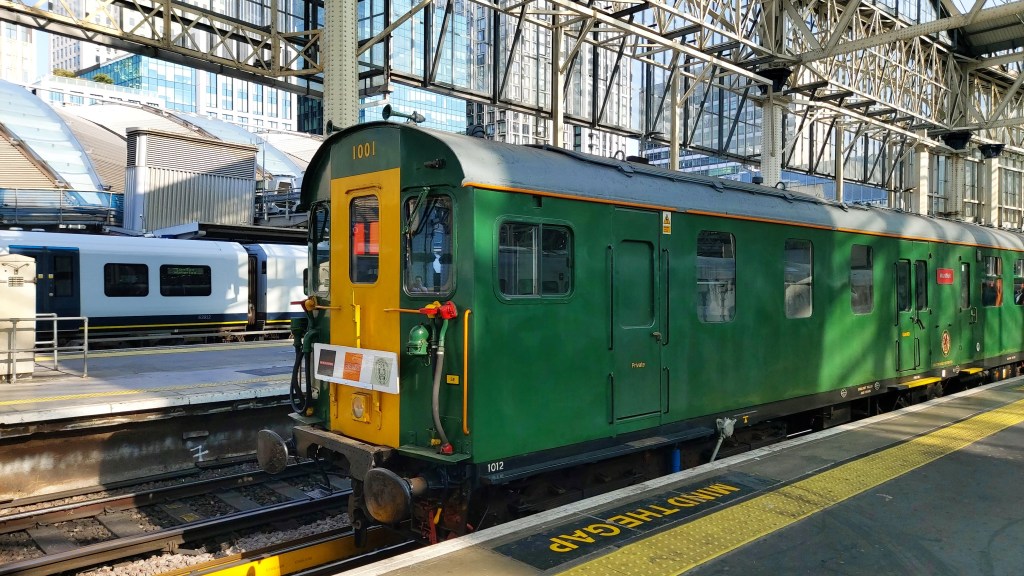
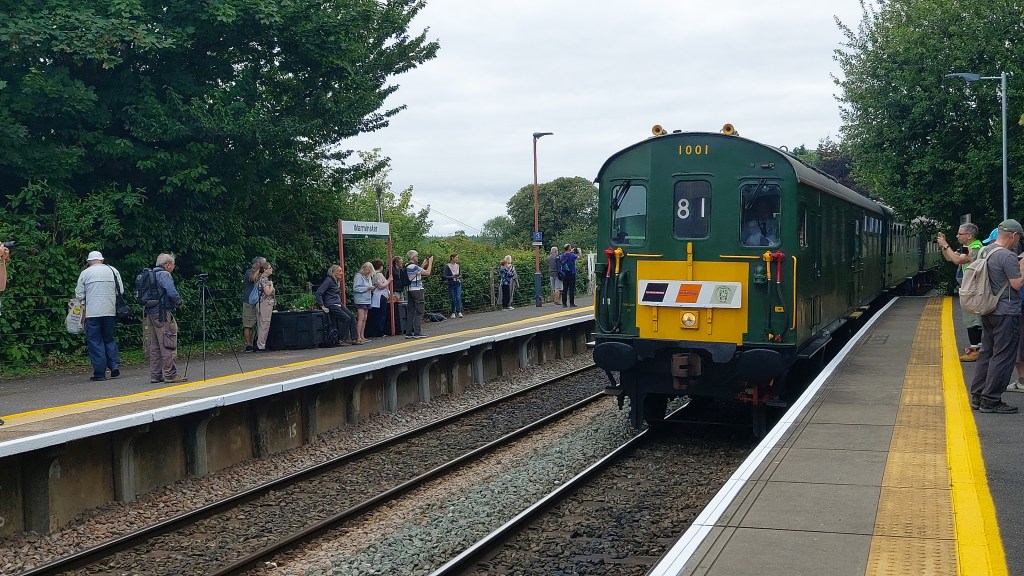
Just after five past eight on the Saturday morning, our train for the day rolled into Tonbridge’s platform 1, arriving slightly late on its trip from the depot at St. Leonards near Hastings. 201002, often known as ‘Unit 1001’ is the pride of the Hastings Diesels fleet and is a historic Diesel-Electric Multiple Unit that formerly operated on the London Charing Cross to Hastings via Tonbridge route for British Rail between 1957 and 1986. These days the unit is actually made up of carriages from a number of different units, with the Hastings Diesels fleet now comprising of 14 former ‘Hastings’ coaches in various forms of repair along with three non-Hastings coaches, one of which is the buffet car.
This journey to Warminster and back on the ‘Hastings’ would be my first proper rail tour, and we were in standard class for the return trip to Wiltshire. We left Tonbridge a few minutes late owing to the unit’s late arrival, caused by congestion as a result of an earlier level crossing failure at Robertsbridge. With the main route to London closed by a possession between Tonbridge and Orpington, we were routed along the line towards Redhill, passing through Godstone enroute and its siding into Godstone Tip. The first stop on the charter to pick up other passengers was at South Croydon and our arrival into the south London station was six minutes late owing to the train initially having been routed into the wrong platform.
All our delay was recovered during our extended stop at South Croydon, and we were soon winding our way through the maze of lines that forms the commuter railway south of the Thames. Our next stop would be at the busiest station in the country, London Waterloo, however before we arrived there we would traverse a rare bit of track for passengers. The Linford Street curve connects the ‘Atlantic Lines’ towards London Victoria with the ‘Windsor Lines’ towards London Waterloo and was formerly used by Eurostar services during their era serving Waterloo. With this bit of track ticked off, we continued along the ‘Up Windsor’ arriving into Waterloo six minutes early.
With the driver having changed ends, our departure from Waterloo took us onto fast line all the way to Basingstoke, with just a short final stop at Woking for a crew change and to pick up the final passengers. After Basingstoke we left electrification behind as we joined the West of England mainline towards Salisbury and Exeter. According to Real Time Trains we were due another stop at Salisbury, however we passed through without stopping, continuing through to Warminster with the only slowing for signals and junctions. We’d made good time on our journey from Kent to Wiltshire and arrived into the platform at Warminster at 1149, one minute early, ready to join the chaos of Imberbus!

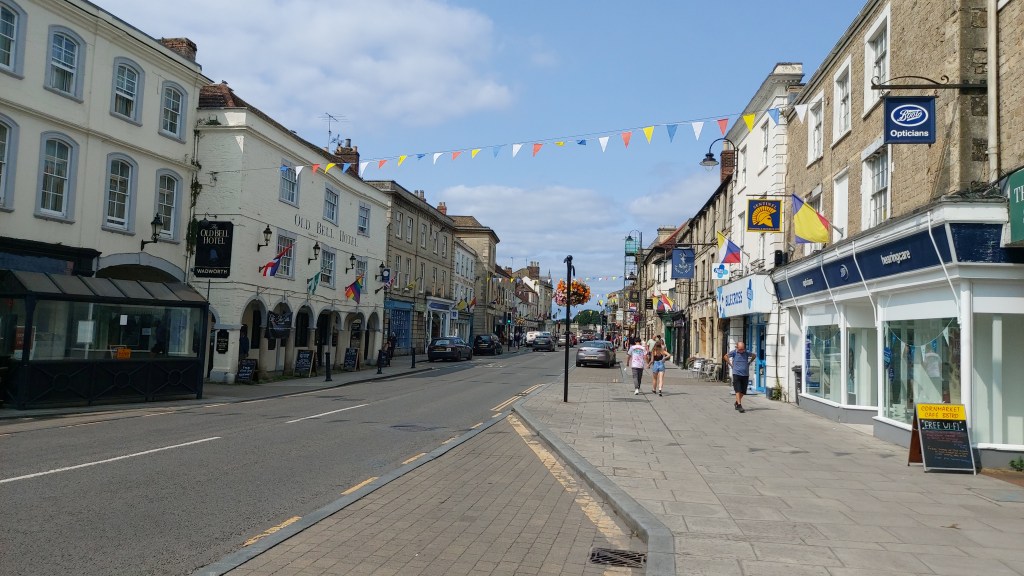
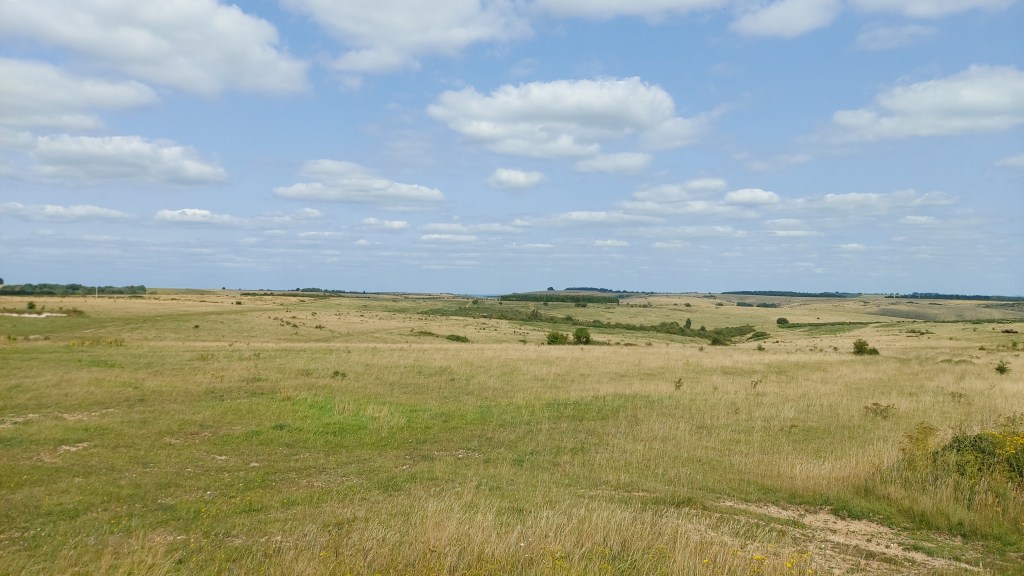
After heading into the town centre and grabbing some excellent Thai food for lunch at The Old Bell, we joined the long queue to get onboard one of the many buses operating as part of Imberbus. Imberbus was started in 2009, providing an annual service with a historic Routemaster bus that connects the town of Warminster with the abandoned village of Imber on Salisbury plain. The villagers of Imber were forcibly evacuated by the War Ministry just before Christmas 1943 as part of the preparations for D-Day and the village has remained abandoned since then. The village and large parts of Salisbury Plain remain property of the Ministry of Defence and, apart from a few odd days each year, are closed to the public. The annual event of Imberbus takes advantage of one of those ‘open days’ to open Imber up to a wider audience and raise money for charity whilst doing it.
We ended up having to wait for two pairs of buses to leave before we reached the front of the queue and were able to board a 1962 heritage Routemaster ‘RMC 1490’ for the 25-minute ride across Salisbury Plain to Imber. In addition to the ‘classic’ Routemasters, there are other types of buses in operation during Imberbus, with around 40 in total running, including some more modern types to assist in improving accessible access to the event. As well as the regular shuttle service between Warminster station and Imber (buses every 10-15 minutes, often running in pairs), some buses also continue on to the other side of the Plain, allowing visitors to also see some of Wiltshire’s smaller villages such as Gore Cross, Brazen Bottom and the Lavingtons.
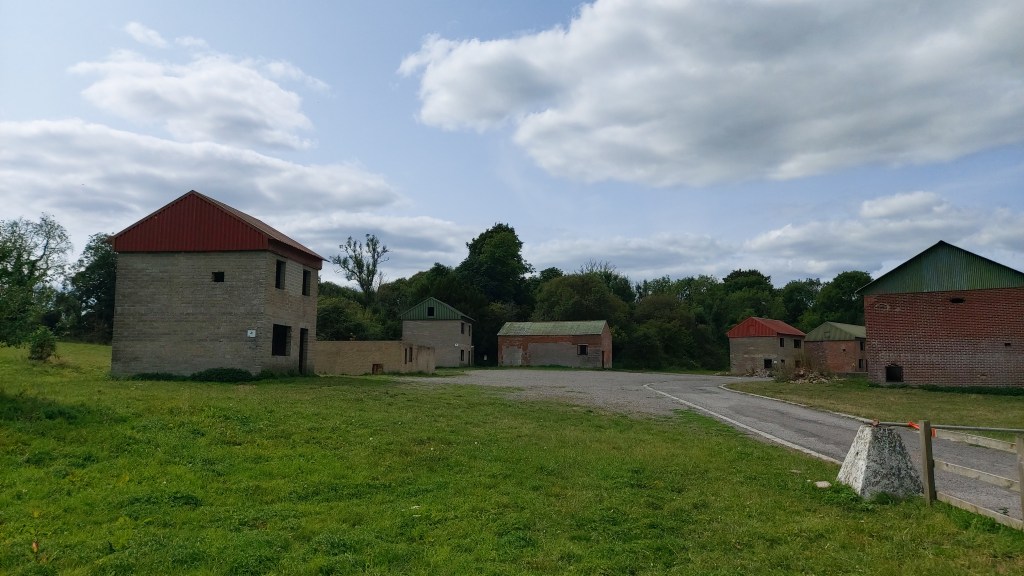
Deciding to tick of Imber itself before we did anything else, we jumped off the open rear platform of the bus on arrival into the abandoned village and set about exploring. With Imber being part of a live Army training area, there are strict rules about where you can and cannot wander, with large signs at each end of the village prohibiting pedestrian access, as well as access to all buildings being forbidden. One exception to the latter rule is St. Giles Church, which sits proudly overlooking the village and has been maintained for the most part as it would have been at the beginning of World War 2.
As would be expected, given the novelty of visiting this village that is out of bounds for most of the year, Imber was very busy with queues to both get into the church and to board the buses heading in both directions. As we queued to have a look around the church, we were treated to a performance by a local Brass Band that was set up in the churchyard, and a historic Omnibus has been provided by the London Transport Museum to sit at the end of the road leading to the church. Inside the church there is also a ‘tearoom’ set up to provide refreshments, possibly a key factor in the business of this part of Imber.
Unfortunately, we learnt that the disadvantage of visiting Imber (or anywhere else) as part of a rail tour is that you don’t have flexible timings and very much have to catch the train if you want to get home. We’d started to queue up for a bus heading towards the Lavingtons, however realised we wouldn’t actually have time to get there and back and make our train and so had to abandon that plan and head back towards Warminster. Although long, the Warminster queue was fairly fast moving with more buses operating on the shuttle and as we reached the front nearly ended up boarding one of the Routemasters owned by Lord Hendy himself. Just as we were about to cram onto this already busy bus though, an empty one arrived and we decided to jump on this to make sure we got a good seat together for the journey back.
With just enough time to grab a quick coffee in Warminster, we then headed back to the station in time to see our train arrive back from its break at Westbury Yard ready to take us back across the south of England. I was quite glad we were onboard a charter and not just catching a regular service as unfortunately one of the hourly trains had been cancelled, leaving plenty of people waiting to catch a train in 90+ minutes time. Departing Warminster on time, our route back towards London was slightly different to the route down, with us heading via Romsey, Southampton and Winchester before rejoining familiar territory at Basingstoke. With everyone having had a long day in the sun, the return journey was relatively muted as people just enjoyed the scenery in what soon became fading light. Eventually reaching Tonbridge, we all alighted and watched the ‘Hastings’ head back towards its namesake town and its home depot at St. Leonards.
I thoroughly enjoyed my first mainline rail tour and was glad to have finally ticked Imberbus off my bucket list, however I’ve got to say if I return in future I’ll make my own way and stay nearby to allow more time on the buses. The ‘Hastings’ unit that took us across to Wiltshire and back has been beautifully restored and is an absolute stunning piece of railway heritage that I’m glad to have had the opportunity to ride. There’s plenty of companies that promote rail tours across the British rail network, so if this has peaked your fancy then head to Google. Whilst the date for 2025 hasn’t yet been announced, I’m sure Imberbus will be back and just as successful in raising money for charity, so if you get the chance head down to Warminster and join in!
 Flights & Times
Fascinating post, thanks for sharing. 🏄♂️
LikeLiked by 1 person