
This post covers the second part of our visit to Lisbon back in February, so if you haven’t read part 1 you can check that out here. Part 1 ended with us heading for lunch with some people we had met on a walking tour, and we were hoping to try somewhere recommended by our tour guide João. Unfortunately, when we found the restaurant, it was closed, with a notice on the shutter advising the owners were on holiday.
Not to be deterred, we found another restaurant nearby tucked away slightly off the main road, although from the tables outside we were able to watch the hustle and bustle. Loja das Conservas Petiscos appeared to be slightly rough around the edges, but the food it served was great. I opted for a fish, potato and rice dish which I can best describe as a fried risotto, although that’s probably not a great description.
After lunch we decided to do the boat tour that was included in our bus tour ticket and so headed to Cais do Sodré river terminal only to find the tour boat infact departed from a small jetty slightly back towards Commerce Square. Grabbing a drink from a nearby café whilst we waited, it wasn’t long until we boarded and set off, initially to Commerce Square itself, before then heading down the Tagus towards Belém.
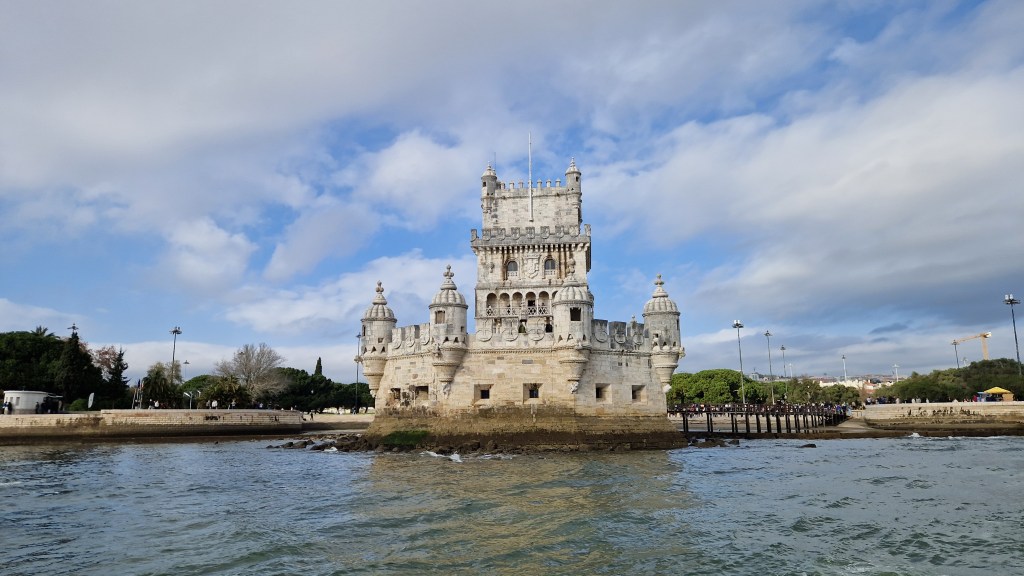
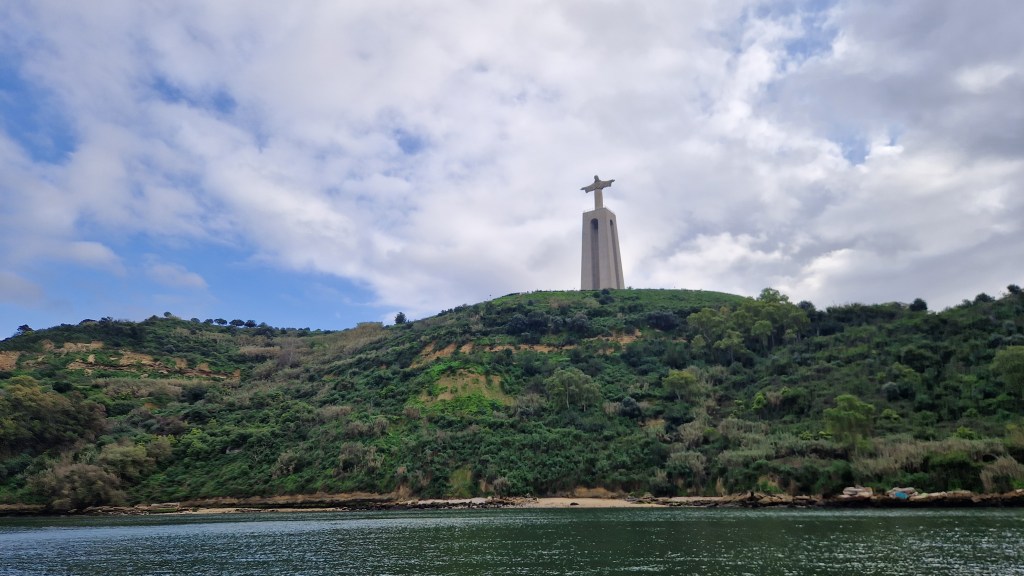
Unfortunately, we were ultimately disappointed with the boat tour as though it provided good views of the Santuário de Cristo Rei, 25 de Abril Bridge and Belém Tower, there was no commentary onboard, and the boat was essentially the most time-consuming option of reaching Belém from the city. As such, rather than completing the full loop as we’d intended, we jumped off at Belém and decided to get one of the tour buses back into Lisbon.
The Belém route bus tour is a bit odd as whilst there are things of note in both Belém and Lisbon, to get between the two involves travelling along a dual carriageway, giving the tour a weird gap of nothingness. As we left Belém, we did pass the Museum of Art, Architecture and Technology (MAAT) and the Old Power station which now forms part of the MAAT’s technology offering.

Having made it back into the city, we had a bit of a break before heading back out to the Rossio area for dinner. Once again aiming for one of our guide’s recommendations, this time we were successful, managing to grab a table at A Provinciana, a tasca, just before a rush. Tascas are generally small, family-run eateries that have an ever-changing daily menu based on the ingredients available. A Provinciana was tucked away on a side street connecting Rossio station with the Theatre district and surprisingly we were once again comfortable enough to sit outside despite it being February.
Within about 10 minutes of our arrival all tables both inside and outside were full and the rest of our meal there was almost always people waiting for a table to become free. A Provinciana had a wonderfully relaxed atmosphere, and the food was really really good. We both went for the soup of the day to start and one of the dishes handwritten on the menu for our mains, Beth opting for Pork Steaks and I opting for Goat Chanfana. Helpfully I didn’t write down how much we paid but I recall it being very reasonably priced for a three course meal with wine in the centre of a capital city. I’m pretty sure I got change from €50 cash.
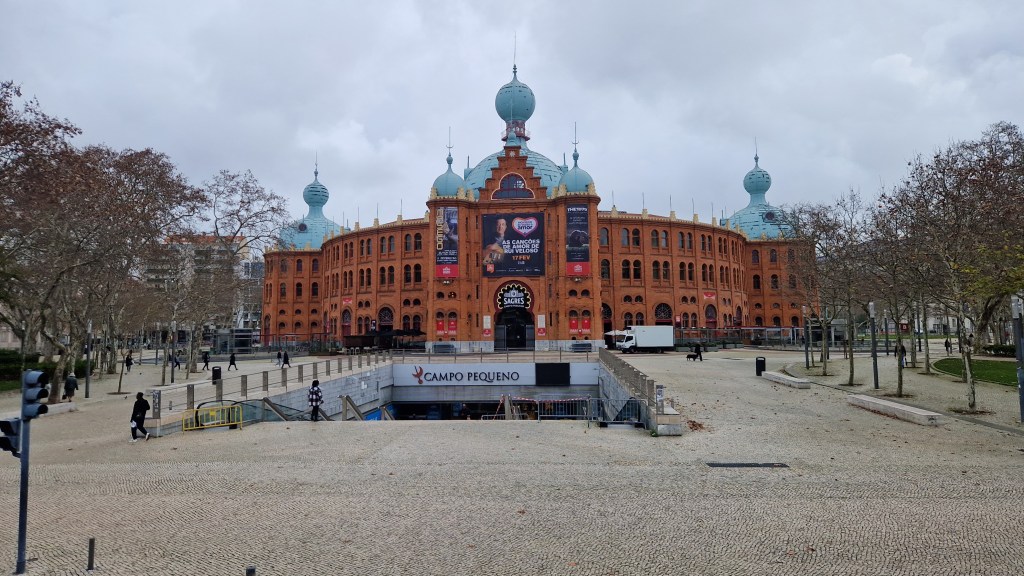
Day 3 of our Lisbon explorations started a bit later than previous days as we were able to pick up the ‘Oriente’ bus tour from a stop just a couple of minutes from our hotel. This tour covers some of the tourist sights in the ‘newer’ suburbs of the city including the Bull Ring (where bull fights still occur, although the bulls are not allowed to be killed), the Oceaniarium and the former oil refinery area which was the site of Expo 98. This latter area reminded me of a combination of London’s Docklands and the area around Stratford International, having been redeveloped for a major event and are now a modern, spacious and upcoming area of the city.
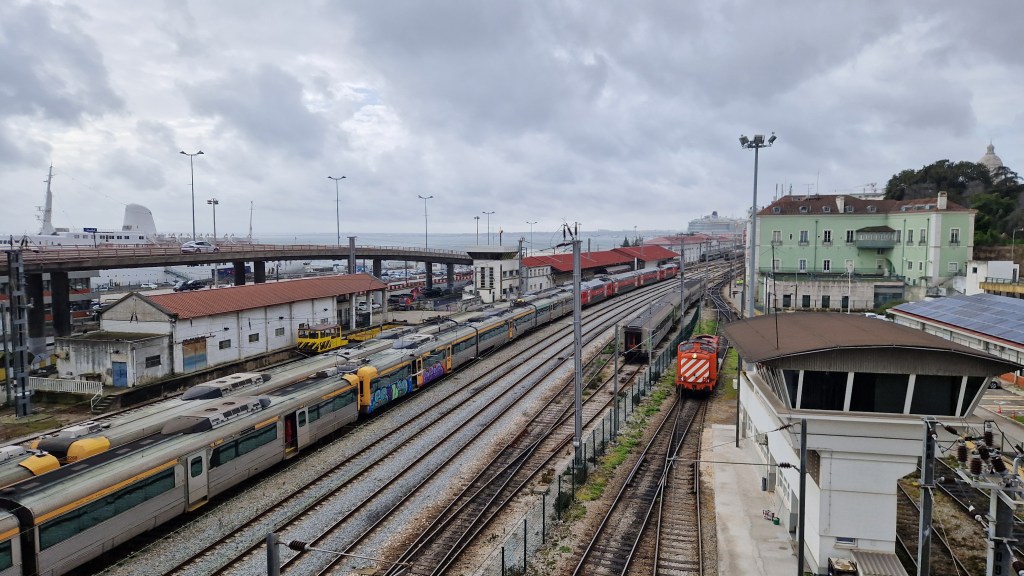
The route back into the city took us passed Oriente railway station, one of the country’s busiest transport hubs and a key interchange between the Metro, buses and both suburban and inter-city rail services. We then pretty much followed the railway line to the Santa Apolina terminus, crossing over the lines and the adjacent rail yards enroute. We then worked our way through the city centre, passing through Praça da Figueira, another of Lisbon’s main squares, before heading along Avenue da Liberdade back to the tour bus interchange at Marques De Pombal.
Next up was to head back out to Belém, which we’d briefly visited on day 2, to enjoy some lunch, have a wander and visit Torre Belém. We caught the ‘Belém’ tour bus out of the city, taking us passed the Time Out Market, Cais do Sodré railway station and the clock which tells the official time for Portugal. Alighting near the Garden of Afonso de Albuquerque, we headed to the nearby Taberna dos Ferreiros for lunch. This is just off the main road and so is slightly less ‘touristy’ but is still in a largely ‘touristy’ area. The food here was good, although certainly not the best of the trip with Beth opting for the Duck Leg and I going for the Cod.
Continuing into the centre of Belém, we stopped at the institution that is Pastéis de Belém, the top rated producer of Pastéls de Nada in Lisbon and the surrounding area. Buying a box of six, we stopped in the Empire Square Garden opposite the stunning Mosteiro dos Jerónimos to eat a couple. The Jerónimos Monastery is a former monastery of the Order of Saint Jerome and one time necropolis of the Portuguese Royal Family and since 1983 has formed part of a joint UNESCO World Heritage site with the Torre Belém. Unfortunately, neither our time nor budget allowed us to visit the Monastery, however its definitely on our list of reasons to come back!
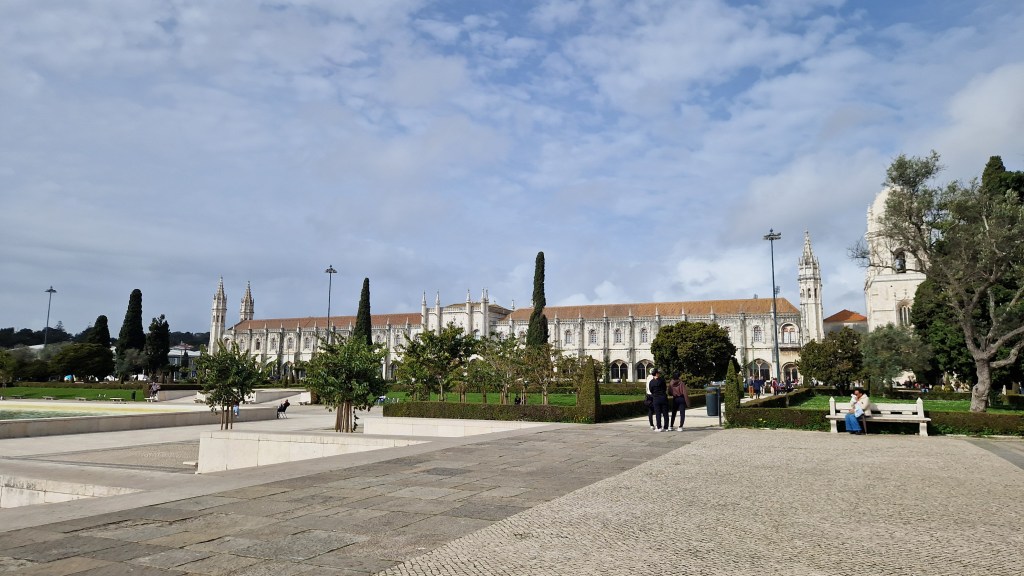
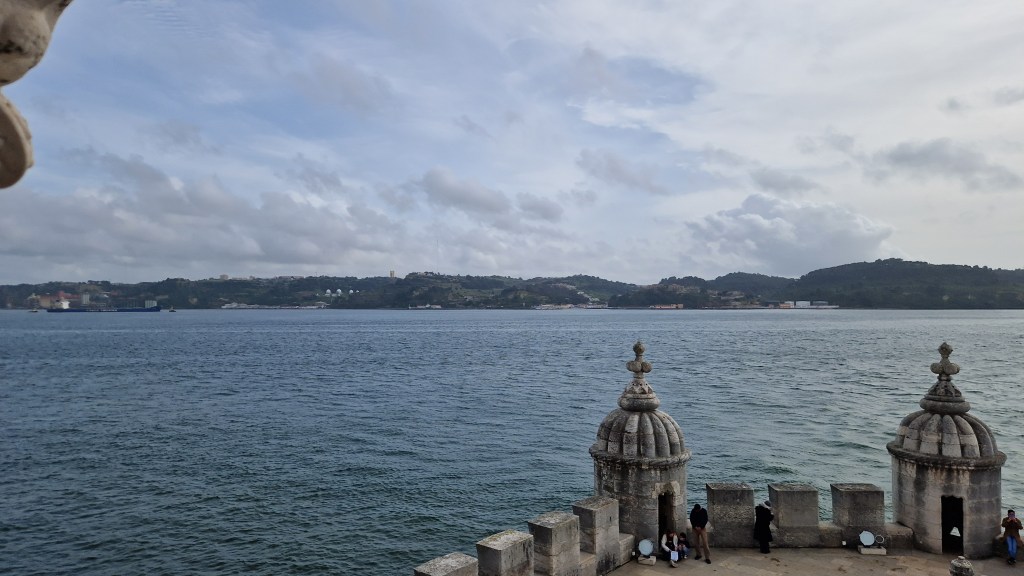
The Torre Belém is about a 10-15 minute walk from the centre of Belém, either along the main dual carriageway or via the back streets although neither way is a particularly great route. The Torre Belém is a 16th century fortification constructed during the height of the Portuguese Renaissance and consists of a bastion and 30m high tower. As well as acting as protection for the city of Lisbon, the Torre Belém has also been used as a prison and a customs house through its history and is now part of the combined UNESCO World Heritage site with the Mosteiro dos Jerónimos. Entry to Torre Belém costs €8 and this is most definitely worth it, with access to the entire tower except the roof.
As we decided to bin the boat ‘tour’ the previous day and get the tour bus back, we decided not to repeat this section of the tour and so walked the 15-20 minutes to Belém railway station. Unfortunately, this was mostly along the dual carriageway and definitely wasn’t the most pleasant of walks, although getting the suburban trains to/from Cais do Sodré is definitely one of the cheapest ways of getting to/from Belém. From Cais do Sodré we were able to easily get the Metro back to our hotel to freshen up before heading back into the city for the evening.
One of the things on my wish list for this trip was to take a ride on one of Lisbon’s funicular railways, which climb the steep slopes and form part of the city’s public transport network. Heading once again to Praça dos Restauradores we were able to take a ride on the Glória Funicular which climbs one of the side streets from the square, above the Rossio station throat up to the northern part of the Barrio Alto neighbourhood. The upper terminus of the Glória Funicular is next to the Miradouro de São Pedro de Alcântara, a scenic viewpoint where we were able to enjoy the illuminated cityscape whilst enjoying a performance of a local musician.
Unfortunately, the scenic viewpoint and walk back down the hill (passed the parked funicular carriages) turned out to be the beginning of the end of my active involvement in our Lisbon break. Having enjoyed dinner at a small restaurant in the Theatre district, I unfortunately contracted food poisoning and spent the majority of our final night in the city being unwell. We had the morning of Day 4 to explore before heading to the airport, but I spent this asleep in the hotel, whilst Beth went out to visit the Interpretative Centre of the History of Cod (which despite sounding a little boring, she thoroughly enjoyed). Despite this set back I thoroughly enjoyed our stay in Lisbon, and its cemented itself onto the never ending ‘to revisit’ list.
 Flights & Times