
Arriving in Lisbon onboard the A321 ‘retrojet’ of TAP Airlines Portugal (read about that here), we had made our way through the airport, onto the Metro and to our hotel in the Saldanha area of the city. With bags dropped off, we made our way back out into the city to begin exploring and decided to start our visit as many do, with a bus tour.
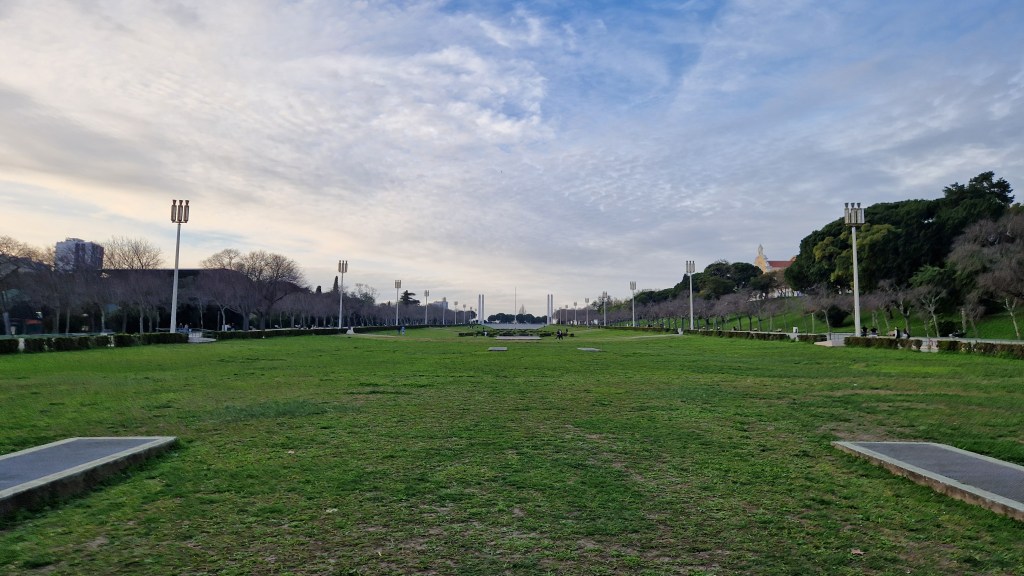
As would be expected from a capital city, there are numerous bus tours and even companies to choose from with the vast majority starting from Praça do Marques De Pombal, one of the main intersections in the city. We bought tickets allowing us 3 days of exploring the various tours and decided to start off with one that would take us through some of the narrower streets of Lisbon’s older neighbourhoods, the Castle Tour.
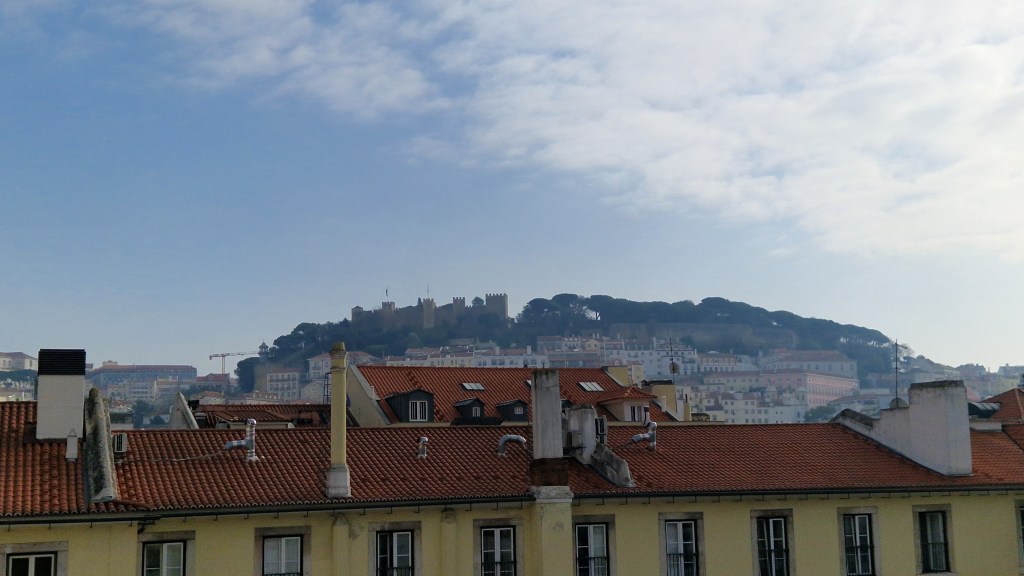
This tour took us through the famous Alfama area of the city, following the winding route up past the Miradouro das Portas do Sol viewpoint and up to the entrance of Castelo de S. Jorge. We had planned to visit the castle whilst in the city, but decided to leave it for another day and eventually skipping it entirely on the advice of the tour guide of our walking tour next day. Whilst there has been fortifications on the hill for centuries the current castle, which looks medieval, was actually built in the 1930s as a project of the Salazar dictatorship and today is seen as a bit of a tourist trap.

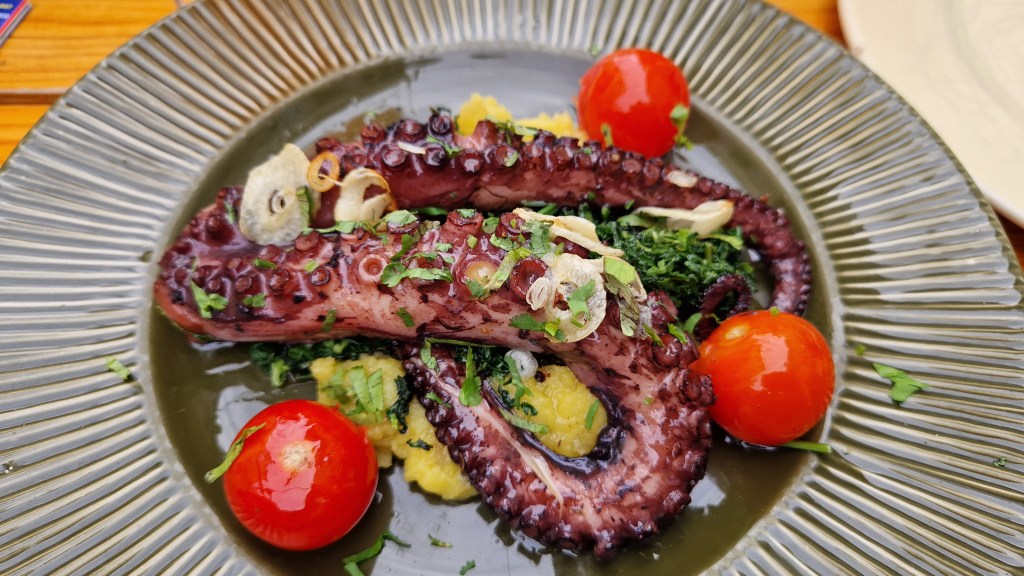
Whilst we decided not to visit the Castle on day 1, we did jump off the bus at the castle stop, planning on finding somewhere for a very late lunch under the lee of the castle walls. Just across the road we found Petisqueira Conqvistador, a delightful ‘hole-in-the-wall’ restaurant and were delighted to be able to sit outside and eat in early February. I opted for the Octopus with mash and Portuguese cabbage and, in a slightly embarrassing moment, was a bit shocked when the Octopus came actually looking like Octopus. I think I’d expected something a bit more like Calamari!
Having overcome my mental confusion by the presentation of the food, I tucked in and it was absolutely delicious. The Octopus was tender and a lot less rubbery than I expected, whilst the mash was some of the best I’ve had. Not only was the food good, but the atmosphere was also great, sitting outside on a pleasant side street enjoying the sun and light breeze and beginning to feel all the usual life stresses slip away. As unhurried as we were, we just missed one of the tour buses and so had a further 20-minute wait for the next one to take us back down through Alfama to Marques De Pombal and the end of Day 1 of the break.
Day 2 dawned with some more good weather and made our way to Praça dos Restauradores, one of the city’s main squares adjacent to Rossio railway station. First up was breakfast and so we called in at Fábrica da Nata, one of the top rated places for Pastéls de Nata in the city which is situated directly on the edge of the square. A coffee, breakfast croissant and a couple of Pastéls de Nata are a great way to start the day and once again, even first thing in the morning, the weather was nice enough for us to sit outside in February and enjoy our breakfast.
The reason we’d headed down to Praça dos Restauradores was it was the meeting point for another thing we do in most new cities, a walking tour! Our guide for this tour was João, a Portuguese native who started by telling us about the nearby Rossio station aswell as the history of Portugal. At Rossio station itself, we headed up the escalators to the platform level terrace which provides views over the city towards the Castle and it was at this point he gave us the Castle’s history and warned of the tourist trap nature of it.
One worth mentioning about Lisbon is that it is a very hilly city. Like Rome, legend has it that Lisbon was born amongst seven hills and as such it was inevitable our walking tour would involve climbing up at least one of them. Thankfully João got the majority of the uphill walking done early on and our next stop was Carmo Square, the site of a former army barracks. These barracks, now the Museum of the Repbublican Guard were where Marcelo Caetano hid in the final hours of his tenure as Prime Minister of Portugal’s fascist dictatorship.
Also located just off Carmo Square is the Convent of Our Lady of Mount Carmel or Convent Carmo, the southern façade of which is one of the largest remaining pieces of evidence of Lisbon’s largest natural disaster, the 1755 Lisbon Earthquake. This earthquake had a magnitude of at least 7.7 and, along with the subsequent Tsunami and fires killed between 30,000 to 40,000 people and destroyed the majority of the city and its surroundings.

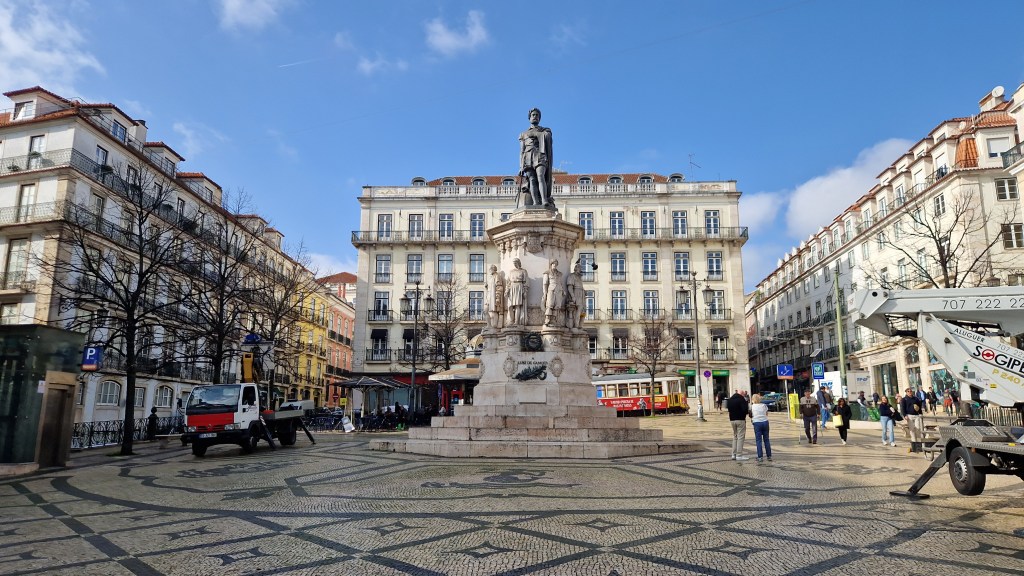
The walking tour continued on, taking a break at Flor do Mundo where we purchased some more Pastéls de Nata before João took us through the Barrio Alto neighbourhood, home to Lisbon’s nightlife before we paused again in the Chiado neighbourhood at the Praça Luís de Camões. This city square is served by Lisbon’s famous Tram 28 and is also home to a statue of the man it is named after, Luís de Camões, considered to be the greatest poet Portugal or the Portuguese language have ever had.
Continuing our decent towards Lisbon’s riverfront, we paused by the Elevator of Santa Justa. This is another of the city’s tourist traps which will, after paying €5 and waiting in a massive queue, provide you with the same view you could get for free by walking along a passageway from the previously mentioned Convent Carmo. There’s also numerous other free viewpoints around the city that can be easily accessed via public transport, so save yourself €5 and maximise your time!
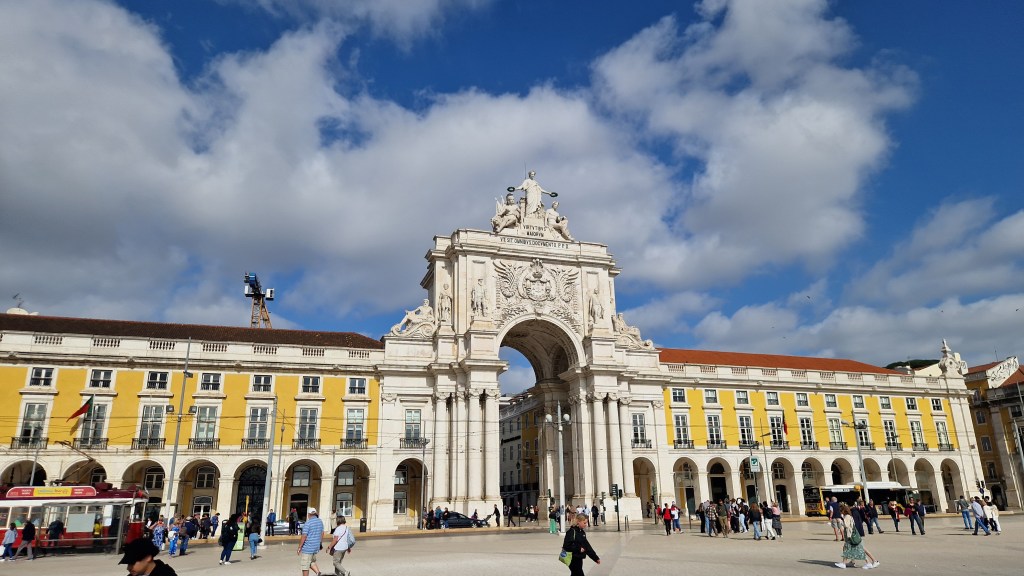
Our tour ended in Commerce Square on the banks of the River Tagus where the central statue of Joseph 1st honours the King who led Lisbon through the recovery from the 1755 earthquake. But did he? Following the earthquake, Joseph 1st never returned to within the city walls and the relief and rebuilding efforts were led by the country’s Prime Minister, Sebastião de Melo (1st Marquis of Pombal). This led to the style of architecture that is prominent throughout the city being known as Pombaline style and the Marquis being honoured through statues and reliefs across the city.
João finished the tour with telling us more about the Carnation Revolution which led to the downfall of Portugal’s fascist regime in 1974 with almost no shots being fired and only a handful of deaths. João also provided us with a list of recommendations for both things to do and places to eat within the city and so, along with a couple of people we had met on the tour, we headed to the nearest one to grab some lunch.
And lunchtime on day 2 of our trip is where this part ends. Lisbon is a great city and despite our trip only being for a few days we were able to see loads. Part 2 of the trip is coming on the blog next week, so make sure to read that when it comes out!
 Flights & Times