
The Glasgow Subway has been in operation for more than 125 years, since the first service ran on 14th December 1896, and since then there have only been two generations of rolling stock. The Subway’s first generation of rolling stock lasted more than 80 years, from 1896 through to 1977 when the Subway was closed for modernisation, and the current second generation was introduced when the line re-opened in 1980. This second generation of rolling stock isn’t going to make it to 80 years of service though as this year the third generation of rolling stock is starting to be introduced.
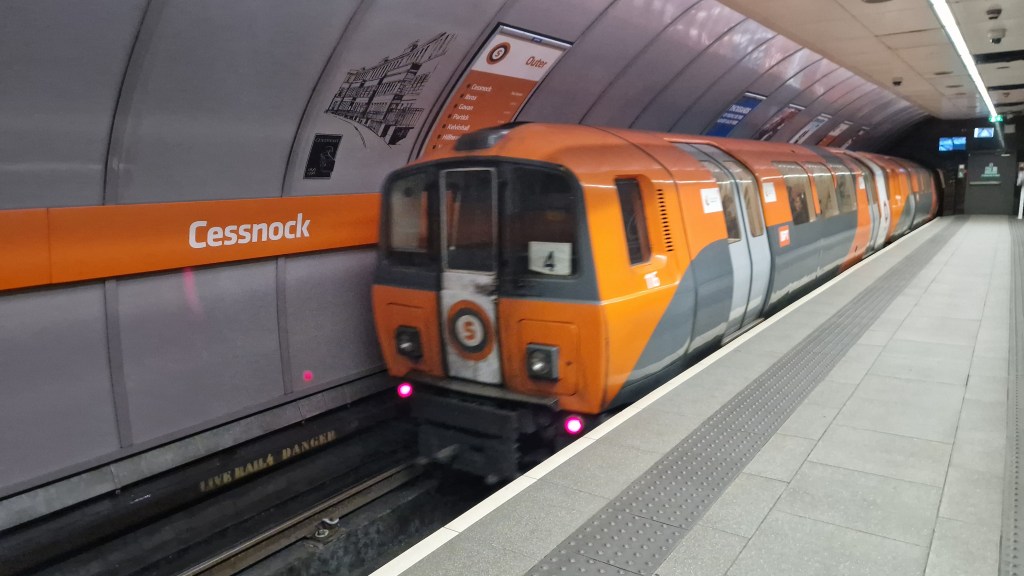
In the 128 years of operations, there have been very few changes to the Glasgow Subway, with only one new station (Partick) and two station closures (Partick Cross and Merkland Street). When the Subway originally opened, the trains were operated with a ‘clutch-and-cable’ system where a fixed cable continually operated around the loop, with train drivers operating a ‘clutch’ on the train that engaged or disengaged with the cable to move or stop the trains. With all of the stations having island platforms, the first generation of rolling stock only had doors on one side of the train!
An upgrade in 1935 saw the Subway converted from ‘clutch-and-cable’ operation to standard electric powered operations, although there was a nine-month period where clockwise trains used the old system and anti-clockwise trains used the new system. The next upgrade came in 1977 where damage discovered to various parts of the network saw it being closed down for the best part of three years for modernisation. When the network re-opened in 1980 it had modernised stations, an entirely new one and some brand new trains.

The Subway’s second generation of rolling stock was built by Metro-Cammell at their Washwood Heath works in Birmingham with 33 cars initially being delivered for the re-opening of the subway. These trains had more doors, including some on both sides of the carriages, had brighter interiors and generally improved passenger comfort. A further eight ‘trailer’ cars were ordered in 1992 with the original 33 cars being refurbished between 1993 and 1995. Of the 41 total cars constructed, 40 made it to 2023 still in operation, although 3 faulty cars were retired during 2023 as the introduction of the third generation rolling stock approached.
The Subway’s third generation of rolling stock has been built by Stadler in their factory in Altenrhein, Switzerland with a total of 68 cars being constructed, forming a total of 17 trains. Whereas the second generation rolling stock was formed into 3-car units, the third generation will be 4-car units, although will still be the same total length as the trains they replace. Walk through carriages, a brighter interior and compatibility with platform screen doors when they are introduced in the future, the new trains are a massive step forward for Glasgow.
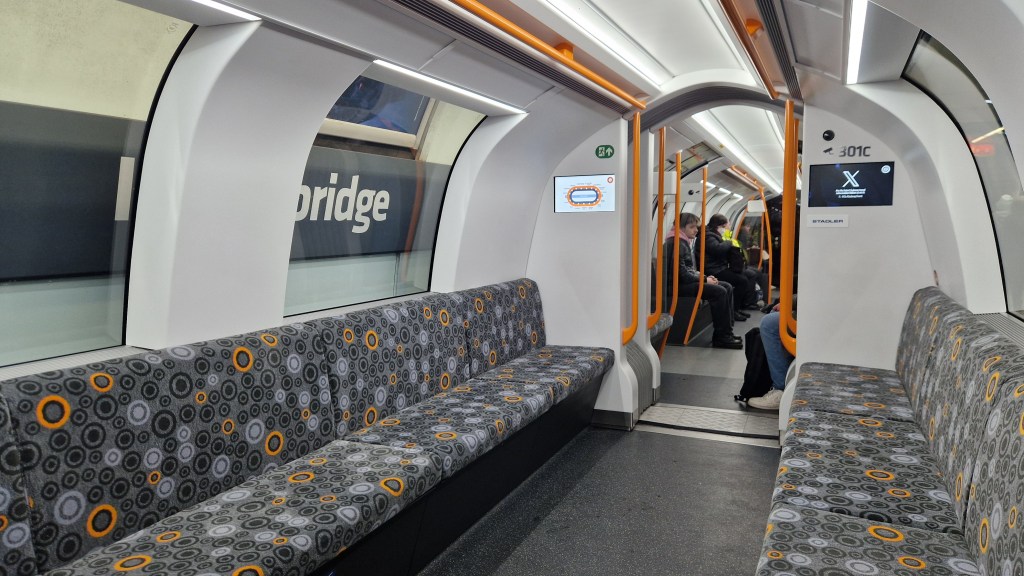
Back in March I was in Glasgow for work and had a bit of time to spare, so went in search of one of the new trains. After a false start where I just missed one and headed the opposite way around the circle to meet up with it, only to find it had been put into the depot, I eventually managed to catch up with one at Cessnock. This gave me the opportunity to ride on one for five stops around to Kelvinbridge before I had to return to Buchanan Street. Currently there’s only a few new trains in service although the number is gradually being increased, and the first second generation car was sent for scrap on 12th April.
I’ve got to say I was impressed with the new trains as they certainly seem fit for the future, with even their general look being stylish and modern. They are clean, bright and comfortable and the walk through carriages certainly create a more open feel, whilst also providing more capacity during peak hours. It surprised me that in the 128 years of the Glasgow Subway’s operation that this is only the third generation of rolling stock, however based on the average of the previous two generations, the Subway could hit 200 years of operation before we see the fourth generation of rolling stock.
 Flights & Times