
Having arrived in the Belgian capital onboard a Eurostar service from London (read about that here), I had just under seven hours in Brussels until I was scheduled to depart onboard the European Sleeper. With Eurostar terminating at Brussels Midi/Zuid, I was a little bit out of the city centre, and so I headed round to the main domestic concourse ready to catch a train to my first stop.
With a large hiking rucksack on my back for my trip across Europe, I had made the decision to find the luggage lockers at each of the intermediate stops enroute to give me the freedom to explore the city without a cumbersome bag. At Brussels Midi/Zuid, the lockers are off the main concourse by platforms 3 and 4 (just beyond the waffle shop) and an ‘XL’ locker costs €11 for 24 hours. Be warned that once you re-open the locker, you’ll have to pay that price again if you want to reclose it, so make sure to remember everything you need for the day in your small bag!
If travelling to Brussels or Belgium with Eurostar its worth noting that your ticket will cover you beyond Brussels Midi/Zuid. If you are travelling to other cities in Belgium such as Bruges or Antwerp, when you book make sure you book a ticket to ‘Any Belgium Station’. This is a few pounds more (if that) than a Brussels only ticket and will save you the cost of an SNCB ticket. This also works if travelling to Luxembourg as you can use this to the last Belgian station and then just buy a ticket to Luxembourg from there which is what I did when I travelled there last year (read about that here).
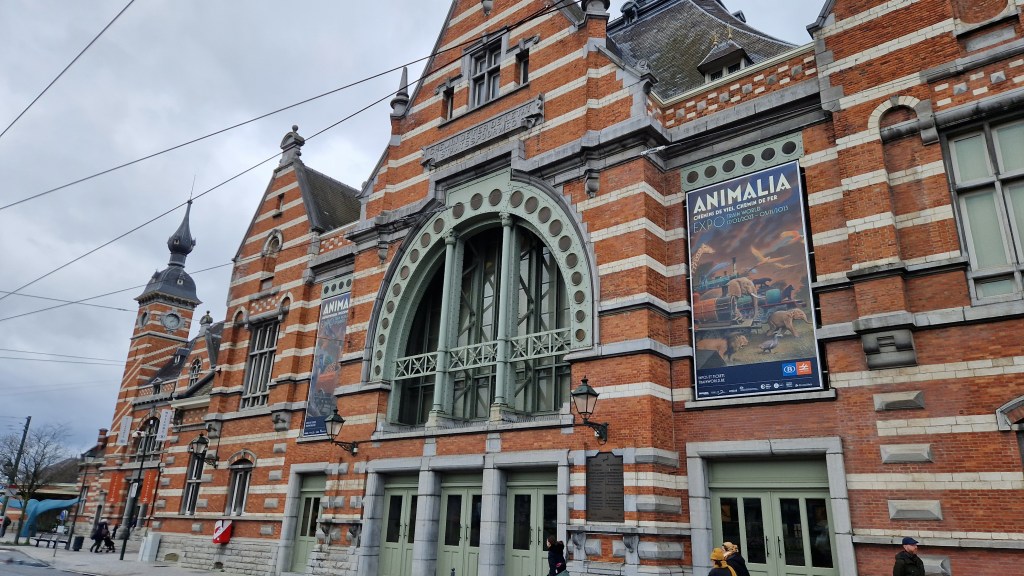
If you’ve bought a ticket to Brussels only and are staying within the Brussels region then your ticket will probably still cover you to your destination as it includes through travel to 30 stations around the capital. This includes Brussels Centraal, Brussels Nord, Brussels Luxembourg and the first destination on my exploration of the capital, Schaerbeek. Not your usual Brussels destination, however Schaerbeek is the home to the Belgian Railway Museum, Trainworld and as such I jumped onboard the S1 for the few stops to Schaerbeek.
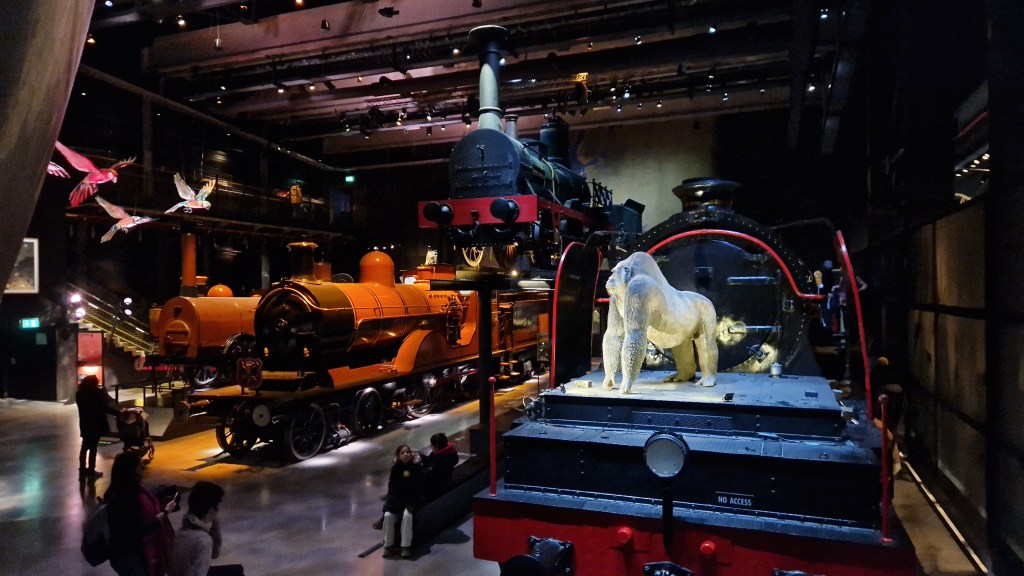
Trainworld was an interesting museum, telling the history of both the Belgian railways and its people, including the more difficult stories of World War 2. The museum is located across two buildings, the first being the beautiful Old Schaerbeek station building, whilst the second and much larger building has been purpose built for the museum. Entry to the museum costs €15 for adults and the signs for the normal exhibits are in French, Dutch, German and English. The signs for the special Anamalia exhibition were only in French and Dutch, leading to me being very confused by the random model animals all over the place and having no idea of the story they were trying to tell.
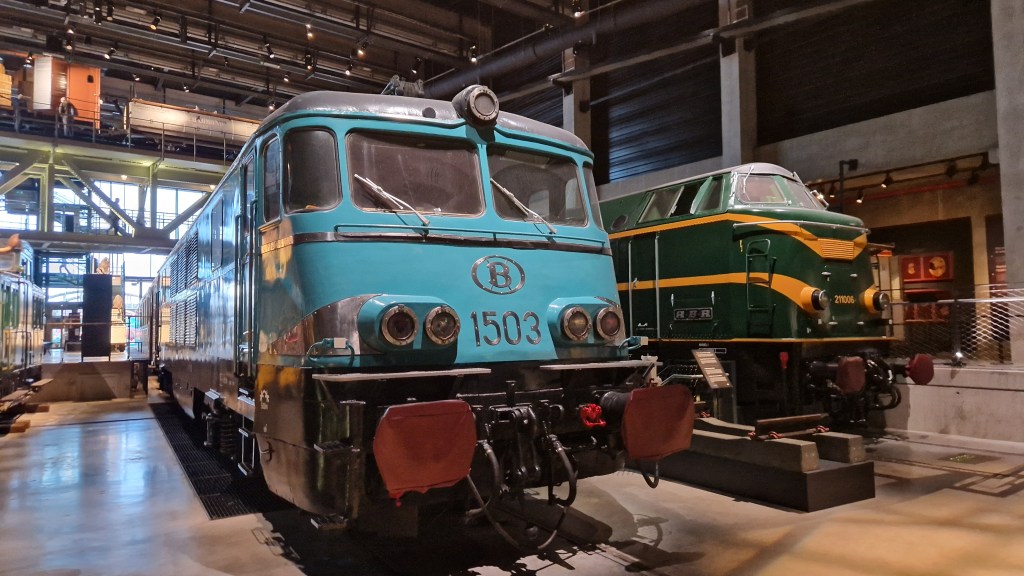
Belgium developed its railways really quickly and a large portion of the network was electrified early on with just a few areas now unelectrified. The museum has a number of locomotives and carriages in its collection ranging from some of the first steam engines to the more recent electric locomotives of the post-war era. The museum not only covers the railway’s history but also how its actually constructed and operated, giving visitors a basic understanding of the various component parts. There’s even a pantograph on display at eye level that you can push a button and see it raise and lower.
Having spent a couple of hours discovering the history of Belgium’s railway network aswell as getting some interesting photographs of model animals on locomotives, it was time to head into the city itself. To get the city centre, you want to catch a train that stops at Brussels Centraal as from there its just a few minutes’ walk into the centre itself, with the station being reached easily from Midi/Zuid.
On my walk into the centre from Centraal station I stumbled upon the Église Sainte-Maarie-Madeleine or Chapel of Mary Magdalane. Whilst quite obvious on the walk into the centre, most people just walk straight past this chapel and when I headed inside it was deserted except for one other person. I took a few minutes to reflect in the silence whilst having a look around before continuing towards the Grand Place.
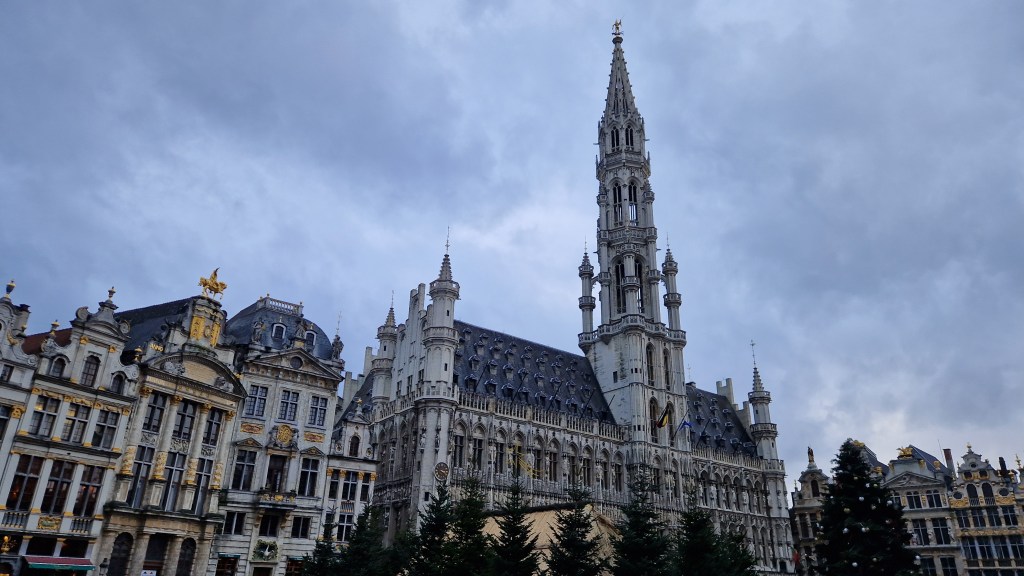
Brussel’s Grand Place or Grand Square is the centre of the city and home to the Town Hall aswell as the various guildhalls that were formerly home to the Guilds of Brussels. One of the world’s most beautiful squares it is a UNESCO World Heritage Site and THE most important tourist sight in Brussels and is the centre of the city’s cultural events, hosting a flower carpet in the summer along with festivities during the Christmas and New Year period. With my visit coming at the tail end of the latter, the collection of Christmas trees were still present adding to the square’s beauty.

A few minutes’ walk from the Grand Place is Manneken Pis, a water-fountain with an iconic statue of a small boy urinating into the fountain. Whilst it is one of Brussels most iconic sights, I was underwhelmed if I’m honest as the statue is smaller than you imagine and the crowds of tourists surrounding it make it hard to get close to or see properly. If you do a walking tour of the city, you’ll probably cover it but I personally wouldn’t go out of my way to see it again.
Continuing on away from the Grand Place, I headed towards Brussels-Chapelle station and the Église Notre-Dame de la Chapelle or Church of Our Lady of the Chapel which gives the station its name. This church is designated a historic monument and dates from between the 12th and 18th centuries as it has been extended or repaired. Entry to the church is free and it is worth visiting if you have some time to spare.
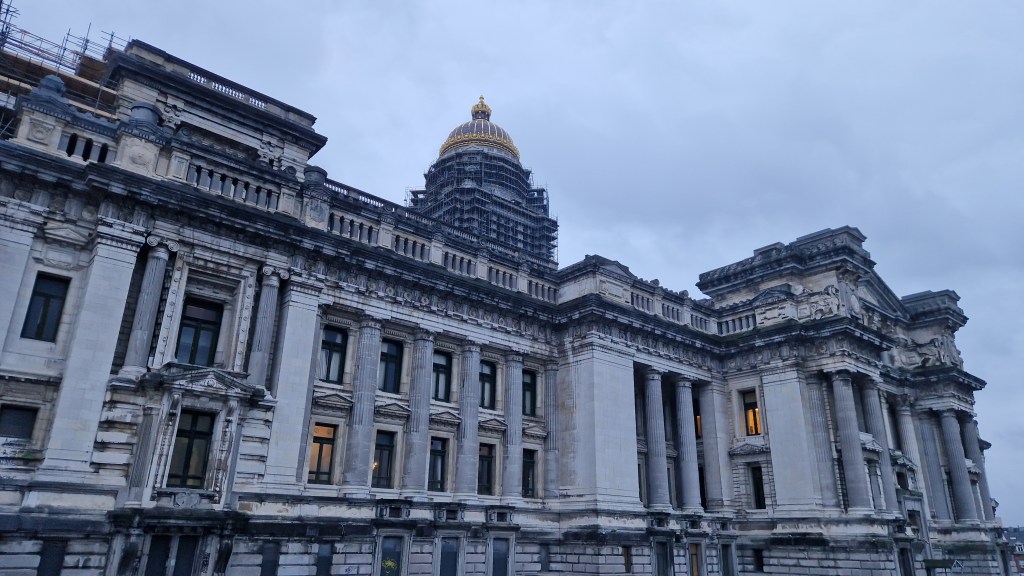
I had next been aiming to visit another church close by, however took a wrong turning and ended up walking away from it towards the Palais de Justice. Sticking with my amended itinerary, I headed up the ‘Ascenseur des Marolles’ (lifts) to outside the grand building and adjacent to the city’s answer to the London Eye. On a clear day I’m sure you can enjoy stunning views over the entire city and some of the surrounding areas, however the drizzle and generally miserable weather definitely reduced the range of sight.
The Palais de Justice was constructed between 1866 and 1883 and was at the time the largest building of its kind covering 26,006m2, remaining one of the largest to this day. Damaged during World War 2, the dome was rebuilt higher than the original, although its hard to see given scaffolding has covered the building since 1984 when the building began undergoing renovation. Supposedly this scaffolding is going to be removed during 2024, although when further renovations were announced in 2022, completion was expected in “2024 or 2025”. The building is certainly impressive in scale and hopefully when the endless renovations are finished it will once again become one of Brussels most stunning buildings.

Jumping onto Brussels Metro, I travelled a couple of stops on line 2 before getting off at Trone station and walking the few minutes to the Place des Palais which separates the Parc de Bruxelles and the Royal Palace of Brussels. Unfortunately, my visit to Brussels fell well outside the window of July-September when the Royal Palace is open for tours, however the outside of the building is extremely impressive and certainly challenges Buckingham Palace for grandeur.
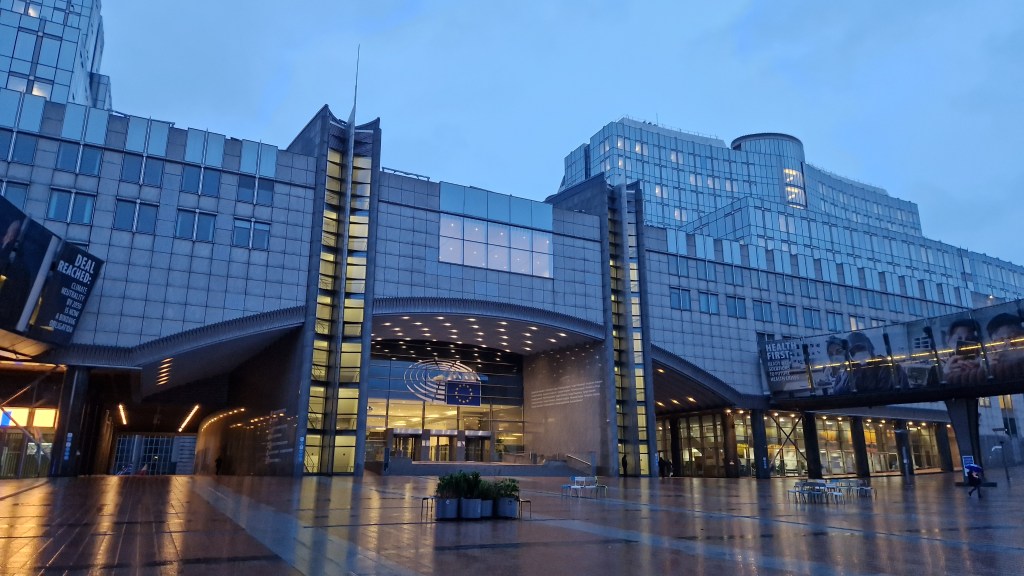
With my time in Brussels drawing to a close, I decided I could tick off one more sight during my visit and so walked the 10-15 minutes from the Royal Palace towards Brussels Luxembourg station. Sitting above the underground station is the Espace Léopold, home to many of the European Union’s pan-European institutions and also the secondary home of the European Parliament. In fact the European Parliament now sits in Brussels more than its official home of Strasbourg, however it legally obliged to keep the latter as its official seat. The Espace Léopold is an impressive collection of buildings, and the public can take tours, although again my visit fell during the winter recess with the complex closed for another week or so after my visit.
Brussels was the last of the north-west European capitals that I’ve visited, and it was certainly an interesting city to explore. Unfortunately, the weather was not my friend, preventing too much wandering and I limited exploring the city centre as a result. I certainly intend to pay Brussels another visit in the future, perhaps not in January and give my self sufficient time to explore its multitude of museums and historic buildings.
 Flights & Times
2 thoughts on “Brussels – Capital of Europe?”