
Following what had felt like a longer travel day than most, probably not helped by the hour delay to my flight (read about that here), I arrived in Košice later than planned and so my explorations of Slovakia’s second city started in earnest the following morning.
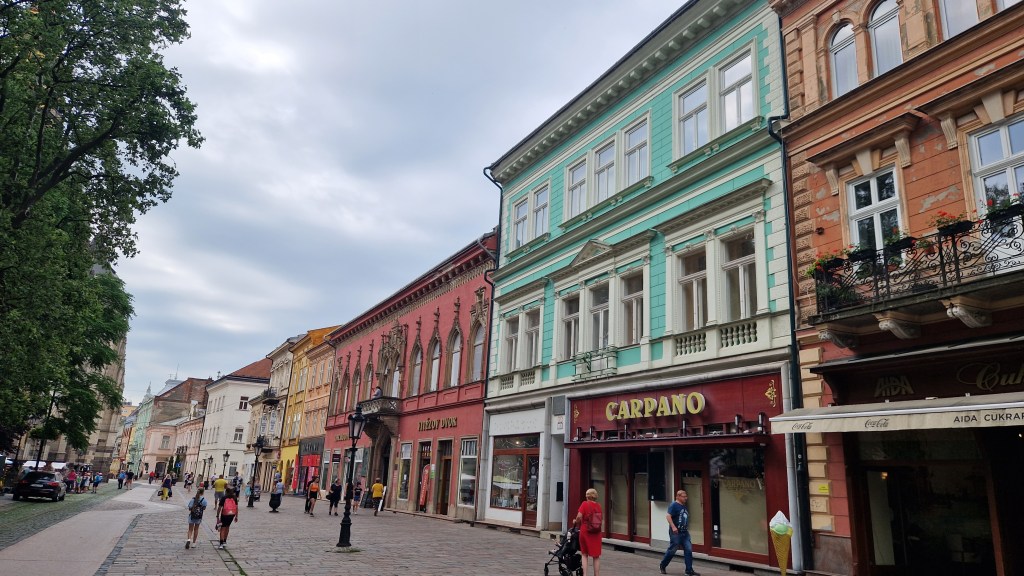
Having enjoyed a leisurely breakfast at my hotel, I decided to start my time exploring the city with a wander down the city’s main street to see what there was to offer. Cutting through a couple of side streets, I emerged onto Hlavná ulica next to the St. Anthony of Padua Church, or Franciscan Church, the second oldest church in the city.
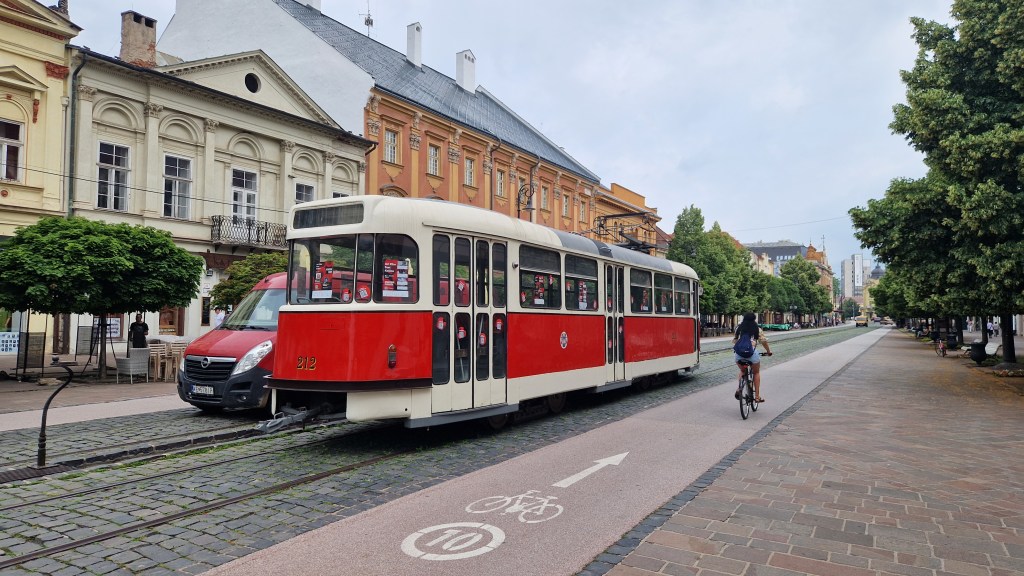
Opposite the church was an old tram, seemingly parked in the middle of the street and displaying posters for the city’s film festival, the Art Film Festival, which was coming to an end on the day of my visit. Tram tracks went the full length of the Hlavná ulica, however it was obvious that trams weren’t running up the road mainly due to the one just parked there.
Trams ran within the centre of the old town, along Hlavná ulica until 1986, when the final part of the city centre’s pedestrianisation took place. Cars had been banned in the centre from 1984, however as part of the work to protect the Cathedral of St. Elizabeth trams were also banned two years later. The tram I saw parked in the centre (Tram 212) provides rides twice a year as part of city celebrations.
Further down the main street are the Plague Column and Signing Fountain, situated where the street splits into two. The Plague Column, or Immaculata, was constructed in the early 18th century to commemorate the plague of 1709 and 1710. The base features sculptures of Saint Joseph, Saint Sebastian and Saint Ladislaus whilst at the top of the 14-meter-high column is a sculpture of the Virgin Mary.
Unfortunately, the Singing Fountain was undergoing some maintenance and so I couldn’t see the display, but when working the fountain regulates the water spray and lighting to match the music being played. In total there are more than 700 nozzles within the fountain, with some spraying water 19 meters high. The fountain is the oldest singing fountain in the former Czechoslovakia, having been constructed in 1986.
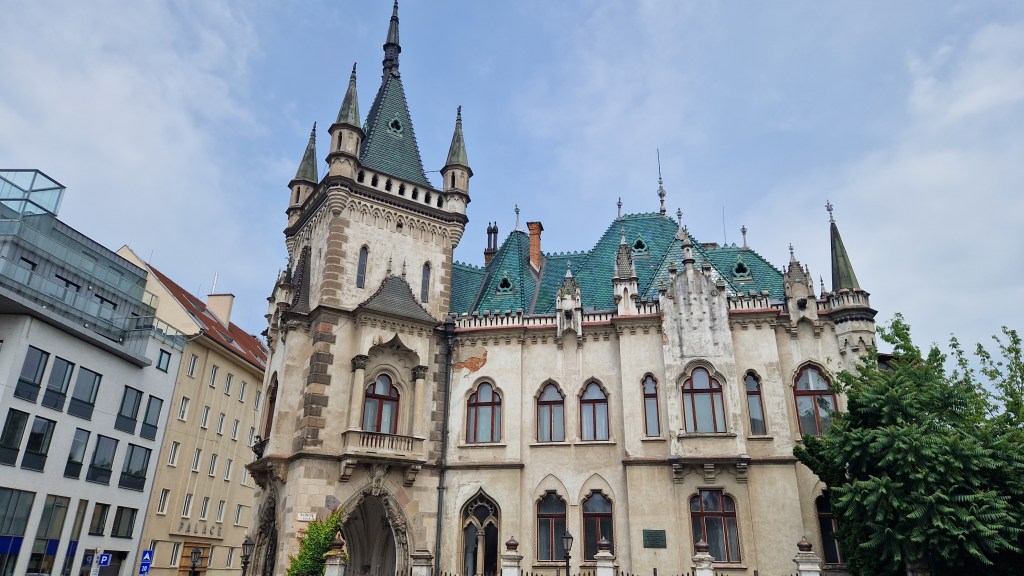
Behind the Singing Fountain is Slovakia’s old National Theatre, constructed in the late 19th century to a Neo-Renaissance design during the time the city was part of Austria-Hungary. The opening of the theatre was of such importance that the Prime Minister and their entire cabinet attended its debut performance, with the building housing the National Theatre ensembles until the New National Theatre Building opened in 2007 following 21 years of construction.
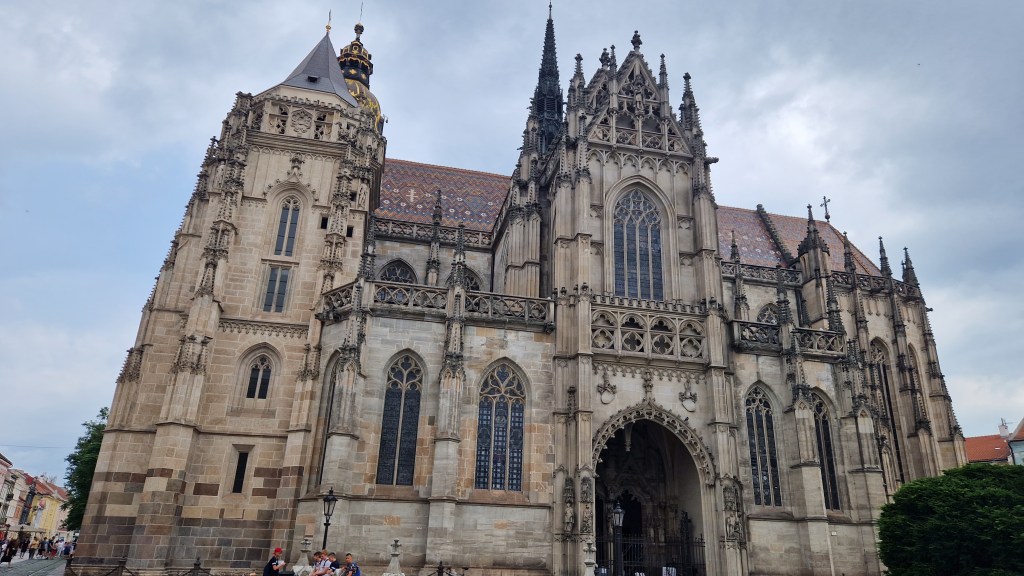
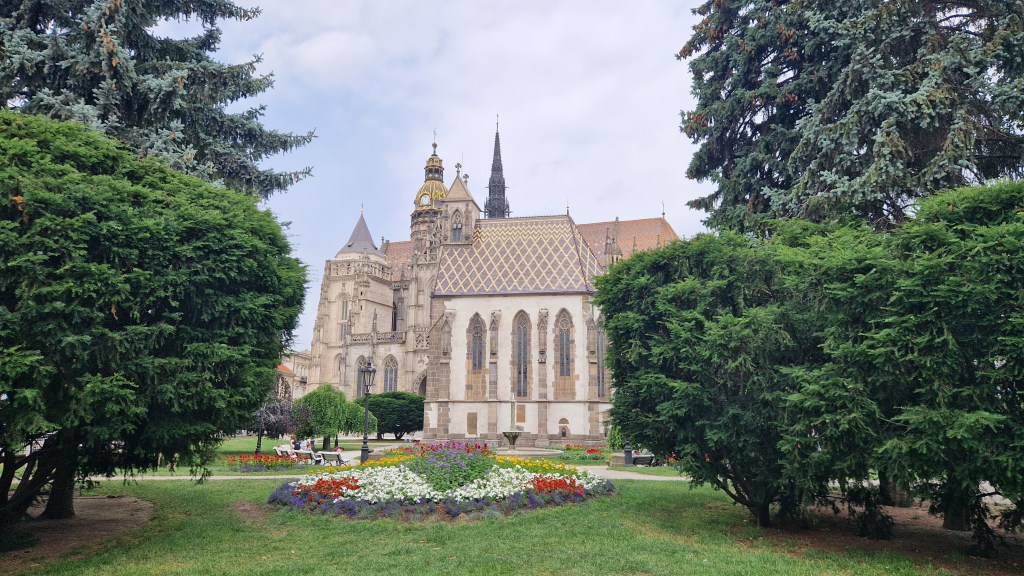
The central landmark of Košice is the Cathedral of St. Elizabeth, which dominates the city’s skyline from throughout the old town. Completed in 1508, it is one of the easternmost Gothic cathedrals in Europe and the largest church in Slovakia. The cathedral has undergone two restorations in recent history, with the first at the end of the 19th century and the second starting in 1978 and continuing to this day. The protection of the National Cultural Monument played a large part in both cars and trams being banned from the main street.
The main thing I did during my visit to Košice was pay a visit to the East Slovak Museum, located in the east of the old town. The museum is spread over several sites, however I explored three that are located adjacent to each other, the Francis II Memorial House, the Executioner’s Bastion and Mikluš prison. The Francis II Memorial House is a replica of a house from the Turkish town of Rodošto, where the leader of the last Hungarian uprising, Francis II. Rákoczi lived in exile between 1720-1735.

Located within the Memorial House is an exhibition telling some of the region’s stories through history, including that of Francis II. Rákoczi, aswell as there being an art exhibition on display in the adjacent Executioner’s Bastion. The bottom floor of the Bastion shows the various shooting chambers of the bastion as well as having one chamber displaying the original stone pavement and drainage system of the bastion.
The highlight of my visit was heading across to the Mikluš prison, situated in two Gothic town houses from the 13th and 14th centuries. This section of the museum has an audio guide with English translation and so provided a lot more information than some of the more limited translations elsewhere in the museum. The building served as the city prison from the start of the 17th century until the early 20th century, and also provided accommodation for the city’s executioner in a connected wing. The museum is open 0900-1700 Tuesday to Sunday and entry to the areas I visited costs a total of €8 or €5 if you just want to visit one part.
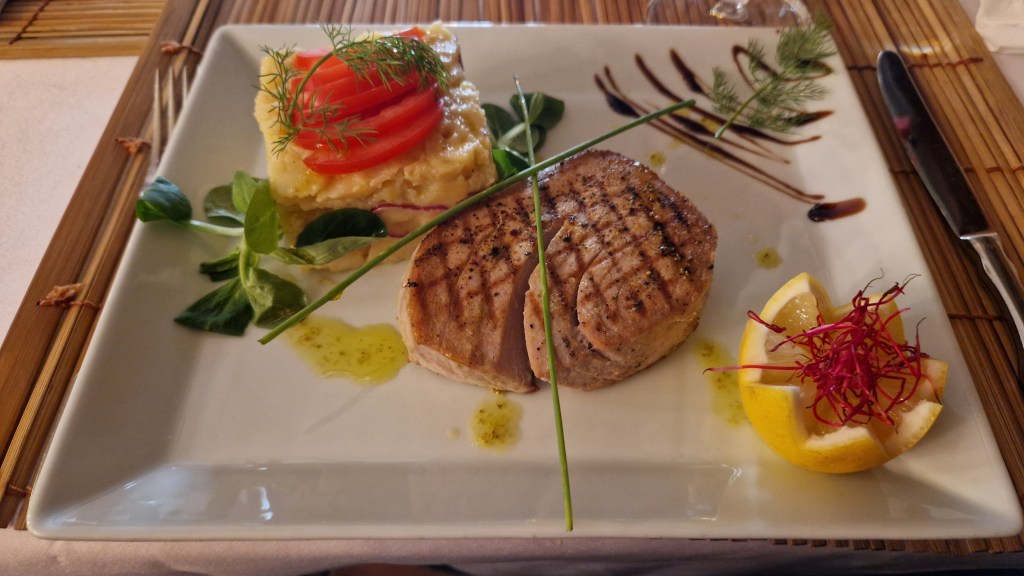
Following my visit to the East Slovak Museum, I decided it was time for some lunch and so headed for a place I had found recommended online, Le Colonial. Located just off Hlavná ulica, Le Colonial is a little mor pricey than I’d usually go for but with just one meal in the city I decided to splurge a little. Opting for a starter of Coconut Soup with Prawns followed by a Tuna Steak with Viennese Potato Salad, the food was absolutely excellent, and I was surprised to have space for a dessert of Strawberries and Mascarpone.
With limited time left in Košice, I decided to spend some time relaxing and so headed for the Námestie slobody (Freedom Square) and gardens in the centre of Hlavná ulica adjacent to St. Michael’s Chapel. The chapel sits in the shadow of the Cathedral of St Elizabeth, however was constructed earlier and served different a denomination of Christianity, with the chapel serving the Slovak church, whilst the cathedral served the German and Hungarian church. Originally the square and gardens were the city cemetery, served by the chapel, however were repurposed in the late 19th century to commemorate the 1848-1849 revolution.
I thoroughly enjoyed my time in Košice and was disappointed that my flight times limited my exploration of the city. With two branches of the Slovak Technical Museum (one of which is the national aviation museum) that I didn’t get chance to visit, a return trip to Slovakia’s second city is definitely needed with possibly a couple of nights stay to make it worth it. If you’re heading to Slovakia, don’t just head for the capital, make sure to head out east to the wonderful city Košice.
 Flights & Times