
Part two of my Derry blog covers the majority of my trip to the city, with there being another day and a half of content included. You can check out the first part of the blog here.
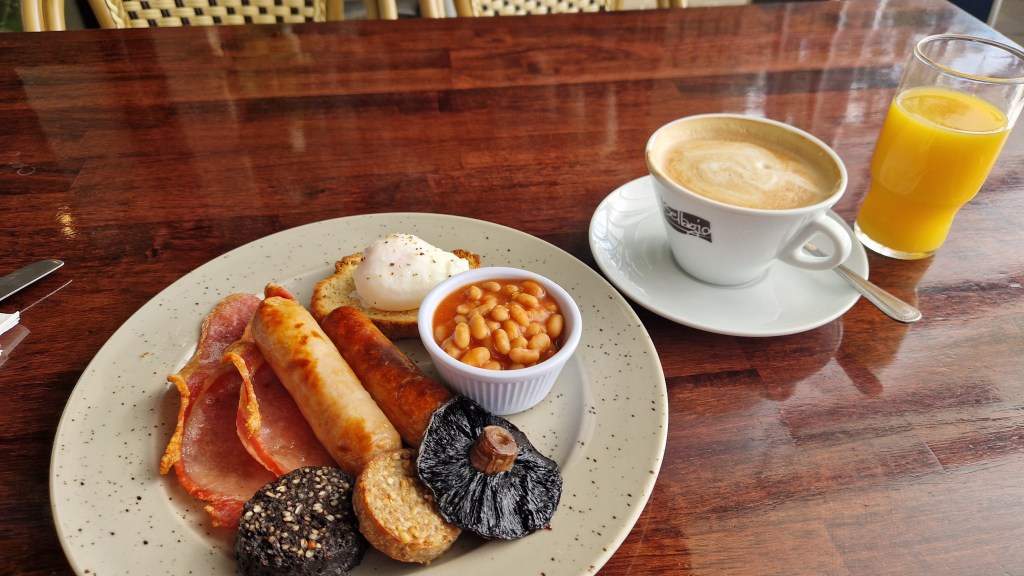
My only full day in Derry dawned with the weather looking like it was going to provide another good day. I decided to start the day with a walk from my accommodation down to the banks of the River Foyle, an area known as the Quayside. It was here that I found my spot for breakfast and enjoyed an excellent fry up at Primrose on the Quay.
From Primrose on the Quay it was an enjoyable 15-minute walk along the quay to the Guildhall and the city centre, arriving into the centre an hour or so before the walking tour I was booked onto. Deciding to spend some time walking the famous city walls, I was able to look out over Bogside as well as attempt to recreate Orla’s famous dance scene from ‘Derry Girls’. Spoiler alert, she can do it better!
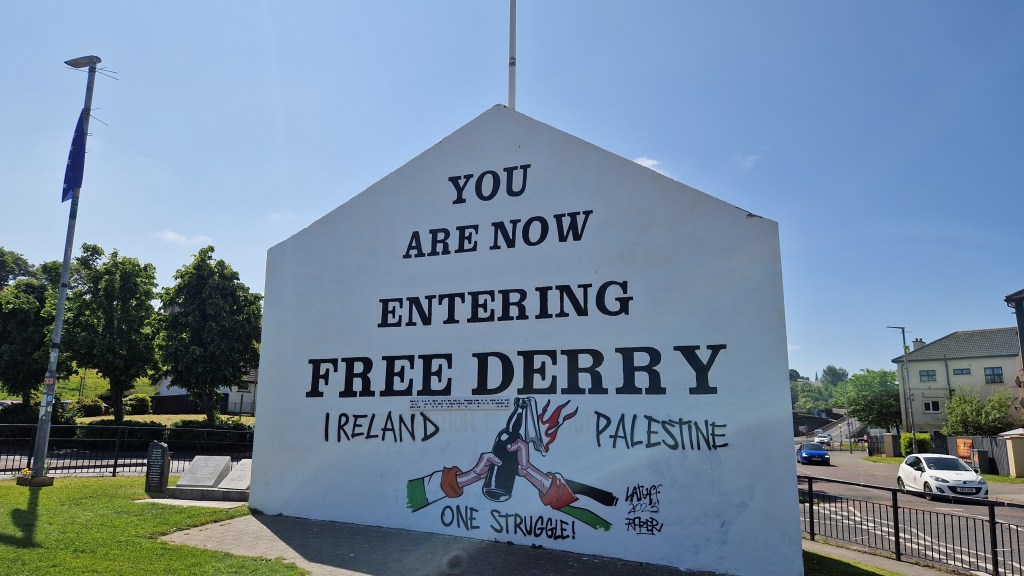
The walking tour I joined covered the history of the Bogside and the Northern Irish ‘troubles’, including the period of Free Derry. The tour was led by Paul, son of one of the victims of Bloody Sunday, giving the tour and the history told through it a personal link. As well as the more general history of the Bogside and the troubles, the tour also covered the meaning behind some of the many murals that this part of Derry is famous for. Whilst I booked this walking tour via ‘Freetours’, it turned out there was a fixed cost of £10, a price I’d have probably paid anyway but worth noting.

The walking tour finished outside the Free Derry Museum, which focuses on the 1968-1972 period of the city’s history, culminating in the events of Bloody Sunday. The introduction to the museum, ahead of an introductory video being played, was given by a relative of another victim of that day. The museum was very interesting and took around an hour to explore, although as with a lot of the history of Derry there is a level of bias in to how the stories are told. This was also apparent from the other side of things later in my visit when I visited The Siege Museum.
Having had my fill of Bogside and its history, I wandered back into the city centre for some lunch, enjoying some excellent fishcakes at The Pickled Duck, which is just between the Guildhall and the walls. Whilst The Pickled Duck probably fits into the ‘Coffee shop’ category, it did have some excellent food options, so its worth checking out if you’re looking for a light lunch.
After lunch I was beginning to flag from all my walking, but decided to cram in a bit more exploring before I headed back to my accommodation for a break. Heading into the Guildhall itself, I was surprised to find how much there was to see given entry was completely free. As well as the beautiful and historic Guildhall itself, there is an exhibition on the Plantation city as well as John Hume’s peace awards being on display.
John Hume was an Irish nationalist politician and leader of the Social Democratic and Labour Party (SDLP) from 1979 to 2001. As leader of the SDLP and as the MP, MEP and MLA for Derry, John Hume was one of the architects of the Northern Irish peach process and is the only person to have received all three of the major peace awards. Having been awarded the Nobel Peace Prize (as a co-recipient with David Trimble), the Gandhi Peace Prize and the Martin Luther King Award, all three of these are on display within the Guildhall.

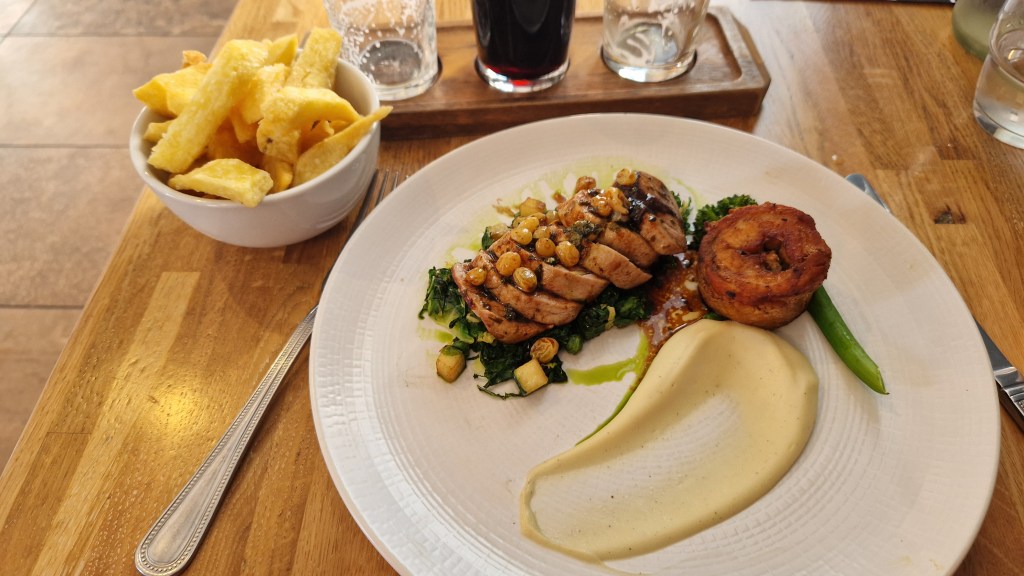
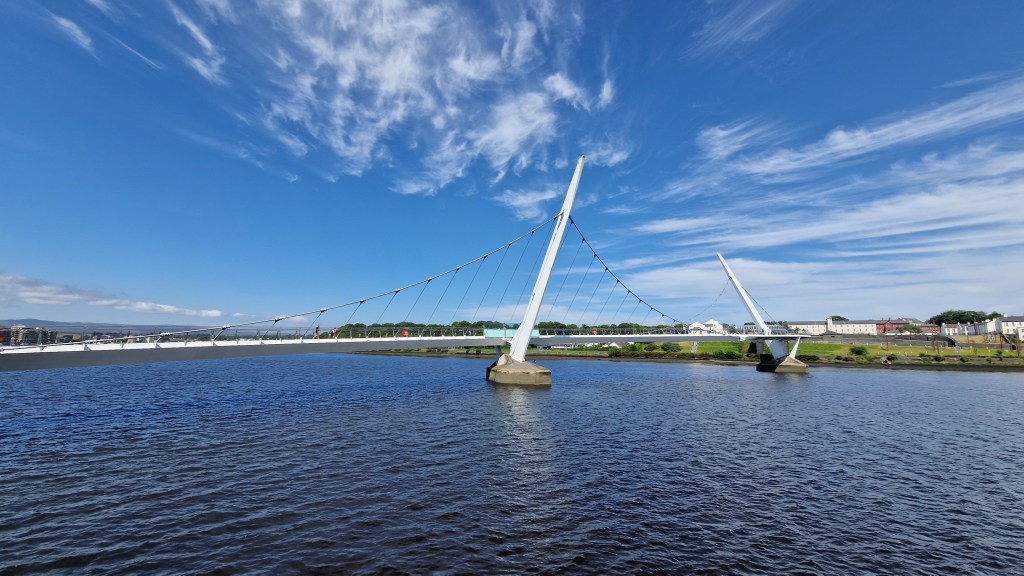
Following a trip back to my Air BnB to recharge for a bit, I headed back into town and crossed back across the Peace Bridge to Ebrington to enjoy the evening. My destination was the Walled City Brewery, located on one side of Ebrington square and which serves great foot and excellent beers. Not being able to choose between the many beers brewed on site and at other nearby breweries, I opted for a ‘flight’ of thirds including ‘Boom’, a Derry Pale Ale; ‘Foyster’, a Lough Foyle Oyster Stout; and ‘Punt Purse’, a Magnum Red Ale. The latter was so good, I opted to have another half.
Along with the drinks, I also had an excellent three course meal of a fishcake for starter, roast pork for the main and a delicious crumble and custard for dessert. All in all the meal cost £35 for the three courses which considering the quality and location, was an absolute bargain. The flight of beer and extra half pint cost £9, again well worth it given the quality! I almost felt like rolling rather than walking back across the Peace Bridge considering how full I felt!
Day three in Derry started with a bus back to the city centre with my luggage and a thankful discovery that the tourist information had luggage storage. This would have been a great discovery for day one, but at least I’d found it now so could be unincumbered for my final half a day in Derry. The luggage storage cost £4 for four hours or £6 all day, with you paying when you pick it up.
Having dropped my bag off, I wandered around the corner from the tourist information to The Scullery Café for some breakfast. Opting for another fry up, this was another great breakfast, although the views were less interesting than those on the quayside the morning before. Fully fuelled for the day ahead, I headed up Waterloo Road to Castle Gate, before passing through and climbing back onto the city walls.
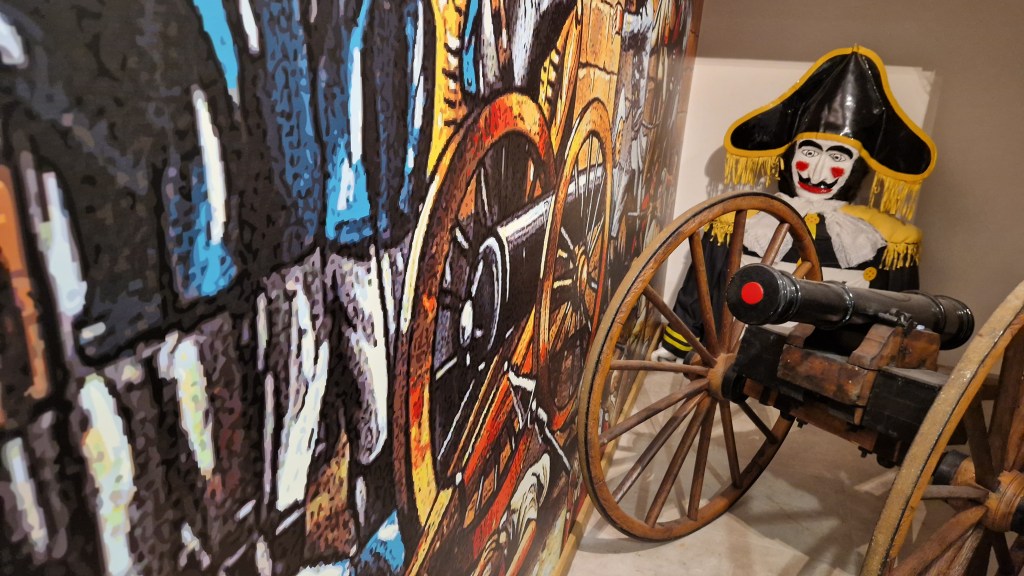
My first destination, at the south-west corner of the fortifications was the Siege Museum which focuses on the 1689 siege and the apprentice boys that closed the gate. The museum is run by the modern-day Apprentice Boys of Derry Association and so is delivered with a slight unionist bias, but nonetheless it provides an in-depth view into an interesting part of the city’s history. There are three floors to the museum, with one of these being more focused on the modern-day Apprentice Boys clubs. Entry costs just £5 and it is a good way to spend an hour or so.
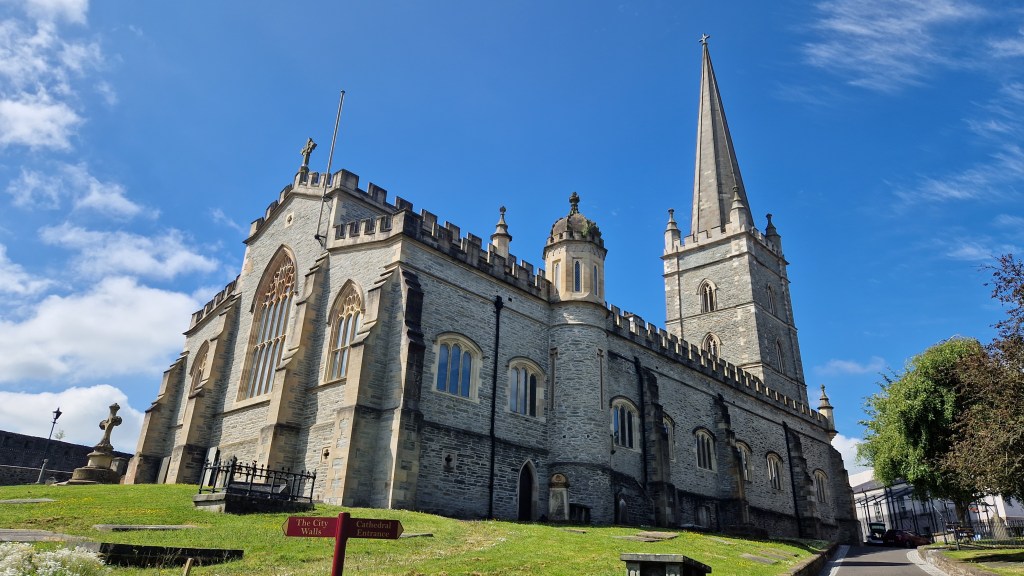
From the Siege Museum, I continued on around the city walls to Derry’s Anglican cathedral, St. Columb’s. Consecrated in 1633, St. Columb’s was the first Anglican cathedral to be constructed in the British Isles following the reformation. The church underwent further extensions an in the 18th and 19th centuries, with the church as seen today finally being finished in 1887. I kept my visit brief as the cathedral appeared to being prepared for a wedding later in the day, however I did spend a minute looking at the mortar shell from the siege of Derry that is on display in the entrance.
Following on from another full morning, I headed to the city’s craft village for a late lunch, originally intending to try out a café that I’d seen about online. Unfortunately this was a very popular destination and I couldn’t get a table, so headed to the quieter Soda & Starch nearby. Here I had a relaxed lunch of fish pie (which was delicious) along with a couple of drinks, deciding to spend some time unwinding before heading back to the airport.
With my luggage back in hand, my time in Derry was coming to an end as I jumped onboard the 234 Goldline service to the airport. These buses aren’t included in the local day ticket, but a single on the app cost £1.80 to the airport. Thankfully the limited timetable lined up well with my flight back to London, and so I was able to catch the 1610 bus rather than fork out for another taxi.
Derry is a city full of history and as long as you respect the human and political aspects of this history, it is a great city to explore and learn about. I was fortunate to have excellent weather throughout my visit and the city was buzzing with people enjoying outdoor tables at bars and restaurants, really giving the city atmosphere. If you have the opportunity to visit Derry, I’d certainly recommend it!
 Flights & Times
2 thoughts on “Derry – A City of Many Names – Part 2”