
As you may have seen on my social media, I’ve made six visits to Scotland in the first four months of 2023 for a mix of work and leisure. Back at the end of February I was north of the border for work but had some spare time one morning and so decided to do a quick trip over south side of the Firth of Forth to do an Exploring the East Coast.
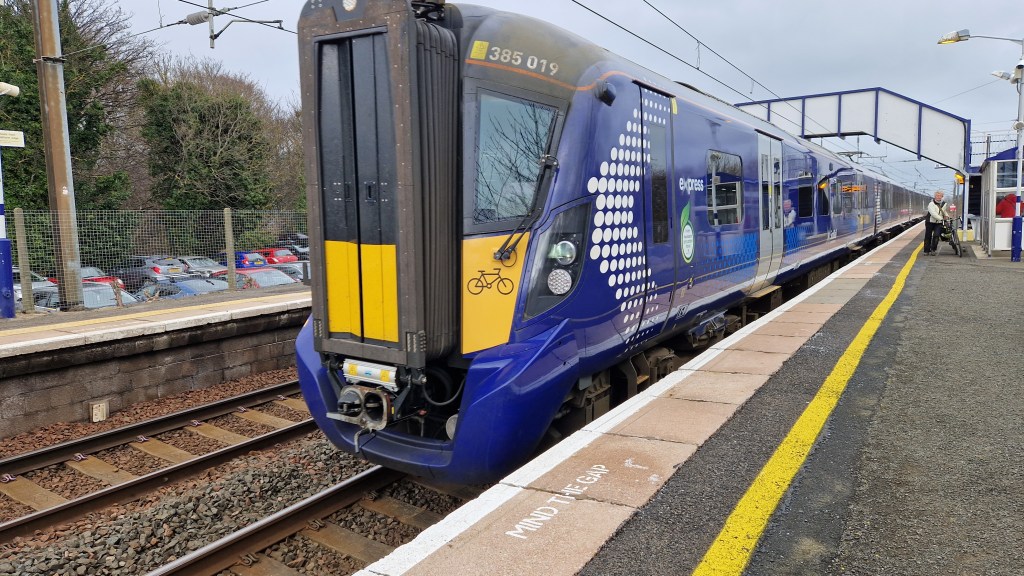
All three stations in this episode are served by the hourly ScotRail service between Edinburgh Waverley and North Berwick, usually operated by a pair of either class 380s or class 385s. These are nice modern trains with WiFi, power sockets and a mix of ‘airline style’ and table seating. However, with the longest journey on this route being 34 minutes, most trips are just short hops.
I started this Exploring the East Coast by making the 15-minute journey from Edinburgh to Prestonpans, the busiest of the three stations for the day. With the station about a 10-minute walk from the seafront, in 2021/22 Prestonpans served 0.129 million passengers, and the stations sees just under 40 services most days.
Prestonpans sits on the southern shoreline of the Firth of Forth and so I headed down to the centre of town, where the High Street runs along the seafront. Just off the High Street is Prestonpans Town Hall, home to the Battle of Prestonpans Jacobite Museum, which tells the story of the 1745 Battle of Prestonpans, the first significant engagement of the 1745 Jacobite Uprising. The museum is open at weekends between 1100 and 1600 and I believe it is free entry but can’t tell for certain.
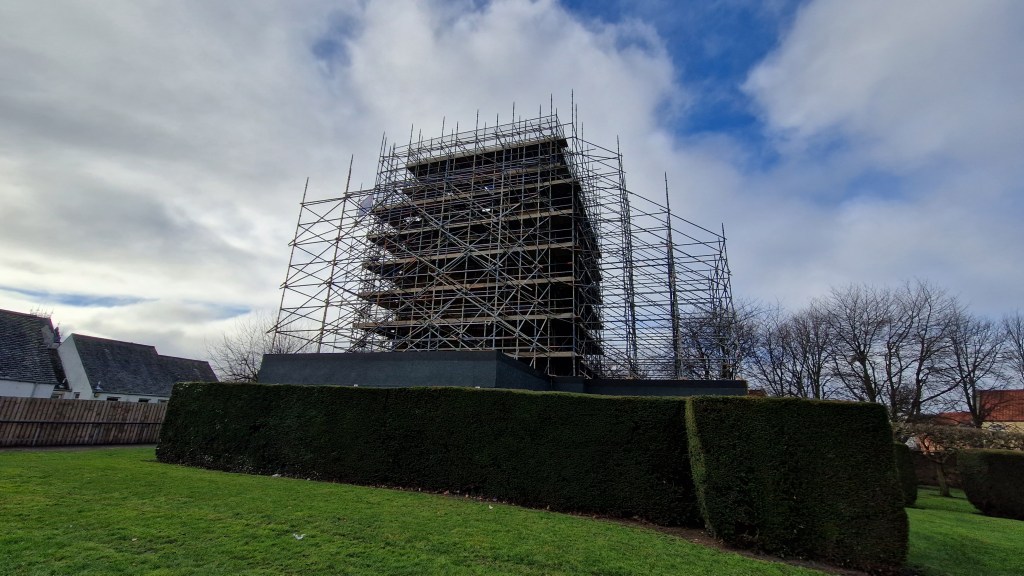
Possibly the most prominent site in Prestonpans is the Preston Tower, a ruined four-storey keep situated not far from the town’s station. Some of the structure dates back to the 14th century, although large alterations, including two additional stories, were made in the 1600s. Having suffered two fires during its history, the latest in 1663 leading to its ruin and abandonment, the tower is now owned by the National Trust for Scotland and looked after by East Lothian Council. During my visit the tower was covered in scaffolding as its undergoing restoration with the intention of allowing the public inside.
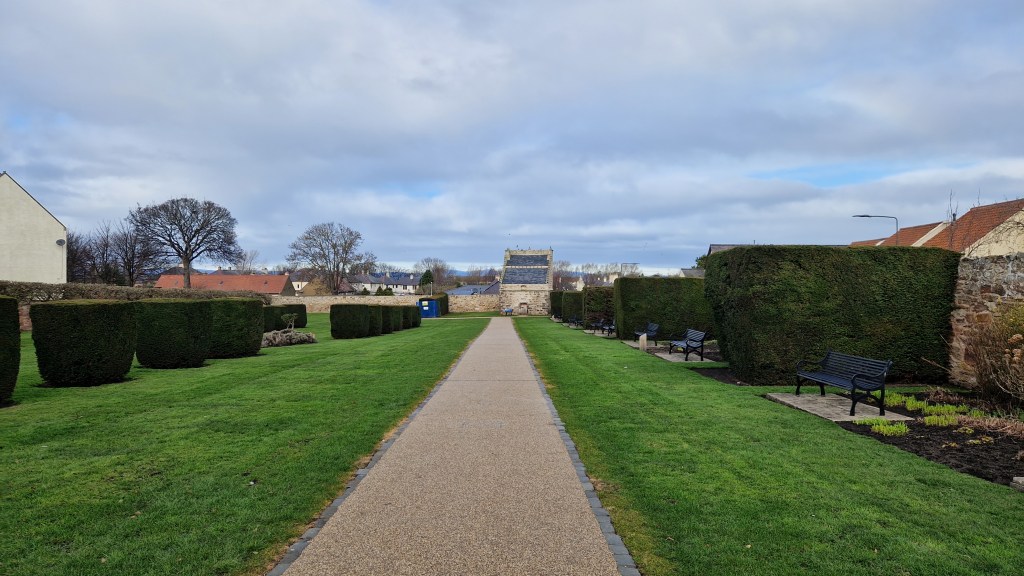
A little further from the station than the Preston Tower is the Preston Cross, constructed in 1617 to serve as the centre of the town’s bustling market place. With the centre of the town having moved closer to the seafront, the Preston Cross has ended up somewhat isolated and now sits next to some retirement cottages. The base of the Preston Cross has a room within its structure that once held the towns’ gaol with a platform sitting above for the town’s proclamations.
After a couple of hours wandering around Prestonpans, it was time to head to the second of my three stations for the day, Drem. This is the last station on the East Coast Mainline (ECML) for North Berwick services, with a junction to the south of the station leading to the single line branch to North Berwick. Prestonpans to Drem was just a short 10-minute ride so it wasn’t long before I was standing on a fairly isolated platform in the Borders.

Drem itself is quite a small village with nothing of note to do or explore, however about a mile away is Chesters Hill Fort, one of Scotland’s best-preserved Iron Age hillforts. Whilst looked after by Historic Scotland, the hillfort has open access and is free to explore, so worth the 20-25 minute walk from Drem if you have the time. Also a short distance from Drem is the National Museum of Flight at East Fortune, connected by bus to Drem a few times a day. This includes a preserved Concorde which was brought from London by barge and then across the fields from the coast via temporary roadway.
My stay at Drem was short, and with insufficient time to visit either Chesters Hill Fort or the National Museum of Flight, I jumped onto the same train as I had arrived at Drem on, with it having completed its run to North Berwick and now on its way back to Edinburgh. The journey from Drem to Longniddry is just a one stop hop and took five minutes to complete.
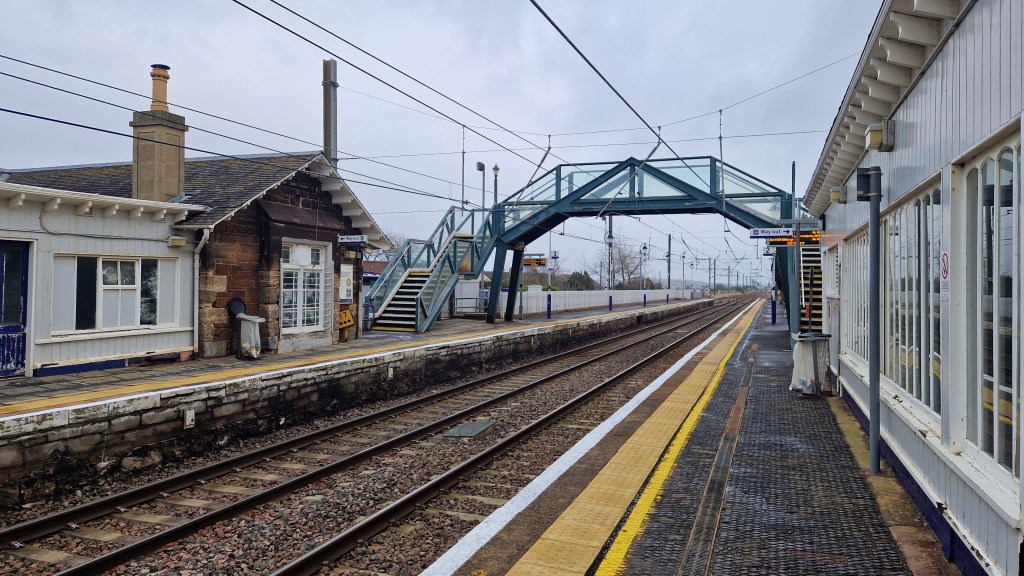
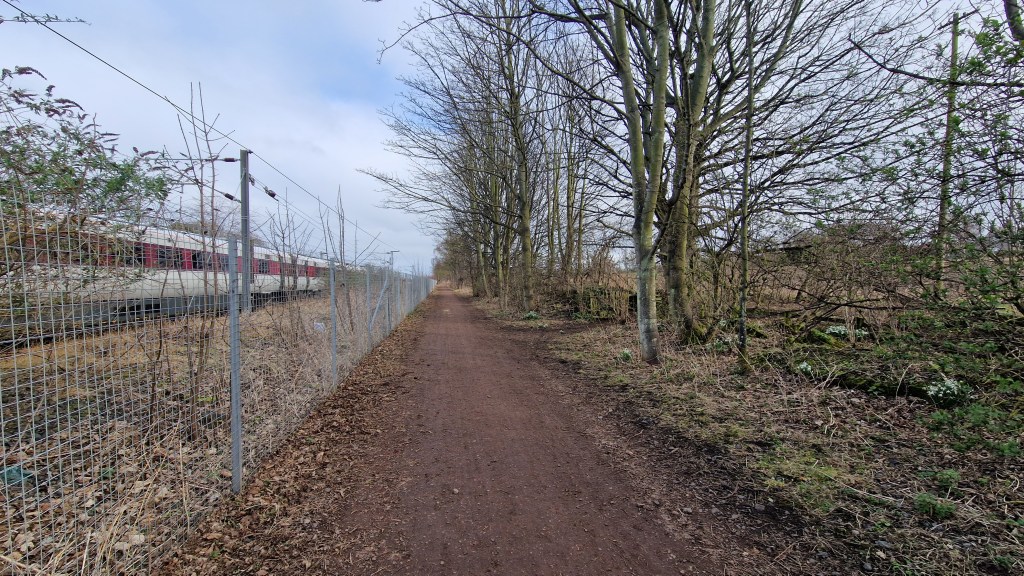
Longniddry’s main attraction during the summer months is its beaches, with locals and tourists heading to the Longniddry Bents to enjoy the sea. Unfortunately for me this wasn’t a such an attraction in February and so I decided to explore something more railway related, the public footpath that lies on the disused branch between Longniddry and Haddington.
This 4 mile branch was originally a single line that connected the town of Haddington with a junction just to the Edinburgh side of Longniddry. A single line for much of its operational life, there was a short period where the line was double tracked (a decision quickly reversed) and as such the bridges along the trail are sufficiently wide for a two-track railway. The branch runs parallel to the ECML for a mile or so, before curving off towards Haddington, providing an opportunity to get some interesting views of services on the ECML.
I enjoyed my first exploration of the ECML in Scotland, certainly helped by the unseasonal good weather I enjoyed. Prestonpans is certainly worth an explore and on a weekend with good weather you could probably spend the day if you tie in a walk along the seafront and the Jacobite museum. Longniddry is worth a visit for the beaches or a walk to Haddington and back, whilst the train to Drem is not the easiest way to visit the Chesters Hill Fort, but can be done with a walk if you fancy it.
 Flights & Times