
Having arrived at the imposing station of Roma Termini onboard a Trenitalia Frecciarossa service from Bologna (read about that here), my first task was to make my way to my hotel to regroup. Having arrived into Rome in the early evening I opted just to get some food and leave the exploring for the following day and so it was in the cooler morning air that I started to make my way across the Italian capital.
Intending on keeping my day exploring Rome and the Vatican as cheap as possible, I avoided the tourist buses and opted to use public transport to get around the city. A ‘MetroBus 24hours’ ticket costs €7 and allows unlimited travel on the city’s three metro lines and expansive bus network from the moment of validation until midnight that day. To get across to the Vatican from Roma Termini, it’s a direct train on Line A (the red line) to Ottaviano and then a 10-minute walk.
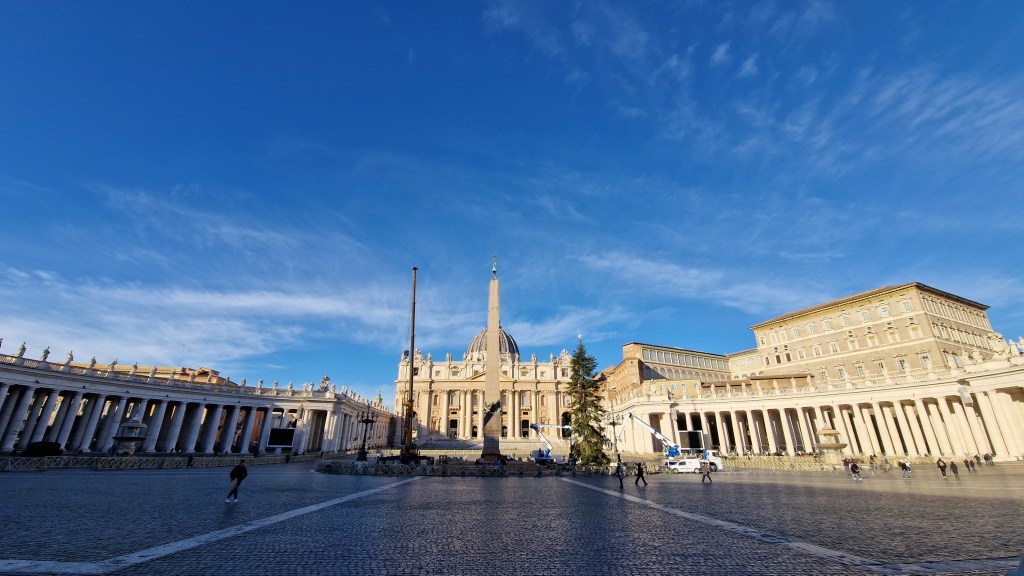
One thing I had noticed whilst crossing borders on this trip was that most of those I had crossed were not particularly well ‘advertised’ on the ground. Surprisingly, as I approached the border of the world’s smallest nation, I found the border was pretty well denoted, with city walls protecting the Vatican and an open archway now providing access. Even at the front of St. Peter’s square, a metal fence marks the open border between the Papal state and Italy.
I spent some time wandering around the surprisingly peaceful St. Peter’s Square and enjoying the winter sun that was slowly starting to warm the air. My visit came just after the death and funeral of Pope Benedict XVI, the pope emeritus, and so the Vatican City was still in the process of returning to ‘normal’ following this and the festive season. As such I was treated to a large crane blocking the famous shot of St. Peter’s Basilica from St. Peter’s square, somewhat typical of my recent luck when travelling.
With both time and budget being fairly limited, I didn’t have the opportunity to explore either the Sistine Chapel or the Vatican Museum (€22 for access to both in advance, or €17 on the day), and having explored the open access outside area of St. Peter’s square, decided to continue on my self-guided tour of Rome. Heading back towards the metro station, I jumped onboard a bus close to Piazza Risorgimento to take me across to my next stop, the Pantheon.
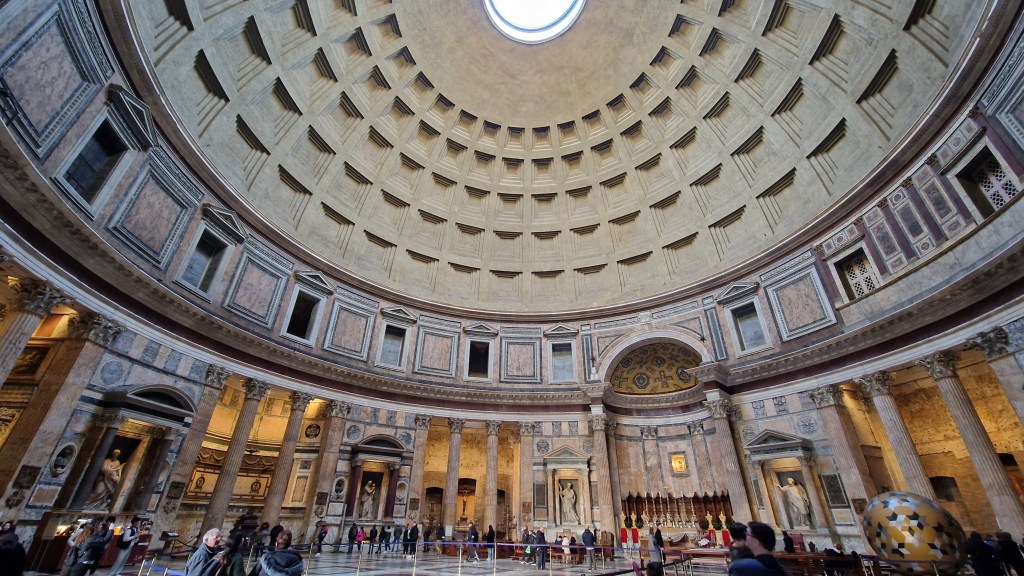
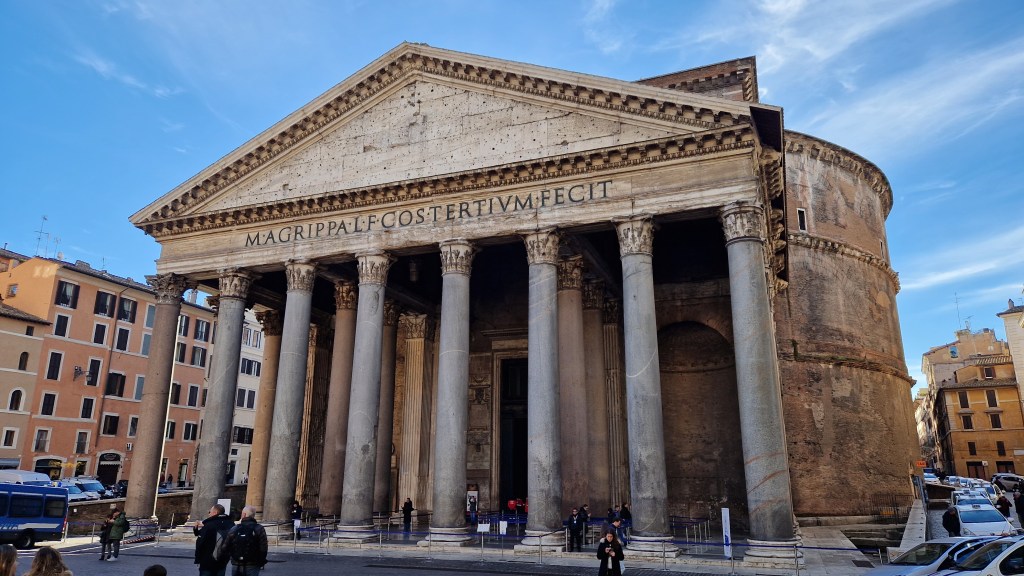
The Pantheon has an interesting history as a place of worship, having originally been constructed during the rein of Augustus (27BC – 14AD) but then being rebuilt by Emperor Hadrian and dedicated in around 126AD following the original temple having burnt down. Since 609AD the Pantheon has been a Roman Catholic Church, the Basilica of St. Mary and the Martyrs, which it remains to this day.
If you’re visiting Rome during the off season and you’re not in a rush, it may be worth gambling on visiting the Pantheon without booking and this way the visit is absolutely free. Officially if you book in advance the entry is still free, but you pay for an audio guide that appears to be compulsory in these instances. I was lucky and found there was no queue to enter and so headed inside for a few minutes to look at the stunning domed rood and beautiful artwork.
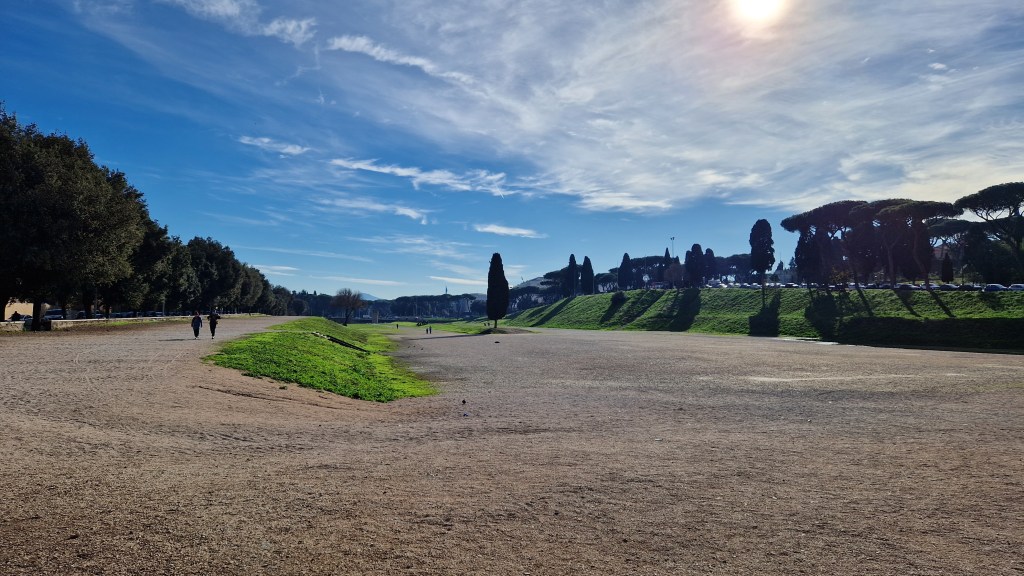
From the Pantheon it was back onto one of the city buses to head to the Circus Maximus, ancient Rome’s chariot racing stadium which is now mostly lost to time. On the site is a large open space showing the size that the Circus Maximus once was and some limited ruins of the stadium. Access is unrestricted and so its free to wander around and be in awe of the sheer scale of what once stood on the site.
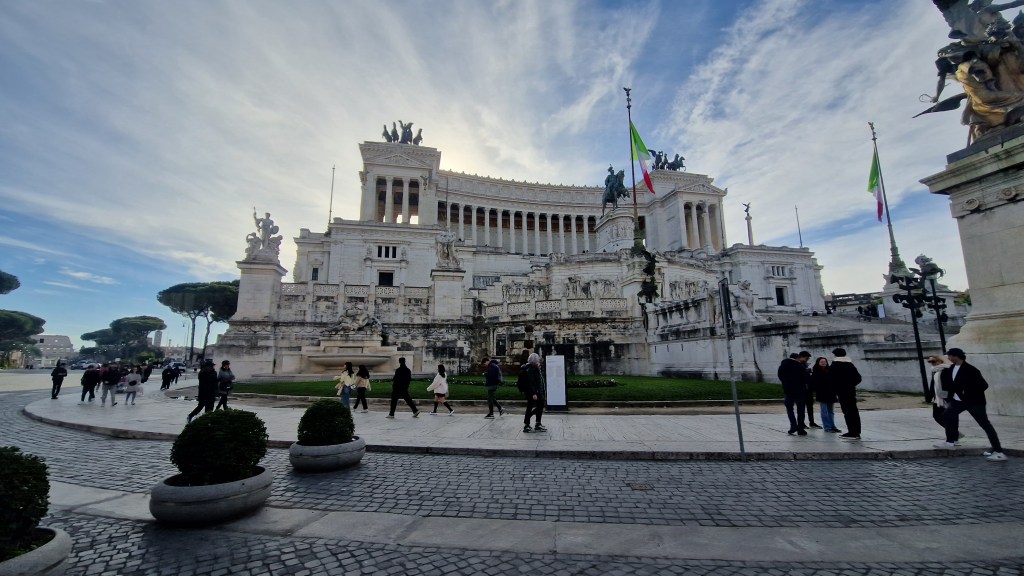
The next stop on my tour of the city was the Altar of the Fatherland, which I didn’t actually stop as because I didn’t realised it existed! I actually saw the Altar of the Fatherland as I passed it on the bus and managed to grab a quick picture of it but had no idea at the time what it was. Constructed between 1885 and 1835 to commemorate Victor Emmanuel II, the first king of a unified Italy, it also contains the shrine of the Italian Unknown Solider.
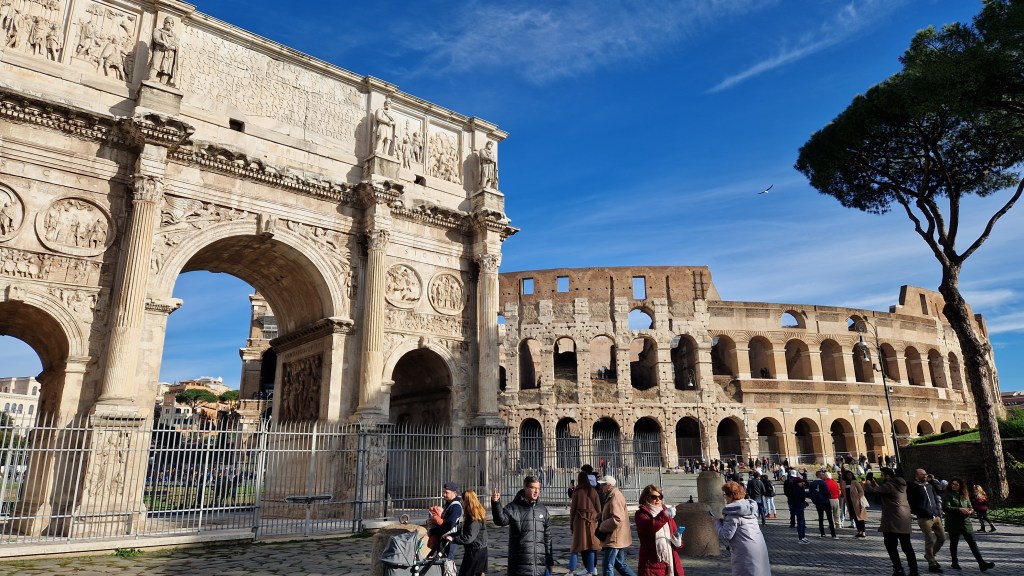
The final stops on my tour are located adjacent to each other and included the most famous of the Roman sites, the Colosseum. Constructed between 72AD and 80AD, the Colosseum is the largest ancient amphitheatre ever built and held frequent Gladiator battles as well as other events including the show of exoctic animals. Whilst the Colosseum has been damaged through the centuries by stone robbers and earthquakes, it is still very much intact and is an absolutely stunning building, partly due to its sheer scale!
Next door to the Colosseum is the Arch of Constantine, dedicated a couple of centuries later in 315AD it commemorates the Battle of Milvian Ridge in 312AD where Emperor Constantine the Great won victory against Emperor Maxentius. This period of Roman history is a bit complicated with both of the aforementioned emperors reigning between 306AD and the Battle of Milvian Ridge where, having lost, Maxentius died in the River Tiber. The outside of both the Colosseum and the Arch of Constantine can be walked around for free, however fences prevent getting too close. Entry to the Colosseum costs €16 and as with most of the sites in Rome, is recommended to be booked in advance.
I’ve always been a bit conflicted about visiting Rome and, whilst the purpose of this trip was to cross the border into the Vatican City, I was glad to have explore the Italian capital a bit whilst I was here. Wandering around in January, the weather was pleasant but the sites weren’t too crowded, so I’d certainly recommend a winter trip to the city if you want to visit. Also, make peace now with the fact you will not see everything as Rome has so much to see it would be impossible to see it all!.
 Flights & Times