
Day 2 of (Not Quite) All the Small Things had ended in the Swiss town of Sargans in the east of country following rail journeys with DB (here and here) and SBB. Day 3 was another full day of travel but started a bit differently, with a bus across an international border.
Liechtenstein is the world’s sixth smallest nation, Europe’s fourth smallest, and nestled between Switzerland and Austria it is doubly landlocked. With the closest railway stations with a train service being across the borders, the only way to access the county by public transport is via the bus services from Sargans, Buchs (both in Switzerland) and Feldkirch (in Austria). The number 11 bus from Sargans runs half hourly throughout the day and although I can’t remember how much it actually cost, it wasn’t extortionate.
One of my favourite facts about Liechtenstein is that Switzerland, who the Liechtensteiners rely on to safeguard their interests abroad, has accidently bombarded or invaded its smaller neighbour on at least five separate occasions since 1968. In the first of these incidents, the Swiss Army accidently shelled Liechtenstein’s only ski resort at Malbun, although fortunately the only reported damage was to a few outdoor dining chairs.
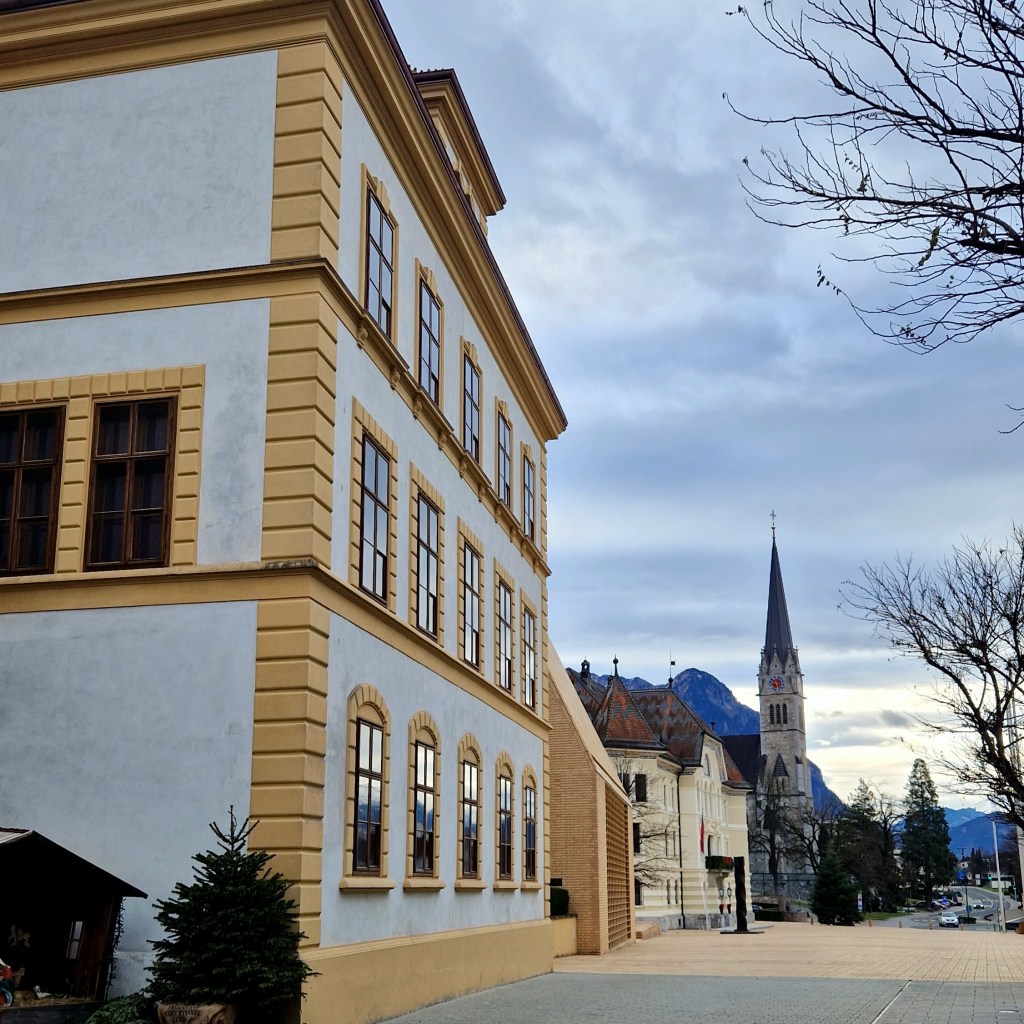
Alighting the bus at Vaduz Post, the best stop for the centre of the capital, I headed between a couple of buildings and was almost immediately outside the Liechtenstein Centre and National Museum. The Liechtenstein Centre is essentially the tourist information office, with staff who speak English and German and a large shop with a range of Liechtenstein branded products including various food products which were actually from Austria.
Its also here that you can get the Liechtenstein ‘passport’ stamps, although I’d advise against getting it stamped in your actual passport as some countries can be a bit difficult to enter if you have one of these in your passport (I’m looking at you Finland!) I’d suggest doing what I did and buying yourself a postcard and getting that stamped. If you post it home, you’ll have a passport stamp and postage stamp as souvenirs!
The Liechtenstein National Museum is open six days a week from 1000 to 1700 (closed Mondays and open until 2000 on Wednesdays) and costs 10CHF (or 13CHF if combined with the Treasure Chamber) to visit. Unfortunately, with my tight schedule of only a couple of hours first thing to explore Vaduz, the museum wasn’t open when I arrived, and I didn’t have time before my bus back to Vaduz to explore. Looking online it has an interesting mix of collections with various archaeological artefacts from early settlers, the regions history from first half of the last millennium and the country’s traditions and cultures.
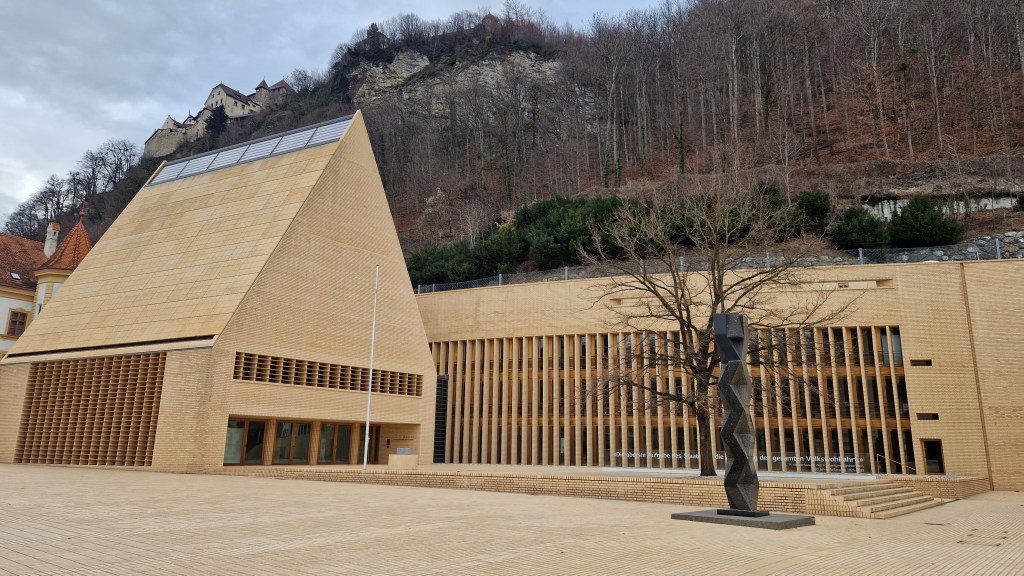
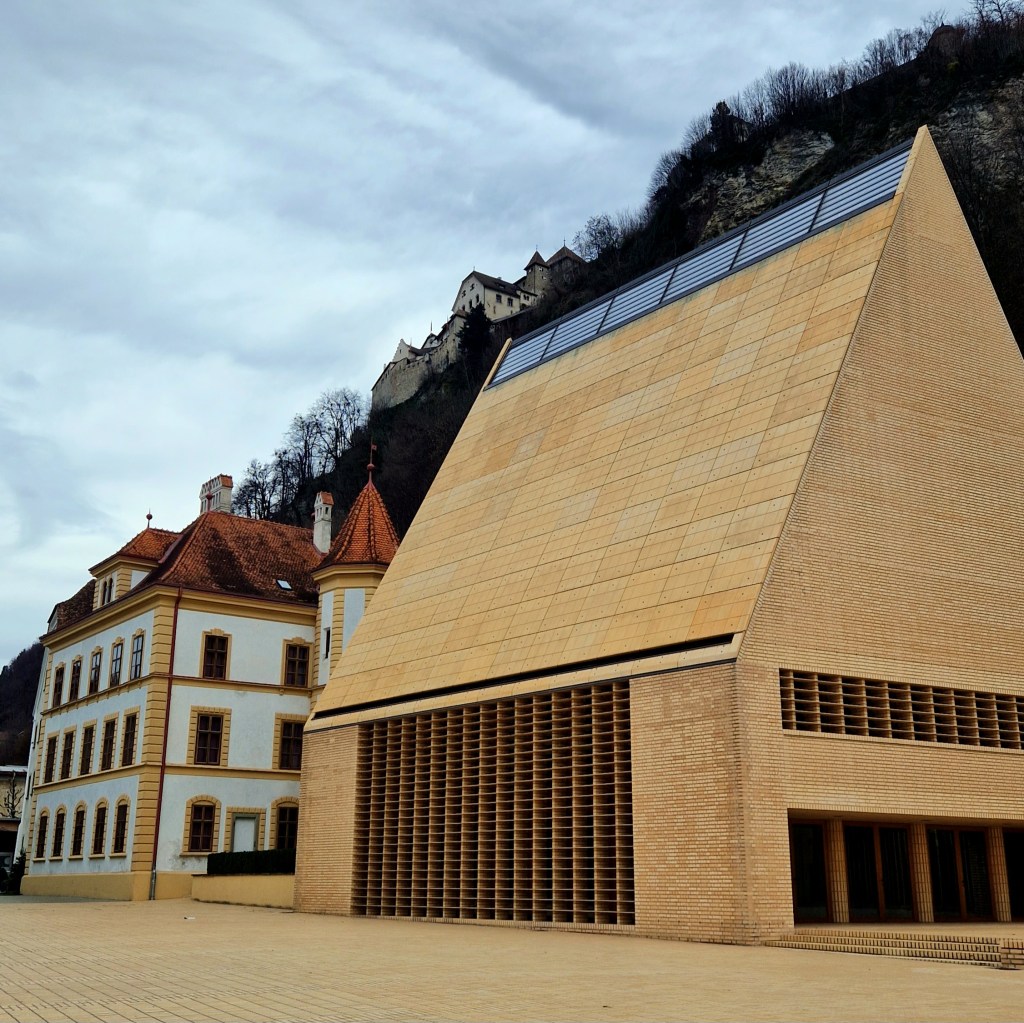
Along from the National Museum is the Liechtenstein Landtag, or parliament, a controversial building which doesn’t particularly fit in with its surroundings. Constructed in 2008, the building was designed by architect Hansjörg Göritz and consists of the ‘Long House’, the ‘High House’ and the ‘Joining House’. It is the ’High House’ that is probably most controversial with its high-pitched roof of yellow brick providing a very striking image against a backdrop of steep cliffs.
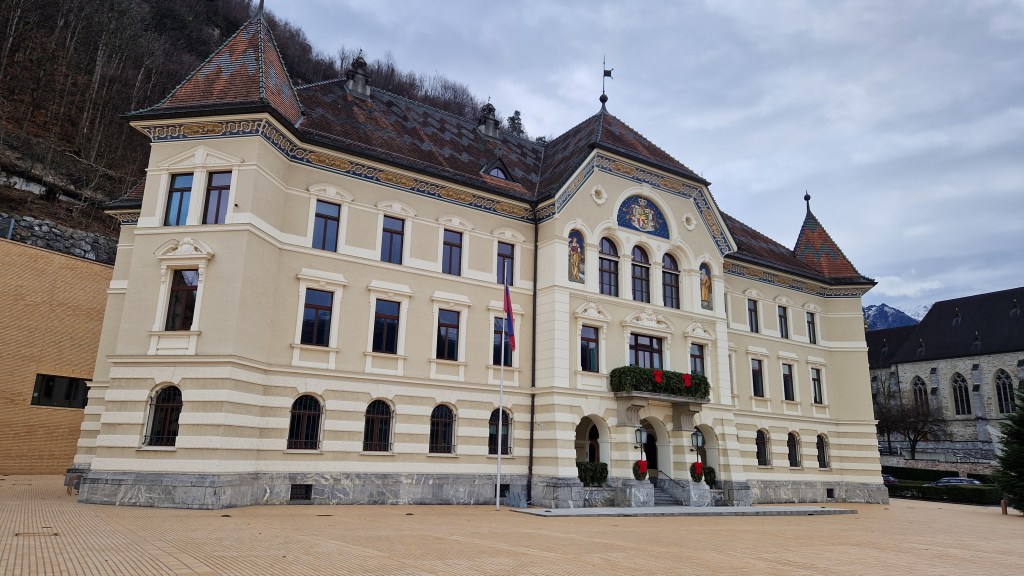
Across Peter Kaizer Platz from the Landtag is the Liechtenstein Government building dating from 1905, a building that is much nice to look at and, beyond that, Vaduz Cathedral. Also known as Kathedrale St. Florin or St. Florinskirche in Vaduz, the cathedral was originally built in 1874 as a parish church but became elevated to a cathedral by Pope John Paul II in 1997 upon the creation of the Archdiocese of Vaduz. As an active cathedral there are regular Roman Catholic services taking place, although I can’t tell if the cathedral is open at other times.
Back towards the centre of the city, the other side of the Liechtenstein centre is the Post Museum, founded in 1930 to house a collection of the country’s postage stamps since 1912 along with an exhibition covering the history of postal services across the country. Again, unfortunately owing to timings I was unable to pay it a visit and whilst the stamps wouldn’t really have interested me, I would have liked to see how postal services worked in this small country.
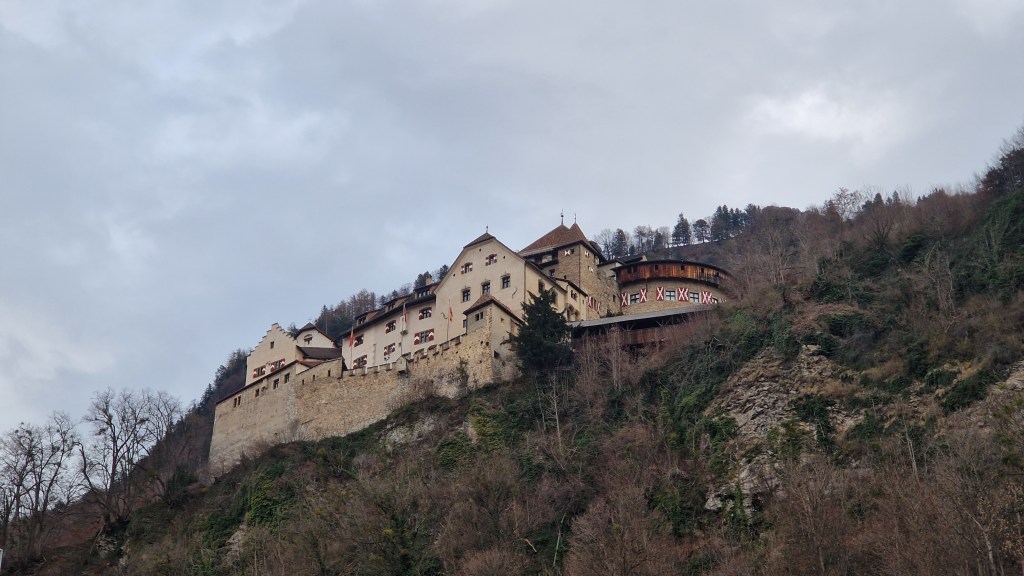
Of all the sites within Liechtenstein, probably the most prominent is Vaduz Castle, perched high on the cliff above the city. The castle is the home of the Princely Family of Liechtenstein who have owned it since 1712 when they purchased it alongside the Countship of Liechtenstein. It was at this point that Charles VI, the Holy Roman Emperor combined the countship with the Lordship of Schellenburg, resulting in the creation of the Principality of Liechtenstein.
Unfortunately the castle isn’t open to the public as it is still the home of the Prince and his family, although you can access the road leading up to and past the castle which I believe provides excellent views out over Liechtenstein and part of Switzerland. However, there is no public transport that runs up this road, so you’ll either need a car or to make a rather steep climb.

Whilst small, a visit to Liechtenstein’s capital, Vaduz, could easily fill a day if time was spent in each of the museums as well as the Cathedral and Art Gallery. With the journey from Zurich being about an hour and a half via Sargans, the country could easily be visited on a day trip from Switzerland’s largest city so there’s not necessarily the need to stay overnight in Sargans. Being my 30th country, Liechtenstein will always be special to me, but I’d certainly recommend visiting if you’re ever in eastern Switzerland or western Austria.
 Flights & Times
Good report on a lovely little (and I mean little!) country. Must get back there again sometime!
LikeLike