
Operator: GWR
Headcode: 1L20
Route: SWA-PAD
Class: 1st
Seat: N/A
Date: Monday 21st November 2022
Having enjoyed a weekend in South Wales with friends, we were back at Swansea station to undertake the journey back to London, the reverse of our journey a couple of days earlier. This journey was supposed to be a little bit different but wasn’t (I’ll come to that in a bit) and so was very similar to the outbound journey.
On thing that is surprisingly sparse on the GWR network is first class lounges, with only London Paddington and Cardiff Central having lounges for the use of first-class passengers. As such, there’s no lounge at Swansea, and so our short wait at the station was filled with us grabbing a coffee from Costa and then fumbling getting through the barriers with one too few hands each…
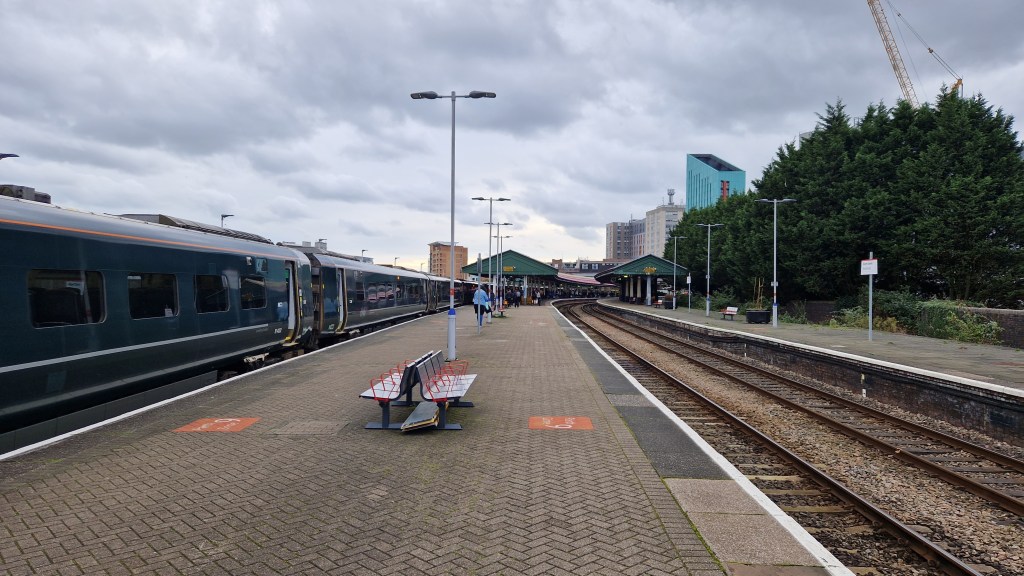
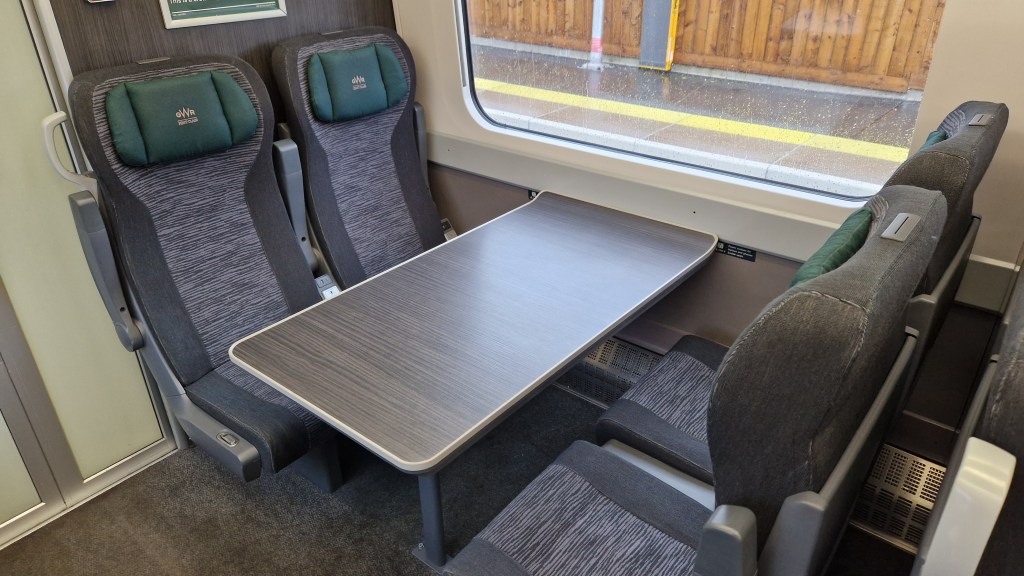
Originally this service was planned to be operated by a pair of five-car class 800/0s, however owing to a set swap for an unknown reason, we ended up onboard a nine-car class 802/1 (802103) and so there were no seat reservations. As such we made ourselves comfortable in the furthest carriage, meaning we’d be closest to the exit on arrival in Paddington.
I had booked this particular train for a specific reason as this is the only service from Swansea each day that is scheduled to have GWR’s Pullman Dining. This is one of the best kept secrets of the railway, and needs to be better advertised, but essentially there six GWR services each day where one of the carriages is turned into a mobile restaurant with a full three-course menu available.
Making use of the Pullman Dining does cost extra (£32.50 for two-courses and £37.50 for three-courses), however I’ve heard only positive things about the quality of the food. If you have a first-class ticket, you’re able to make a reservation to dine onboard, however if you’re travelling in standard-class you’ll just need to turn up and see if there’s room.
Unfortunately, our journey coincided with signallers at the Thames Valley Signalling Centre (TVSC) going on strike and as such GWR decided to cancel all Pullman Dining for the week, despite the vast majority of the Pullman services being retimed by a couple of minutes at most. Whilst they did advise this ahead of time and the Pullman Dining is a bonus, it was extremely disappointing that I wasn’t able to tick this off my bucket-list.
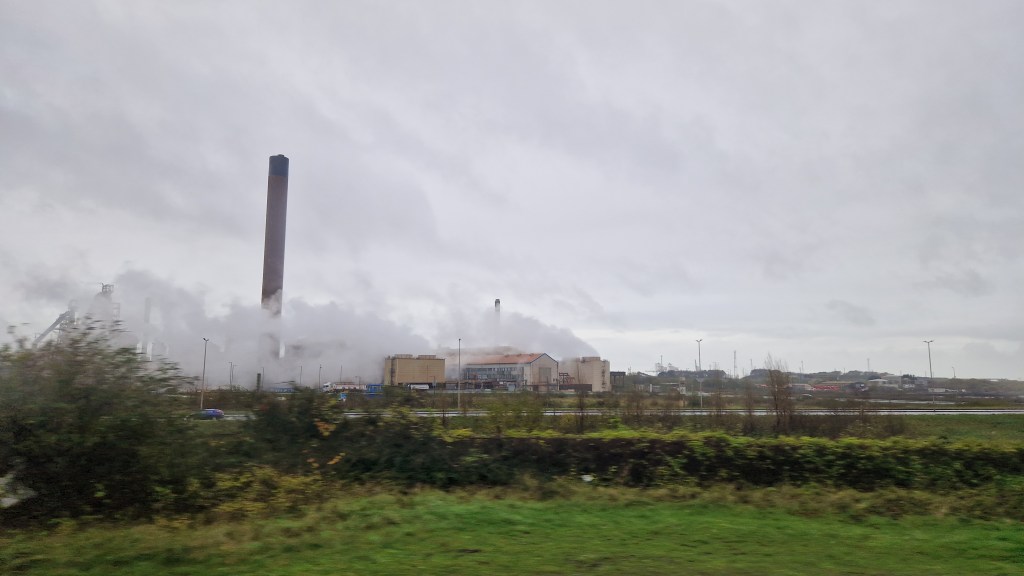
Departing Swansea, we wound our way out of the city and with a short stop at Neath, we were soon passing Briton Ferry where the Swansea District Line joins (or leaves) the South Wales Mainline (SWML). The Swansea District Line is a section of railway that connects the SWML with the Heart of Wales Line whilst avoiding a number of stations including Swansea itself. This allows non-stop traffic to and from west Wales (mostly freight) to avoid the single track connection between the SWML and West Wales Line at Landore and also keeps this traffic further away from the most built up areas.
As with our journey from Paddington, the bulk of our stops were in south Wales, with us calling at Port Talbot Parkway and Bridgend before arriving into Cardiff. With the TVSC strike meaning the hourly Paddington to Cardiff service was cancelled, our service gained a lot of passengers in the Welsh capital, although first-class was still not particularly busy.
Cardiff marks the start of electrification on the SWML and as such is also the point where bi-mode trains, such as ours, change from diesel to electric power. If you’re sitting under the pantograph, you might hear a clunk as it either raises or lowers (depending on direction) however this is perfectly normal. The fact that 170+ years after the arrival of the railways in Cardiff the station was electrified shows that some progress is finally being made on modernising the railway, however its disappointing that it took that long, and the wires aren’t going further.
After departing, there was just a short stop in Newport before we once again dived under the River Severn to cross the border between Wales and England. Emerging back into daylight in Gloucestershire, we passed through the small station at Pilning on our approach to Bristol Parkway. Pilning is an unfortunate victim of the Great Western Electrification Programme, with the station’s footbridge having been removed to allow wires to be installed. Unfortunately this means there is no access to the westbound station, with passengers having to head to Severn Tunnel Junction and backtrack to complete round trips from the station.
A prominent feature of this journey was the awful weather that we had for the majority of the 190+ miles from Swansea to Paddington. Whether it was linked or just a coincidence, we also experienced awful Wi-Fi throughout the journey, meaning that watching England’s opening World Cup game was out of the question. Thankfully I managed to avoid seeing the score and was able to watch the highlights of the 6-2 win when we made it home.
With Bristol Parkway ticked off, we were into the final stages of our journey, with just two stops left before Paddington. The first, Swindon, meant we had completed the SWML and joined the Great Western Mainline at Wotton Basset Junction, whilst also marking the start of a section of line I’ve never done non-stop. A lot of GWR services call at Didcot Parkway on their way to or from Paddington whilst only a handful don’t, and with ours being one of the latter it meant this was the first time I had travelled between Swindon and Reading without stopping.

As we slowed from our high-speed sprint on the approach to Reading, we passed Reading Traction Maintenance Depot, GWR’s main depot for the non-IET fleet. This includes, since the closure of Old Oak Common Depot, the class 57 locos and coaches for the Night Riviera, GWR’s sleeper service between Paddington and Penzance. This is another GWR service that sits high on my bucket list next to the Pullman Dining.
As the familiar scenery along the Thames Valley between Reading and Paddington started to change from the countryside of Berkshire into the built up suburbs of London, it marked the end of a journey which whilst ‘fine’ had left me disappointed. Working on the railway, I understand more than most the logistical issues that strikes and disruption cause, however I can’t help feel that if GWR had wanted to operate the Pullman Dining it could have done. Nonetheless, the journey was comfortable and punctual and most importantly the staff were great.
Lounge 0*
Seat/Facilities 4*
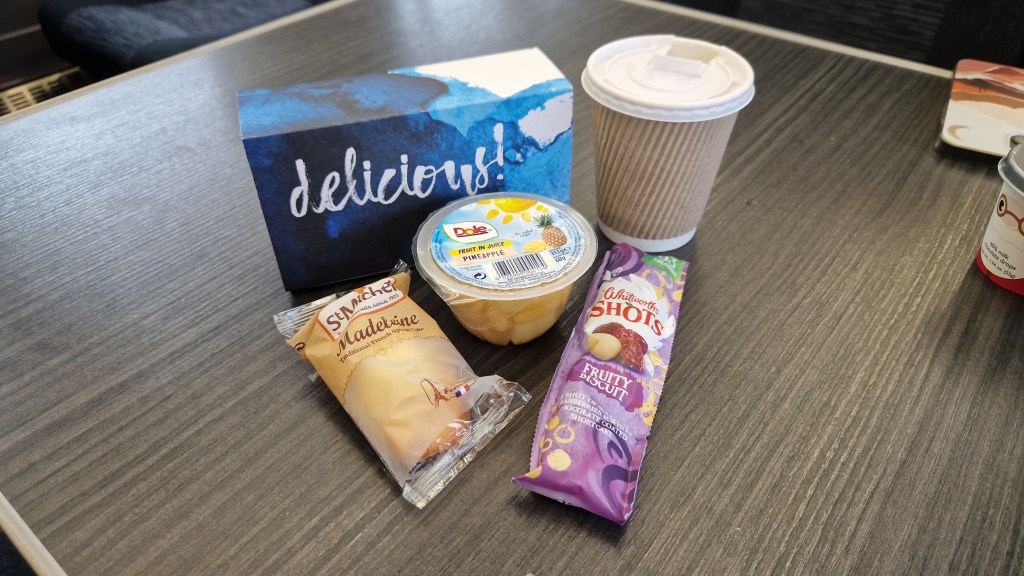
Food 2*
Service 5*
Punctuality 5*
Overall Rating 16/25 (read about my rating system here!)
 Flights & Times